REVIEW · ROVANIEMI
From Rovaniemi: Ice Floating under Aurora Borealis
Book on GetYourGuide →Operated by Safartica · Bookable on GetYourGuide
Ice floating under the aurora sounds unreal. In Rovaniemi, you can actually do it with a guide, a full-body rescue suit, and the chance to watch the Northern Lights overhead while you relax on the frozen lake. What I like most is the safety-first rescue suit setup (you stay on the surface and stay dry), and the way the night builds in natural viewing moments so you’re not just waiting around for the sky to cooperate. The one drawback to plan for: you’re relying on weather for clear aurora skies, so you may not see lights every night.
Key points I’d mark
- Full-body rescue suit keeps you dry and on the surface, even in open 0°C water
- Aurora chances while floating plus extra time to see lights as the night evolves
- Nordic wilderness mood in the Rovaniemi countryside, away from crowds
- Photo support in the water so you get real memories, not just blurry shots
- Traditional Finnish tent comfort with hot drinks, cookies, juice, and marshmallows
- Pickup and English guiding organized around a single meeting point at Safartica
In This Review
- How Ice Floating Works in Rovaniemi (And Why It Feels So Relaxing)
- The Arctic Rescue Suit: What It Does for Your Comfort
- Northern Lights Viewing: How You Can Still Enjoy the Night Without Guaranteed Skies
- What a Typical 3-Hour Night Feels Like (Step by Step)
- 1) Meet up at Safartica and get geared up
- 2) Transfers to the lake area
- 3) Suit briefing and safety checks
- 4) Ice floating in open water under the lights
- 5) Warm-up time in a traditional Finnish tent
- 6) Return and wrap-up
- Who This Tour Really Suits (And Who Might Think Twice)
- Price and Value: Is $155 Worth It?
- The Small Things That Add Up (Guide Style, Photos, and Group Flow)
- Logistics You Should Not Ignore (Meeting Time, ID, and Rules)
- Should You Book Ice Floating Under the Aurora?
- FAQ
- How long is the ice floating experience?
- Where do I meet the guide?
- Do I need swimming skills?
- What’s included in the price?
- What should I bring?
- Is there a minimum height requirement?
How Ice Floating Works in Rovaniemi (And Why It Feels So Relaxing)
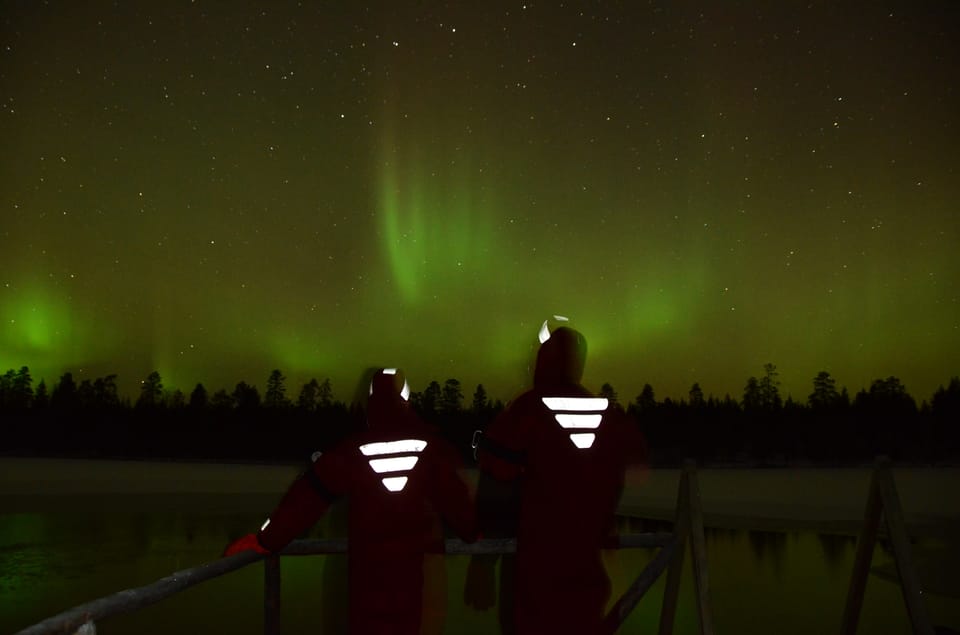
This isn’t the scary movie version of Arctic water. The whole point is controlled, guided, and comfortable. You suit up in winter clothing you’re given for the night and then step into a high-quality rescue setup designed for arctic conditions. In simple terms: the suit helps you float on top of the water, and it covers your body to keep you dry, so you’re not spending the experience fighting cold.
The relaxation factor surprised me. Most winter activities in Lapland are about moving fast—snowmobiles, huskies, tight schedules. Here, you get long still moments. That matters because the Northern Lights, when they’re visible, are easier to enjoy when you’re not tense. You can actually look up and let your brain slow down.
Your guide also sets you up with clear instructions before you get near the water. You don’t need swimming skills. You’re there to float and enjoy the night, not to perform.
The Arctic Rescue Suit: What It Does for Your Comfort
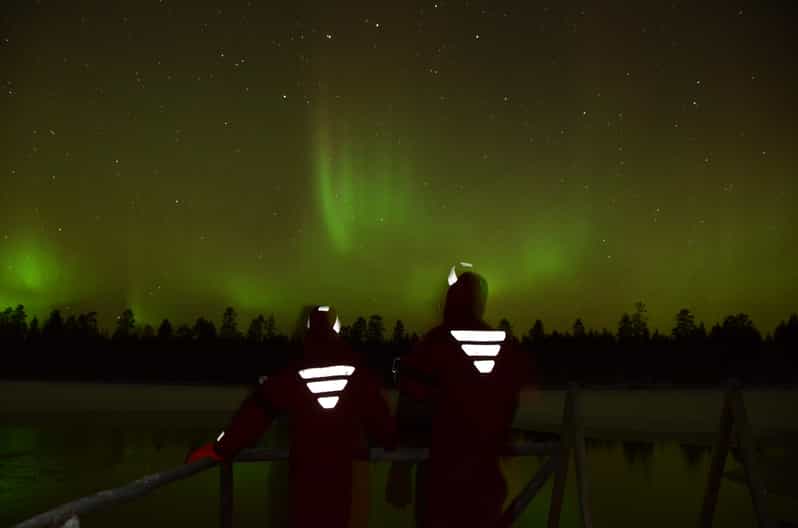
The rescue suit is the centerpiece of the whole experience. Your body stays under the suit, and you float while it does its job. The provided details are reassuring: the suit keeps you dry, and you won’t get cold even because you’re in open 0 degree water. That’s a big deal for first-timers. You’re not guessing whether you’ll last ten seconds.
There’s also a minimum height requirement: 120 cm. If you’re under that, this particular floating experience isn’t suitable. The tour is built around the physics of floating and how the suit positions people in the water, so it’s not a loophole situation.
One more practical note that helps you enjoy the night: you’re instructed carefully before going in. That reduces the usual fear factor—standing at the edge of a frozen lake can make even confident people nervous. Once you understand how the suit supports you and what to do, it becomes more like a guided nature moment than a dare.
You can also read our reviews of more tours and experiences in Rovaniemi.
Northern Lights Viewing: How You Can Still Enjoy the Night Without Guaranteed Skies
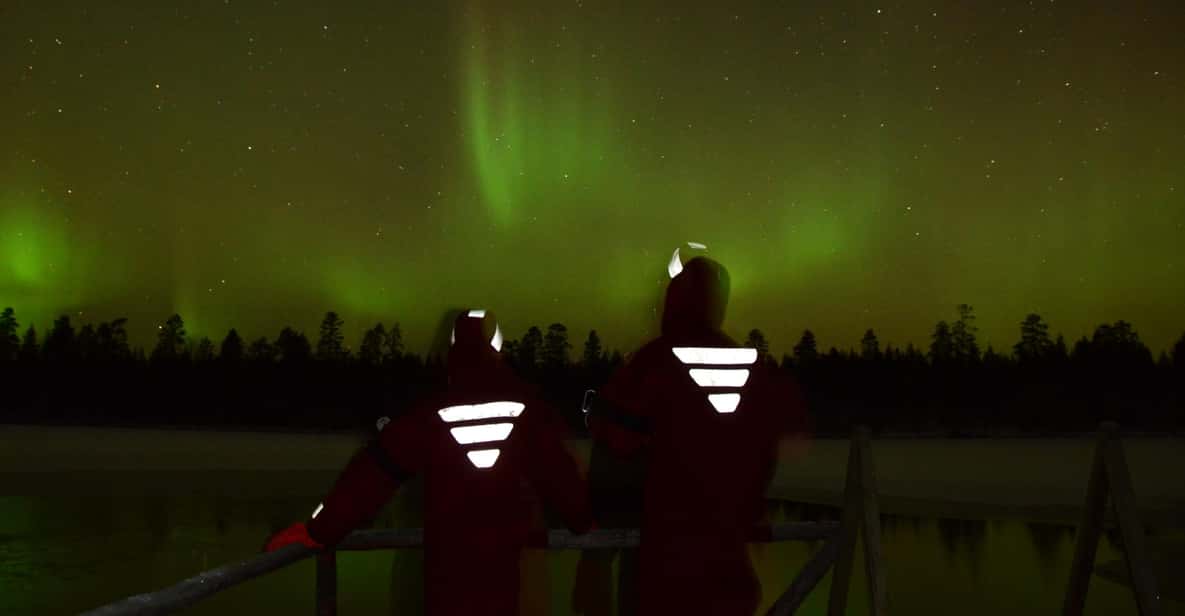
Let’s be honest. Aurora Borealis is never a contract. The experience is weather-dependent, and the lights depend on clarity and conditions. But this tour gives you more than one chance to see the sky, and that’s a smart way to handle the uncertainty.
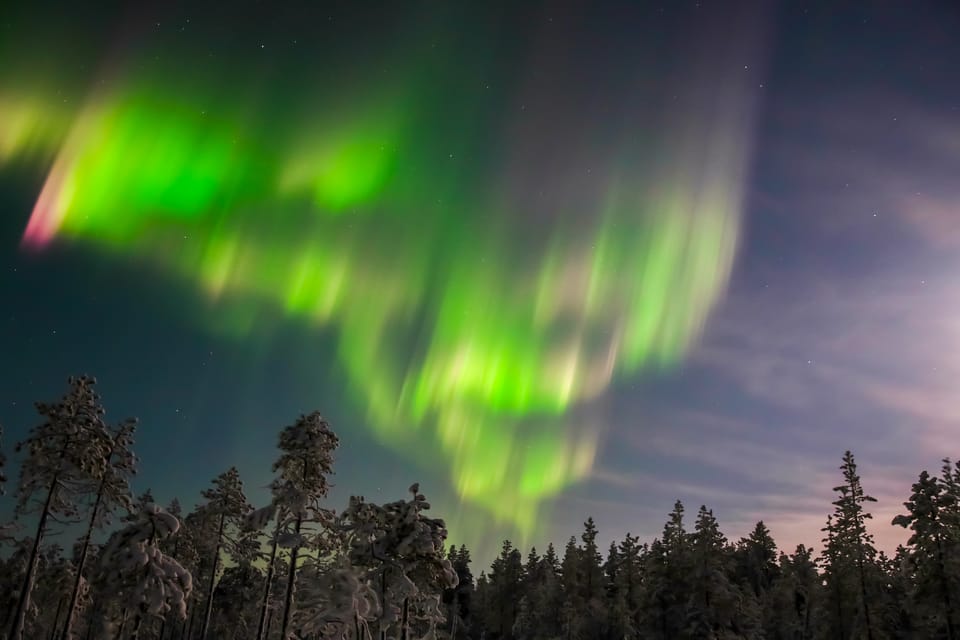
When the weather is clear, you can see stars and sometimes the aurora while you float. That’s the best-case scenario because you’re literally experiencing the aurora in your peripheral vision, not just from a warm viewing point.
And if the aurora doesn’t show up instantly—or if clouds shift—the night still isn’t wasted. You’ll likely get breaks to warm up and refocus on the sky. One of the nicest details from the experience is that you’re kept informed about what’s visible and when it might show. Even people who were already warming inside still got a real chance to see it and take photos, which shows the guide is watching the conditions, not just running a schedule.
What a Typical 3-Hour Night Feels Like (Step by Step)
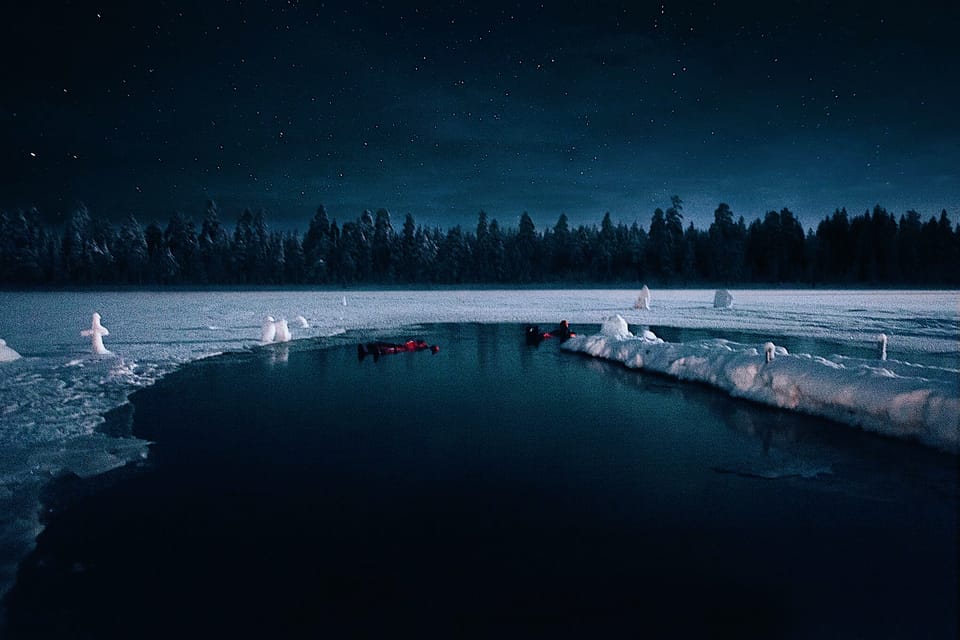
The tour runs about 3 hours, which is just enough time to do the floating, warm up, and still stay alert for the best sky moments. Here’s how the rhythm usually works.
1) Meet up at Safartica and get geared up
You’ll meet at the Safartica office (Koskikatu 9) about 25 minutes before departure. Being early matters here because missing the time or location means you could miss the safari and won’t be refunded. If you’re juggling other Lapland plans, give yourself a buffer.
Your English guide meets you, explains what’s next, and confirms everyone is ready to get into the suits and out into the arctic night.
2) Transfers to the lake area
The price includes transfers, and you can think of this as one less logistics headache. You’re not driving on your own in winter darkness. The transport is rated highly, with 92% of reviewers giving it a perfect score, which usually points to smooth pickup flow and on-time coordination.
3) Suit briefing and safety checks
Before stepping into the water, you get instructed. No one is guessing. You’ll learn how to float, how to relax, and what to expect from the suit and the water. Again, you don’t need swimming skills. The suit handles the floating, and the guide handles the safety routine.
There’s also a strong “feel calm first” approach. In this environment, you want nervous energy controlled early. The guidance is part of what makes it work.
4) Ice floating in open water under the lights
This is the heart of the tour: you dip into the frozen lake and float while looking up. If the aurora is active and skies are clear, the sky show can feel unreal because your body is supported and dry, while the world around you is stark and silent.
Guides also help with photos while you’re in the water. That’s important because it’s hard to take steady pictures while you’re cold-watching-calm. The help can make your photos look like real memories instead of a camera roll full of near-misses.
One review detail I really liked: the group experience is set up in a way that keeps people warm and included. In some cases, one group is in the water while another group stays with cookies and hot drinks, and the conversation keeps moving. It’s not just “wait your turn.” It feels like the night is shared.
5) Warm-up time in a traditional Finnish tent
Between floating sessions (and at the end), you warm up in a traditional Finnish tent. You’ll have hot drinks, and the experience may include cookies, juice, and marshmallows. This matters because comfort affects your mood. When you’re toasty, you’re better at noticing small changes in the sky.
It’s also a nice reset for photos. Instead of racing from water to car to hotel, you get a cozy pause where your body can recover and your mind can re-focus.
6) Return and wrap-up
Once the floating and viewing time are done, you head back via the included transfers. The tour is long enough to feel like a proper Arctic moment, but short enough that you’re not wiped out for the rest of your Lapland evening.
Who This Tour Really Suits (And Who Might Think Twice)
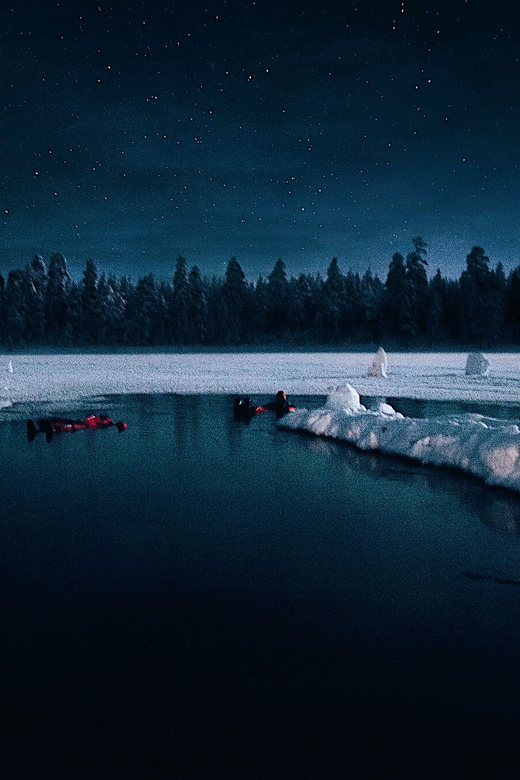
This is a great match if you want something that feels both special and manageable. Ice floating is different from the usual Northern Lights routine, and it gives you a memory you can’t replace with a bus tour.
You’ll especially like it if:
- You want a low-stress Arctic experience with safety support and clear instructions
- You’re open to doing a cold-weather activity for the payoff of the aurora
- You care about photos but don’t want to figure out everything solo
- You want a mix of wonder and warmth (water time plus Finnish tent breaks)
You might think twice if:
- You’re extremely worried about cold. While the suit is designed to keep you dry and warm enough for open water, it’s still an outdoor arctic environment.
- You’re shorter than 120 cm (this experience isn’t suitable below that height).
And if your group includes teens or first-timers, it can work well because the guide’s job is to keep everyone comfortable and guided.
Price and Value: Is $155 Worth It?
For about $155 per person (3 hours), you’re paying for a very specific combination: arctic rescue equipment, guided instruction, transport, and a structured viewing experience that includes both cold and warm phases.
What makes the price feel reasonable is the way it removes the hidden costs and hassles:
- You’re not sourcing the gear or learning the techniques yourself
- You get guided safety and photo help, which boosts the quality of the experience
- You get transfers, so you avoid winter driving and timing issues
- You get hot drinks and warm-up time, so your body actually gets to recover
Could you do a cheaper Northern Lights tour? Sure. But you’d likely miss the core “only-in-the-Arctic” hook: floating in a frozen lake itself. This is the kind of activity where the value is tied to doing it the right way, not just seeing the lights.
And the guide attention matters. In the feedback, guides are repeatedly described as attentive and friendly—checking comfort, helping with photos, and making sure people understand what the visible aurora might be doing over time. When the human factor is strong, the cost feels better.
The Small Things That Add Up (Guide Style, Photos, and Group Flow)
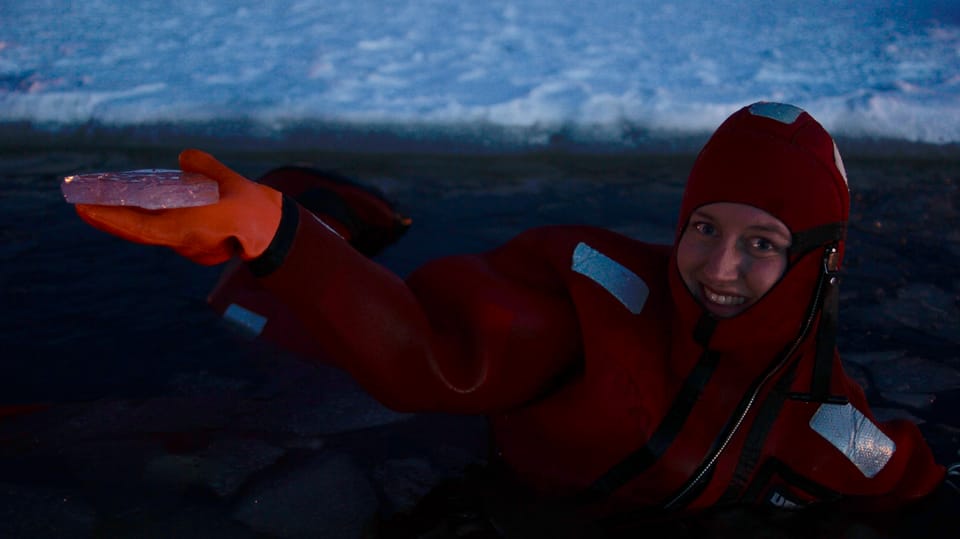
Even when the weather isn’t perfect, the guides can make a night better. One name that came up is Alexi, and people remembered the team’s fun and attentiveness. That’s the kind of energy you want in a chilly environment: calm competence plus good humor.
Two details stand out for practical reasons:
- Photo help while you’re in the water: It reduces frustration and improves results
- Active aurora communication: The guide watches visibility and helps people time their viewing, including those warming inside with a fire
Also, the group setup can reduce the sense of waiting. You may notice splits where one part of the group is floating while the other is warming with snacks. That pacing keeps morale up and helps everyone feel like part of the action.
Logistics You Should Not Ignore (Meeting Time, ID, and Rules)
A few details are simple but important for a smooth night.
Meeting time: You must be at Safartica office (Koskikatu 9) about 25 minutes before departure. If you’re late, you risk missing the safari and not getting a refund.
What to bring: Just have your passport or ID card. That’s the one item explicitly listed.
Rules: Smoking indoors isn’t allowed. (Outside is a different matter, but the rule here is specifically about indoor areas.)
Minimum group requirement: At least two adults are required for the activity to take place, so check your travel plan if you’re going solo or as a couple.
Should You Book Ice Floating Under the Aurora?
If you’re in Rovaniemi and you want a Northern Lights experience that goes beyond standing still, I’d book it—especially if you like the idea of relaxing on the water while the sky does its thing. The suit setup, the guided safety, the warm tent breaks, and the photo support make this feel like more than a novelty.
That said, don’t treat it like a guaranteed lights tour. The sky might be cloudy, and auroras are never automatic. But even when auroras are faint or absent, you’re still getting a rare Arctic activity with strong guide attention and a cozy warm-up structure.
If you can handle cold-air evenings and meet the 120 cm minimum height, this is one of those Lapland moments that turns into a real story.
FAQ
How long is the ice floating experience?
It lasts 3 hours.
Where do I meet the guide?
You meet at Safartica Office, Koskikatu 9, about 25 minutes before departure.
Do I need swimming skills?
No. You don’t need swimming skills because the rescue suit helps you float, and you’ll be instructed before stepping into the water.
What’s included in the price?
The tour includes winter clothing, transfers, floating, hot drinks, and guiding.
What should I bring?
Bring your passport or ID card.
Is there a minimum height requirement?
Yes. The minimum height for floating is 120 cm (not suitable under 3 ft 9 in / 120 cm).