REVIEW · CHIANG MAI
Chiang Mai: Chiang Rai Temples and Long-Neck Karen Village
Book on GetYourGuide →Operated by CHIANGMAI FOOTSTEP TOUR&TRAVEL CO.,LTD · Bookable on GetYourGuide
Temples and hot springs in one packed day. I like the sheer visual punch of Wat Rong Khun with its mirror-like sparkle and symbolic inside details, and I also love the wow factor of the giant Guan Yin at Wat Huay Pla Kang with elevator access to big views. The only real drawback to plan for is the day runs full-speed, with limited time at each stop if you’re the type who wants slow, deep reading of every scene.
This is built for a small group (up to 12) and an English-speaking guide, which helps when you want context fast. Wear shoulders-and-knees covered temple clothes, bring comfy shoes for steps, and note it’s not suitable for wheelchair users or people with back problems.
In This Review
- Key Things to Know Before You Go
- A One-Day Chiang Rai Day That Actually Delivers
- Mae Kachan Hot Springs: Soak, Stretch, and Boil Eggs
- Wat Rong Khun (White Temple): Mirror Sparkle With Symbol Meaning
- Wat Rong Suea Ten (Blue Temple): Deep Blue Tones and Golden Accents
- Wat Huay Pla Kang: The 25-Story Guan Yin and the Top Views
- Long-Neck Karen Village: Culture, Craft, and Respectful Photos
- Price and Value: Is $61 a Fair Deal?
- Comfort, Timing, and How to Avoid a Rough Day
- Who This Tour Fits Best (And Who Should Skip It)
- Should You Book This Chiang Rai One-Day Tour?
- FAQ
- How long is the tour?
- What’s included in the price?
- Is lunch included?
- What should I bring?
- What’s the dress code for temple visits?
- Is this tour wheelchair-friendly?
- Are pets allowed?
- What’s the cancellation policy?
Key Things to Know Before You Go
- Mae Kachan Hot Springs starts you off with warm mineral pools and a quirky egg-boiling moment
- Wat Rong Khun brings mirror-studded drama plus meaningful murals and sculptures indoors
- Wat Rong Suea Ten delivers deep blue tones with gold accents and a photo-friendly Buddha statue
- Wat Huay Pla Kang features a colossal 25-story Guan Yin, plus an elevator to the top
- Long-Neck Karen Village gives you culture and craftsmanship, but you must be respectful with photos
- Small-group pacing (up to 12) is great for questions, yet it still feels like a packed itinerary
A One-Day Chiang Rai Day That Actually Delivers
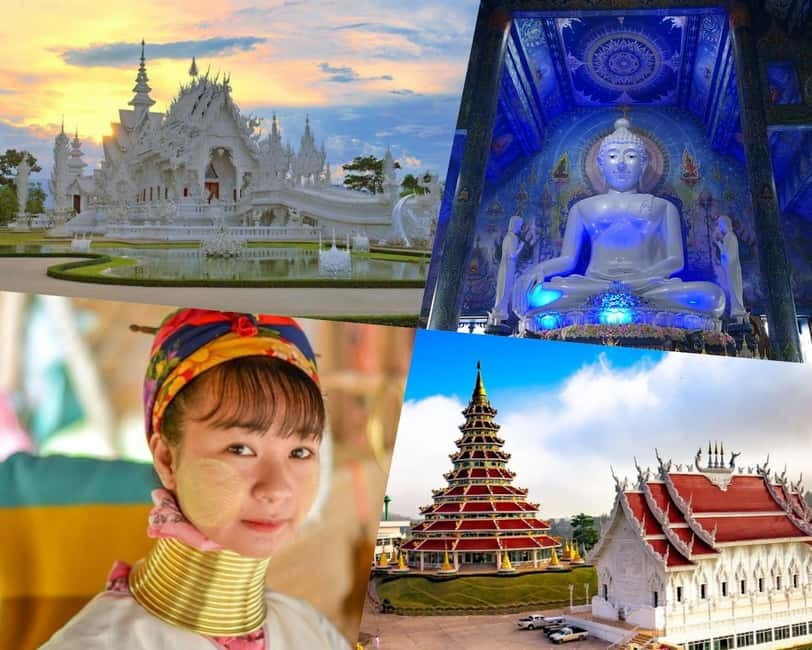
If your time in northern Thailand is tight, this tour makes sense. You get five major hits in one day: Mae Kachan Hot Springs, Wat Rong Khun, Wat Rong Suea Ten, Wat Huay Pla Kang, and the Long-Neck Karen village.
What makes it work is the flow. You start with warm pools to loosen up, then jump into three standout temples with very different styles, and finish with a community-focused culture stop. That mix is why this route feels more complete than a single-temple day.
Still, you’re moving. You’ll climb stairs at temples and spend time on the road in an air-conditioned van, so pick this only if you’re good with an active day.
You can also read our reviews of more tours and experiences in Chiang Mai.

Mae Kachan Hot Springs: Soak, Stretch, and Boil Eggs
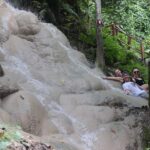
This is a gentle warm-up before the big temples. Mae Kachan Hot Springs gives you a chance to dip your feet in mineral water that’s said to have therapeutic properties, and the atmosphere is relaxed enough to reset your body after the travel days.
One of the fun twists here is the egg-boiling tradition. You can try watching the bubbling springs used to cook eggs, which turns the stop into an experience instead of just a quick photo break.
A consideration: the hot-spring setting can feel more utilitarian than postcard-natural. If you’re expecting a scenic, nature-only spa vibe, manage expectations and focus on the relaxing soak and the novelty of the egg tradition.
Practical tip: bring flip-flops or water-friendly footwear if you’re comfortable with the water area, and don’t forget sunscreen for the warmer parts of the day.
Wat Rong Khun (White Temple): Mirror Sparkle With Symbol Meaning
After the springs, you step into one of Thailand’s most talked-about temples. Wat Rong Khun is known for its white exterior that glows in sunlight, plus sparkling mirror details that make it look almost unreal in person.
Inside, it’s not just pretty. You’ll see murals and sculptures designed to communicate big ideas about life, death, and rebirth. That symbolic layer is part of why the White Temple feels memorable even after the photos fade from your camera.
Time-wise, you’ll want to move with intention. If you only glance, you’ll miss the best parts. But if you take a few minutes to look slowly at the interior scenes, the place lands differently.
Dress code matters here. Shoulders and knees should be covered, and you’ll be on foot enough that comfortable shoes are worth it.
Wat Rong Suea Ten (Blue Temple): Deep Blue Tones and Golden Accents
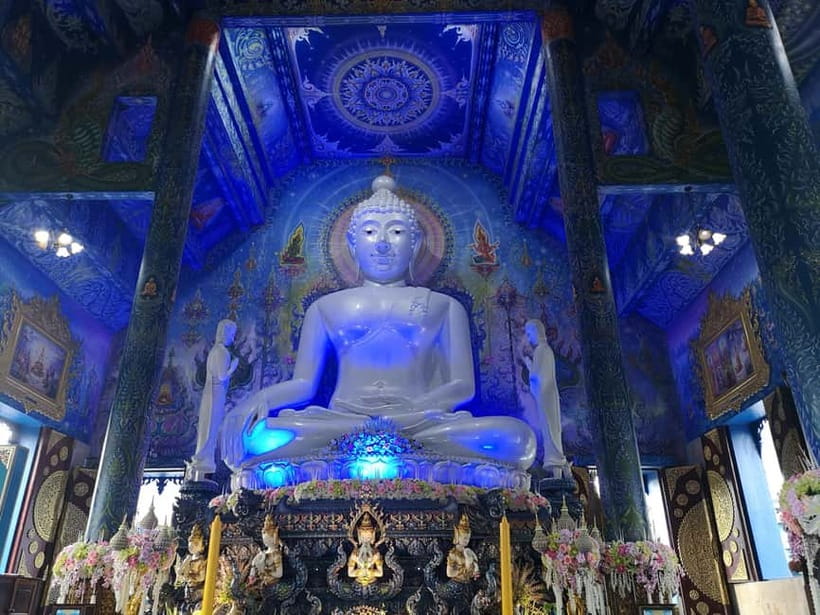
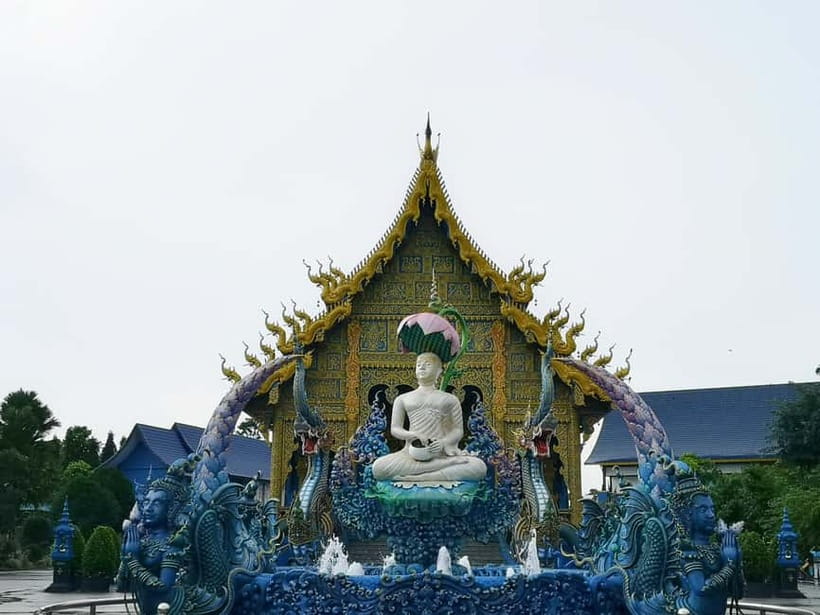
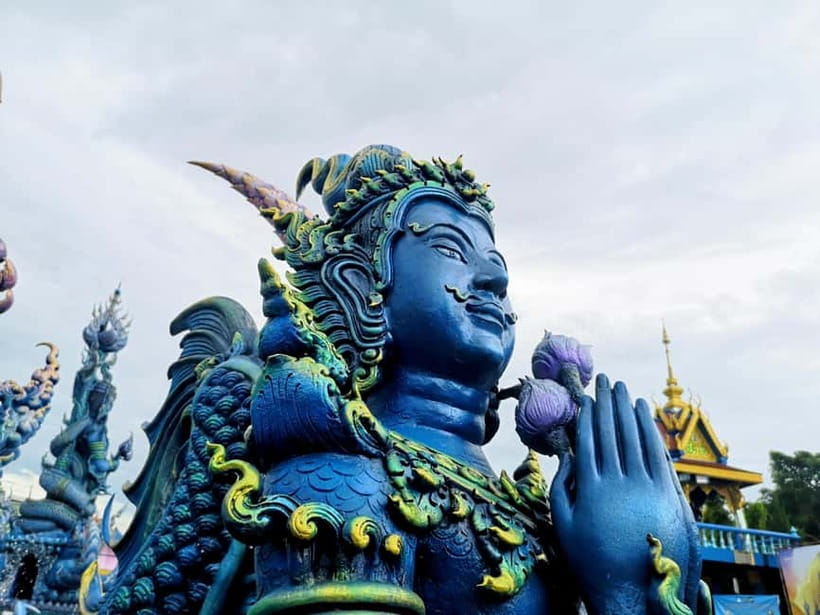
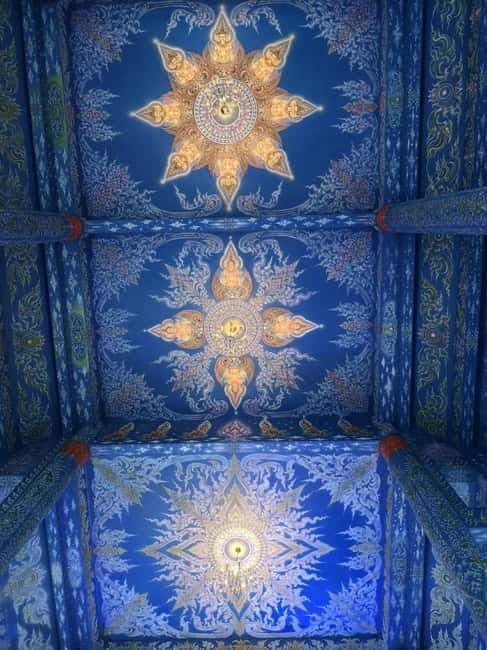
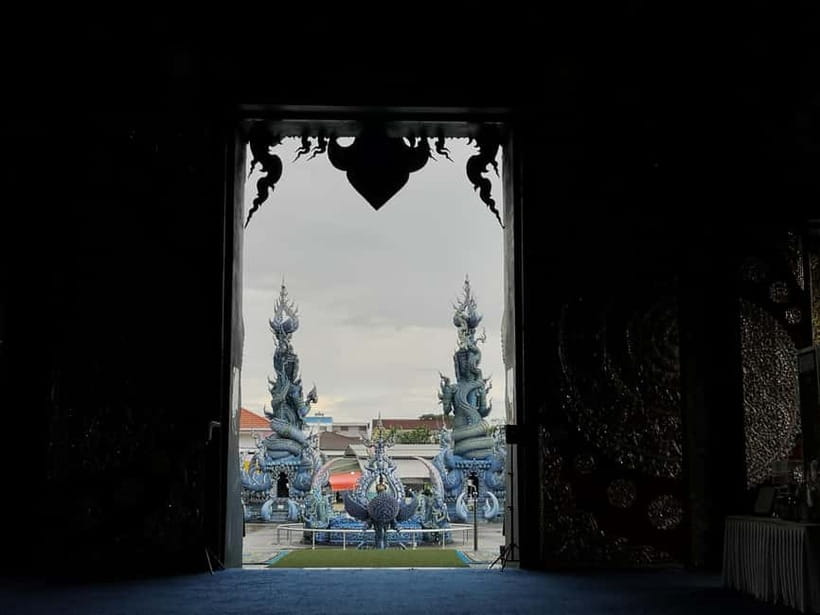
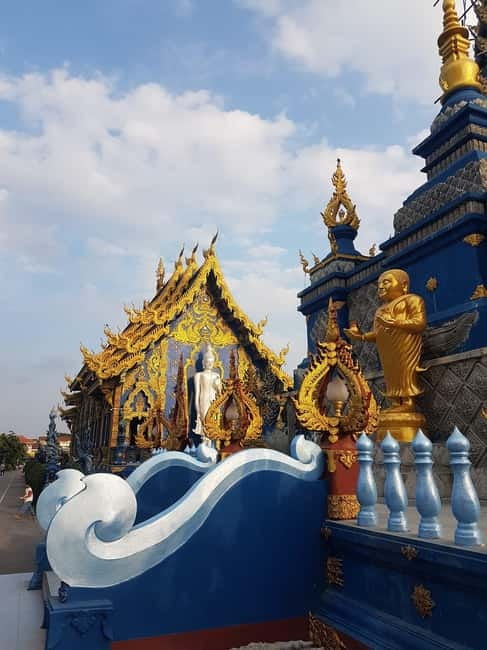
Then comes Wat Rong Suea Ten, and the visual mood shift is the point. The temple is celebrated for deep blue tones paired with intricate golden accents, giving you a completely different atmosphere from the White Temple.
You’ll walk through serene halls where the colors do most of the work. Keep an eye out for the Buddha statue—this is one of the most photo-friendly moments of the day because it’s central and detailed.
This stop tends to feel like a breather after the mirror-white intensity. Still, it’s not a long stay, so it helps to decide what you want most: wide-angle views of the architecture, close-up details of gold trim, or a slower look at the Buddha statue.
Quick photo etiquette tip: temples are sacred spaces. Aim for respectful framing, and keep your pace steady so you don’t block others.
Wat Huay Pla Kang: The 25-Story Guan Yin and the Top Views
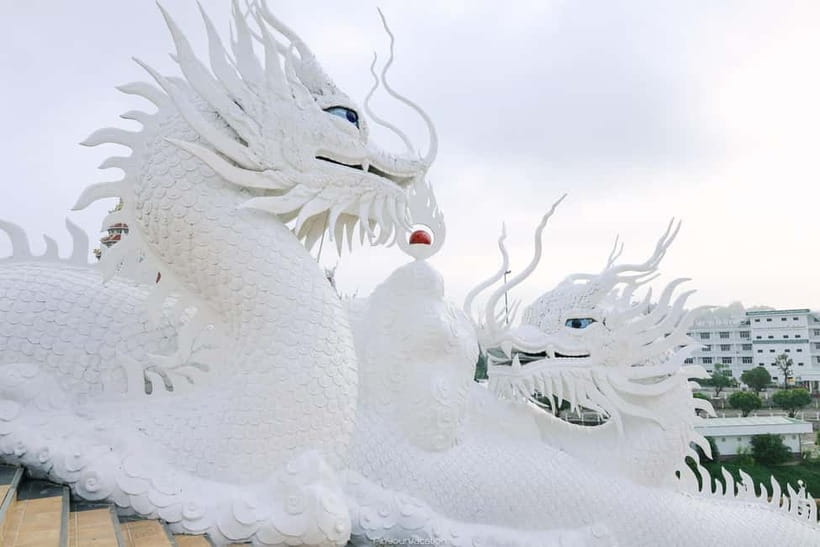
By the time you reach Wat Huay Pla Kang, the day is in full “wow” mode. This is home to a colossal Guan Yin statue—reported here as 25 stories tall—and it’s accessible enough that you don’t have to rely on a long climb alone.
One of the most useful details: there’s an elevator to the top for panoramic views of Chiang Rai’s surrounding areas. That turns what could be a purely strenuous climb into a mix of effort and reward.
You’ll also explore the temple’s nine-tiered pagoda and tranquil gardens. That combination is important because it gives you both scale (the huge statue) and quiet (gardens for a calmer pause).
A consideration for your body and comfort: the tour isn’t listed as suitable for people with back problems, and you should expect some walking and stairs. If you have mobility limits, you may feel the cumulative effort by this point in the itinerary.

Long-Neck Karen Village: Culture, Craft, and Respectful Photos
This is the cultural ending you’ll remember, whether you love it or just appreciate it. The Long-Neck Karen village is built around meeting members of the Karen tribe, learning about traditions, daily life, and craftsmanship, and supporting the community by purchasing handmade souvenirs.
The brass neck rings are the part most people recognize. But the deeper value is what you’re meant to take home: context for how people live and make things, not just the look.
One key rule: be respectful with photography. You should avoid intrusive pictures and always ask for permission before taking photos of individuals. This is one of those places where good manners aren’t optional—they’re part of the experience.
Not everyone is equally into this stop, and that’s okay. If you came for temples only, you might find it harder to “click” with the village portion. If you want a broader slice of northern Thailand beyond temples, this is the most human piece of the day.
Price and Value: Is $61 a Fair Deal?
At around $61 per person for a full day, the value comes from what’s bundled in. You’re getting air-conditioned van transport, an English-speaking guide, admission fees for all attractions, lunch, bottled water, and insurance.
If you tried to price this yourself, the costs add up fast: temple admissions, guide time, and a reliable vehicle for multiple distant stops. Here, the tour also saves you planning stress because the sequence is already organized and timed for a single-day push.
Where the value can feel different is time. When a day is packed, you can end up wanting more minutes in your favorite place. That’s not a deal-breaker, but it’s why the best match is someone who wants a highlight tour more than a slow cultural immersion.
Small group size helps the value. Limited to 12 participants, it’s easier for you to ask questions and keep your bearings without getting lost in a crowd.
Comfort, Timing, and How to Avoid a Rough Day
The tour rides in an air-conditioned van, which is a real quality-of-life upgrade in northern Thailand’s heat. The small group size also usually makes the van feel less chaotic, and it’s easier for the guide to manage the route.
Pacing is the main thing to watch. Some days can feel tight, especially if you want more historical context at each temple. A clear English guide is part of the package, but language skills can still vary day to day, so if you care about deeper explanations, ask questions early.
There’s also a practical timing reality: if the group runs late, it can affect the guide’s mood and the schedule. Build buffer into your own day energy, and try to be on time at each stop.
Finally, comfort can be hit-or-miss depending on seating and the ride back. If you’re picky about long drives, you’ll want to arrive expecting a full-day schedule and bring your own comfort habits.
Who This Tour Fits Best (And Who Should Skip It)
This tour fits best if you want a strong one-day overview of Chiang Rai’s most famous spiritual and cultural stops. It’s ideal for first-timers who like seeing major sights and getting quick context from a guide who can explain what you’re looking at.
It’s also a good choice if you like variety. Three temples are different in style and mood, and the final village stop adds a human, craft-focused dimension.
Skip it if you fall into any of the listed constraints: pregnant women, people with back problems, wheelchair users, or anyone over 220 lbs (100 kg). The temples involve walking and climbing stairs, and the day is structured around a fast pace.
If you’re sensitive to crowds, you still have a small group, but it’s still a full itinerary day—plan your expectations accordingly.
Should You Book This Chiang Rai One-Day Tour?
Book it if you want to see the White Temple, Blue Temple, and Wat Huay Pla Kang in one go, plus you’re open to a cultural village visit. The inclusion of admissions, lunch, and an English-speaking guide makes the price feel reasonable, especially for a short stay.
Don’t book it if you want lots of quiet time, long explanations, or a slow museum-style pace. The day is structured tightly, and the hot springs portion isn’t always the most scenic-looking environment, depending on what you hoped for.
If you can handle a full day on your feet and you’re excited by visual temples and big-view stops, this is a strong use of limited time in Chiang Rai.
FAQ
How long is the tour?
It’s listed as a 1-day experience.
What’s included in the price?
You get transportation in an air-conditioned van, an English-speaking guide, admission fees to all attractions, lunch, bottled water, and insurance.
Is lunch included?
Yes. Lunch is included as part of the tour.
What should I bring?
Wear comfortable shoes and bring a hat, camera, sunscreen, and water.
What’s the dress code for temple visits?
You need modest attire that covers your shoulders and knees.
Is this tour wheelchair-friendly?
No. It isn’t suitable for wheelchair users.
Are pets allowed?
No, pets are not allowed.
What’s the cancellation policy?
Free cancellation is available up to 24 hours in advance for a full refund.