REVIEW · CHIANG MAI
Chiang Mai: Elephant Sanctuary Feeding Program Half-Day Tour
Book on GetYourGuide →Operated by PON ELEPHANT (THAILAND) CO., LTD. · Bookable on GetYourGuide
Elephants, river water, and real respect. This half-day program at Pon Elephant Thailand gives you up-close feeding in a natural forest space, plus real-world lessons on elephant behavior.
I love that it’s built around calm, gentle interactions—no tricks, no riding, and no forcing. Guides you might hear from (like Pat, Tuto, Toto, Pan, and Oom) focus on how to act around elephants so both people and elephants stay safe.
My second favorite part is the education that turns a photo-op into understanding. You’ll learn about Asian elephants and even help prepare herbal treats, then watch how the herd moves through their day. The tour also includes time at the river for swimming and bathing, with activities flexible because elephants choose what they do.
One consideration: plan for some walking between activity spots, including a bridge, and be ready for the river portion to change at short notice.
In This Review
- Key things I’d factor in first
- Entering the sanctuary mindset: ethical interaction that matters
- The drive south of Mae Wang: why the route is part of the experience
- Pon Elephant Thailand: getting briefed and learning how to behave
- Nature walk with rangers: slow down and watch how they move
- Feeding time: Napier grass, sugarcane, and bananas up close
- Herbal treats: learning the why, not just the what
- The river stop: swimming and bathing when elephants choose
- The “stations” format: multiple MC-led segments keeps it moving
- What to wear and bring so the day feels easy
- Price and value: $27 for a half-day that actually teaches
- Who this tour suits best (and who should think twice)
- Practical rules that keep things safe and respectful
- Should you book Pon Elephant Chiang Mai half-day?
- FAQ
- How long is the Chiang Mai elephant sanctuary feeding tour?
- Is hotel pickup and drop-off included?
- What language is the tour guide?
- What food do you feed the elephants?
- Does the tour include river bathing and swimming?
- What should I bring for the day?
- What is not included?
- Are there any items or activities not allowed?
- Is the tour suitable for people with mobility issues?
- What’s the cancellation policy?
Key things I’d factor in first
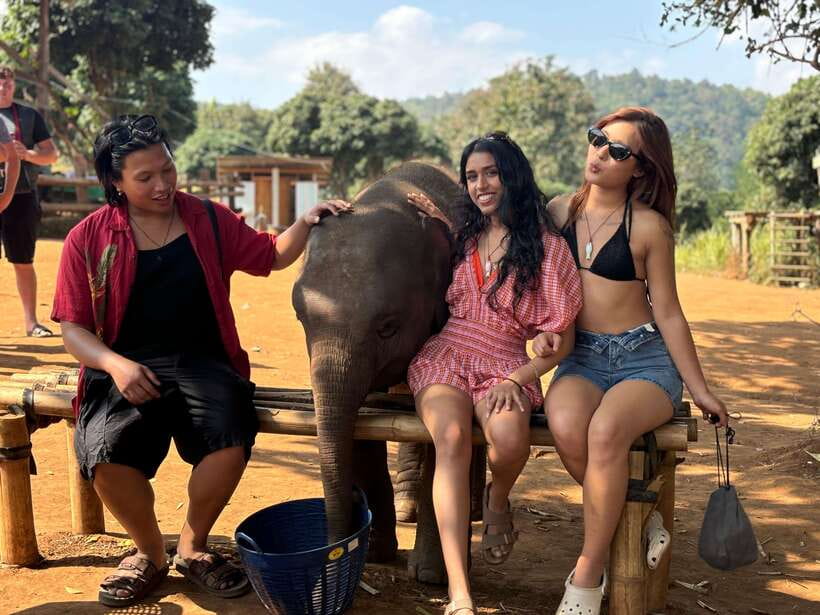
- Up-close, structured feeding with safe guidance on how to behave near elephants
- Herbal treat prep plus a practical briefing on elephant habits and behavior
- River time that’s elephant-led (they decide whether to bathe)
- Multi-stop flow across different “stations,” usually with MC-style guidance rather than one single lecturer
- Small-group feel in many cases, which helps the day feel calm instead of chaotic
Entering the sanctuary mindset: ethical interaction that matters

This tour wins because it doesn’t treat elephants like a carnival attraction. The whole point is peaceful coexistence—watching and feeding in a way that fits the elephants’ routine. Your job is simple: follow the rules, stay calm, and let the elephants lead.
A key detail is that the program says activities are based on elephants who are not forced to do anything. That matters for your expectations. You’re not paying for guaranteed theatrics. You’re paying for access to a well-run environment and the chance to observe how elephants live when they’re not chained, pressured, or performing.
And yes, you’ll get photos. But the best moments aren’t the posed ones. They’re the quiet second-long pauses when an elephant steps closer, sniffs curiously, then goes back to their own business.
You can also read our reviews of more tours and experiences in Chiang Mai



The drive south of Mae Wang: why the route is part of the experience
You’ll head about 1.5 hours south of Mae Wang, traveling through hills, forests, and local farms. For many people, this is half the fun because it breaks Chiang Mai’s city rhythm and reminds you this is still Thailand’s countryside.
If you choose hotel pickup, be ready in the lobby 5–10 minutes early. The driver waits up to 5 minutes after the scheduled pickup time. That sounds strict, but it keeps the schedule smooth for the group and reduces the usual late-day stress.
On the way, you’ll likely get briefing-style context from the team, which helps you arrive understanding what you’re about to see—especially important with animals that respond to body language.
Pon Elephant Thailand: getting briefed and learning how to behave
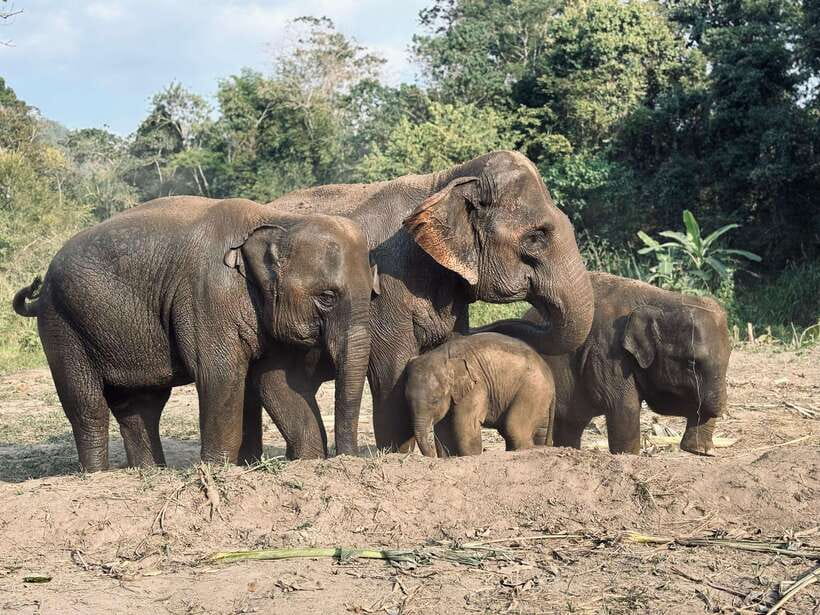
When you arrive at Pon Elephant Thailand, you’ll meet the team and get a briefing on habitat, history, habits, and behavior. This is where the tour earns trust. You’re not dropped into the interaction zone without guidance.
You’ll also learn practical “how to act” basics. The program emphasizes safe coexistence—so you’ll be told what behavior is okay and what to avoid. That’s not just safety theater; it directly affects how comfortable the elephants seem around people.
In many programs, elephant interaction is vague and chaotic. Here, you get a plan: where you’ll stand, what you’ll do, and how your actions fit into the day.
Nature walk with rangers: slow down and watch how they move
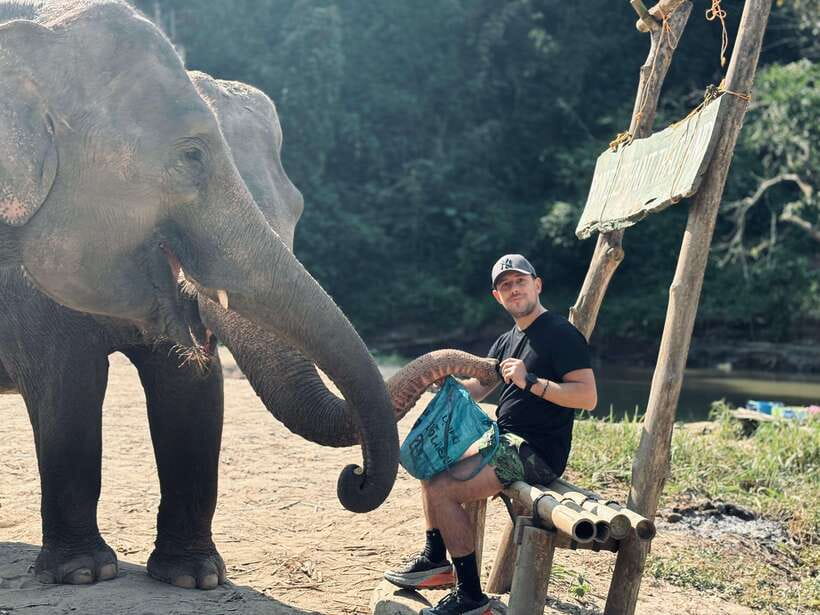
After the briefing, you’ll go for a nature walk with knowledgeable rangers. This is a good reset. Instead of rushing straight to feeding, you start with observation—trees, paths, and the rhythms of the forest.
Expect the walk to be part of the experience rather than a quick shortcut. Some walking is involved between the different activity spots. One reason people love this tour is that it doesn’t feel like you’re herded constantly; the pace is designed to keep things calm.
If you’re sensitive to uneven ground, plan accordingly. The tour isn’t described as a full hike, but you should treat it as a “comfortable walking day,” not a stroll.
Feeding time: Napier grass, sugarcane, and bananas up close
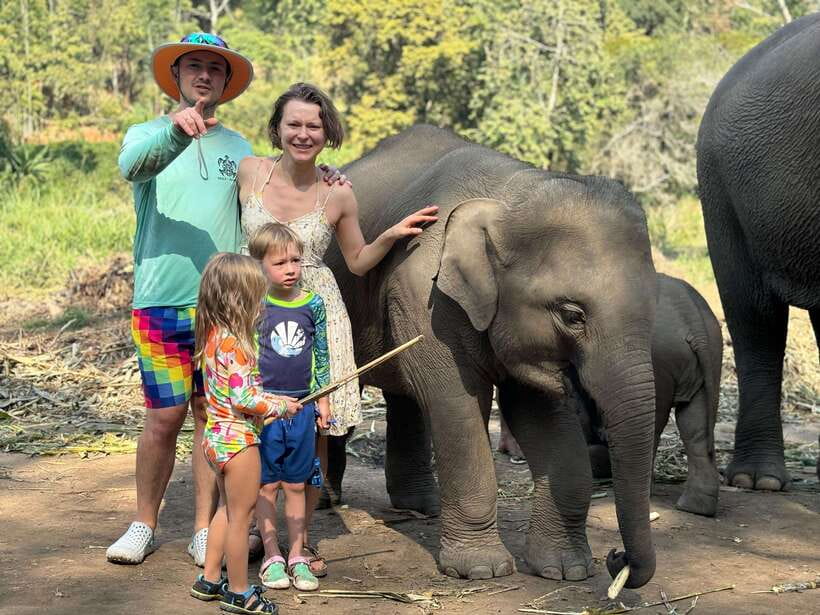
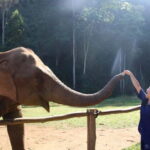
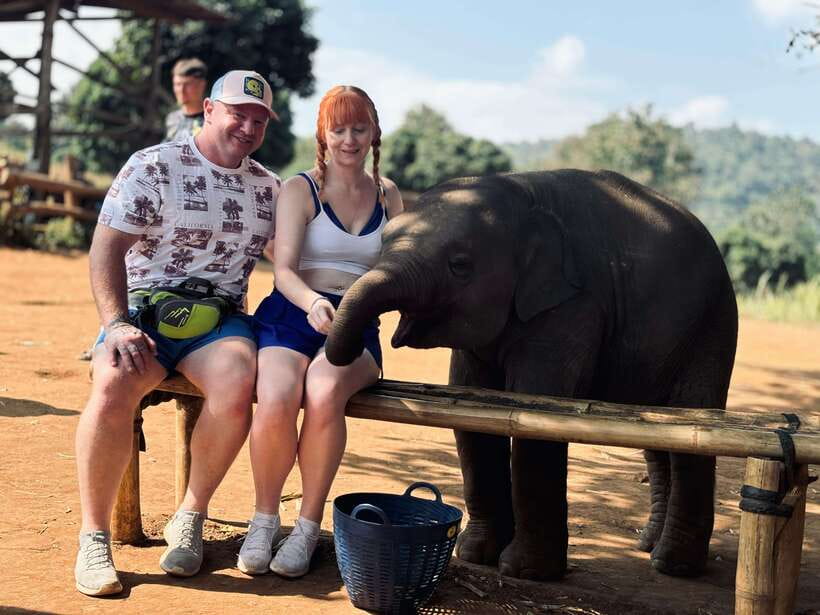
Here’s the core experience: you’ll feed the elephants Napier grass, sugarcane, and bananas in a safe setup. Fruit for the elephants is also included, and the tour provides drinking water, which is a small but welcome convenience.
Feeding feels special because it’s tactile and immediate. You can see how the elephants focus, how they take food, and how they adjust their behavior around you. When it’s done right, it looks like cooperation instead of performance.
Just remember: you’re not feeding random animals on your own. Follow the guide’s directions. If you stick to the routine they set, you’ll get the best blend of closeness and calm.



Herbal treats: learning the why, not just the what
One of the more memorable parts is learning how to prepare herbal treats for the elephants. This turns feeding from a simple act into an education moment—how caretakers think about diet, comfort, and health.
You’ll also get context on Asian elephants: where they came from, how they’re kept, and what their habits look like in a sanctuary environment. When you know what you’re seeing, your photos come out better too, because you anticipate moments instead of just reacting.
In the better-run sanctuaries, staff talk about elephants as individuals. The tour experience here follows that spirit, with guides explaining elephant personalities and day-to-day behavior.
The river stop: swimming and bathing when elephants choose
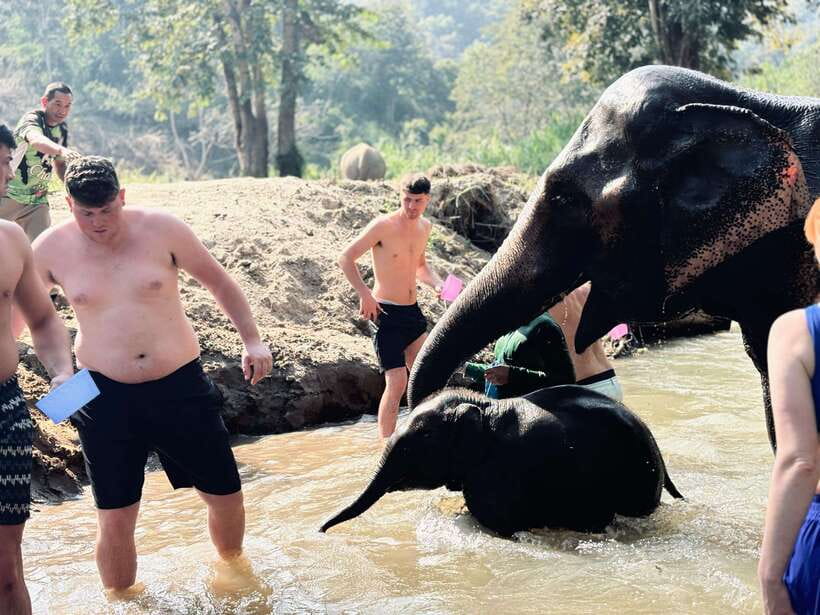
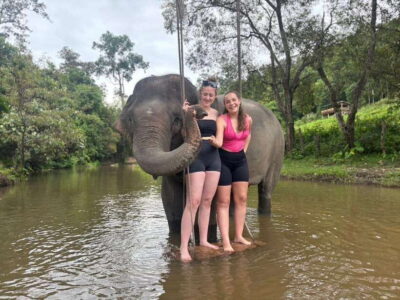
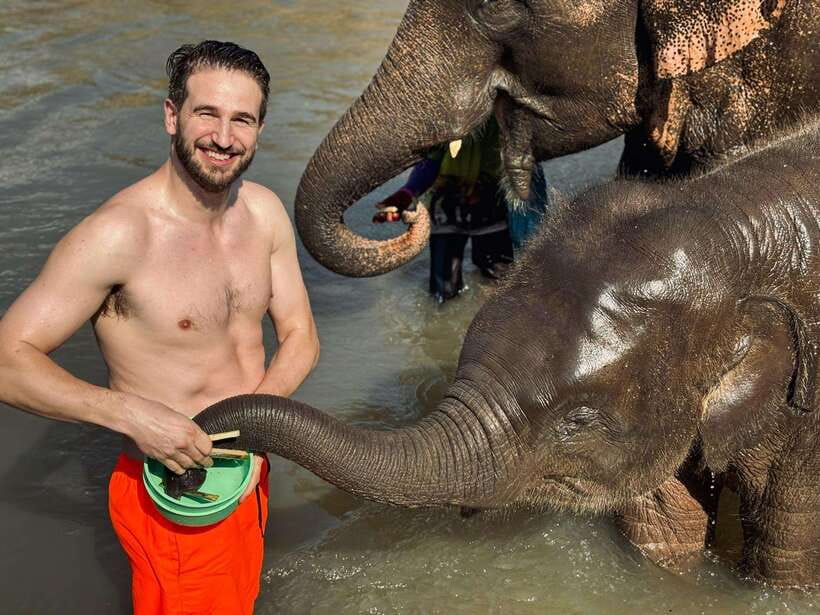
The tour includes taking the elephants to the river, with swimming and bathing with large elephants and their family group. This is the part people remember years later.
The important catch: the elephants choose to bathe. The program explicitly notes they do not force them, so some activities may change at short notice. That’s a different philosophy than the usual tourist setup. It can mean you plan for a big water moment—and then nature picks a different timing.
Still, the atmosphere at the river is usually the highlight. Many people end up getting soaked, and the day can include a water-fight-style moment that elephants seem to enjoy. Bring the right clothing so you’re not miserable if water is involved.
And if the elephants don’t bathe as expected, you’re still likely to have a powerful observation session. It’s a reminder that the interaction is a privilege, not a guarantee.
The “stations” format: multiple MC-led segments keeps it moving
This tour runs across multiple stations rather than a single continuous lecture. In feedback from real participants, some people noticed there isn’t a single tour guide in the classic sense; instead, each station has an MC-style host who keeps things fun and informative.
That format works well for two reasons. First, you don’t lose attention in one long block. Second, you get reminders of rules and objectives as you move between activity spots.
You might also cross a wobbly bridge on the way to one area. The good news: it’s described as part of the adventure and treated as safe. The practical advice: go slow, hold steady, and wear shoes you trust on uneven footing.
What to wear and bring so the day feels easy
You don’t need a backpack full of gear. You do need the right basics, because the day mixes forest walking with water time.
Bring:
- Change of clothes and beachwear (water happens)
- Comfortable clothes that can get dirty
- Camera and a charged smartphone
- Biodegradable sunscreen and insect repellent
- A towel is not included, so plan for that
- Cash (optional but helpful)
- Passport or a copy accepted
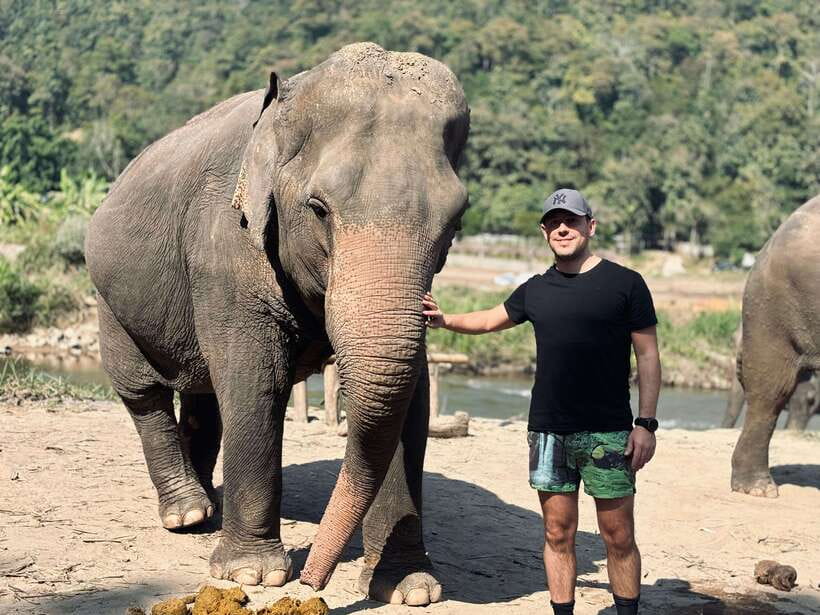
If you’re thinking about photos, wear something that won’t stick awkwardly when wet. For many people, the river moments create the best shots, so you’ll want to move through water without worrying about wardrobe mishaps.
Price and value: $27 for a half-day that actually teaches
At about $27 per person for roughly 5 hours (330 minutes), this tour looks affordable on paper—and it holds up when you match it to what you get.
You’re paying for:
- Hotel pickup/drop-off if you select it
- An English-speaking guide (English/Thai live guidance)
- Insurance included
- Fruit and drinking water
- Structured access to a sanctuary environment with feeding and education
The value gets even better because so much of the day is about behavior, habitat, and respectful interaction—not just “stand here, feed, leave.” The herbal treat prep and the briefing on elephant habits are the kind of add-ons that cost extra in many other experiences.
Also, transport quality gets a strong mention in ratings (with many reviewers scoring it perfectly). A comfortable transfer reduces friction, and that matters when you’re going out for a single half-day window.
Who this tour suits best (and who should think twice)
This is a great fit if you want a calm, ethical elephant experience in a forest setting. It also suits families well—feedback includes people traveling with very young children, with staff support that lets adults focus on the elephants without constant stress.
You might love it if:
- You care about ethical handling and clear rules (no riding)
- You enjoy learning about animals, not only watching them
- You want a “half-day that doesn’t feel rushed” even with multiple stops
Think twice or check with your doctor first if you have back problems, mobility impairments, wheelchair use, epilepsy, recent surgeries, low fitness, insect allergies, or animal allergies. The day involves walking and close contact in a way that may not work for everyone.
Practical rules that keep things safe and respectful
A few rules are clearly stated for a reason. Follow them closely:
- No riding the animals
- No intoxication or drugs
- No littering
- No weapons or sharp objects
- No fishing, making fire, fireworks, or similar activities
- No party groups
Also, the rules say feeding animals isn’t allowed. In practice, this means you should stick to what the program assigns—don’t improvise with other foods or snacks.
If you want the best day, treat the elephants like you’d treat someone else’s home. Quiet voice. Calm body. Follow the guide’s instructions.
Should you book Pon Elephant Chiang Mai half-day?
I’d book it if you want an elephant experience that focuses on ethical interaction, education, and a real chance to observe elephants behaving like elephants. The format—briefing, station-based activities, feeding, and river time—fits a short itinerary without turning it into a rushed checklist.
I wouldn’t book it if you’re looking for guaranteed “water every time” thrills or if walking and uneven ground would be a problem. The river portion depends on the elephants’ choice, and you should plan for some movement between stations.
If your travel style is respectful, curious, and flexible, this half-day is a strong value—and a genuinely memorable Chiang Mai morning.
FAQ
How long is the Chiang Mai elephant sanctuary feeding tour?
The tour runs about 5 hours (330 minutes).
Is hotel pickup and drop-off included?
Hotel pickup and drop-off are included if you select the pickup option.
What language is the tour guide?
The live tour guide offers English and Thai.
What food do you feed the elephants?
You’ll feed Napier grass, sugarcane, and bananas. Fruit for elephants is also included.
Does the tour include river bathing and swimming?
Yes, the tour includes taking the elephants to the river for swimming and bathing. The elephants choose whether they bathe, so activities may change at short notice.
What should I bring for the day?
Bring a change of clothes, a towel is not included, comfortable clothes, beachwear, a camera, biodegradable sunscreen, biodegradable insect repellent, cash, and a charged smartphone.
What is not included?
Towel and a change of clothes are not included.
Are there any items or activities not allowed?
Yes. The rules include no riding, no weapons or sharp objects, no alcohol and drugs, no littering, no fishing, and no weapons/fireworks/explosives. Party groups and making fire are also not allowed.
Is the tour suitable for people with mobility issues?
It’s not suitable for people with mobility impairments or wheelchair users, and it also isn’t suitable for people with low fitness or back problems.
What’s the cancellation policy?
Free cancellation is available up to 24 hours in advance for a full refund.