REVIEW · CHIANG MAI
Chiang Mai: Authentic Thai Cooking Class and Farm Visit
Book on GetYourGuide →Operated by Grandma's Home Cooking School · Bookable on GetYourGuide
Cooking in Chiang Mai feels personal. You get market shopping plus an organic farm stop, where you pick vegetables and collect eggs that end up on your plate. It’s a hands-on way to understand why Thai food tastes the way it does, not just follow a recipe.
I also love the small-group feel: you cook at your own individual station with an English-speaking instructor, including making curry paste from scratch. One heads-up: the day is nicely packed and the food is filling, so wear comfortable shoes and plan for a full stomach afterward.
In This Review
- Key highlights to look for
- From Hotel Pickup to Lanna Pavillions Cooking Stations
- The Market Visit That Actually Explains the Flavors
- Organic Farm Tour: Herbs, Veggies, Eggs, and Chicken Time
- How the Cooking Class Works at Your Own Station
- What You’ll Cook: Tom Yum Koong, Pad Thai, Curry, and More
- Full-Day Upgrade: Coconut Milk With a Coconut Grater
- Eating Together: Sharing Plates and Sampling Results
- Price and Value: What $33 Really Buys You
- Who Should Book This Cooking Class in Chiang Mai
- Should You Book Grandma’s Home Cooking School?
- FAQ
- How long is the Chiang Mai cooking class and farm visit?
- What’s the difference between half-day and full-day?
- What dishes can I expect to cook?
- Do I really make curry paste?
- Is coconut milk included?
- Do I visit both a market and an organic farm?
- How big is the group?
- Are vegetarian or halal options available?
- What should I bring, and what should I avoid?
- Is this tour only for non-Thai residents?
Key highlights to look for
- Organic farm tour with egg collecting you can actually use in your dishes
- Small group size (up to 10) so you’re not stuck watching from the side
- Hands-on curry paste making with clear guidance from your instructor
- Local market visit where you learn the ingredients behind the flavors
- Full-day coconut milk with a coconut grater for curry or mango sticky rice
- Meal at the end with group sampling so you can compare your results
From Hotel Pickup to Lanna Pavillions Cooking Stations
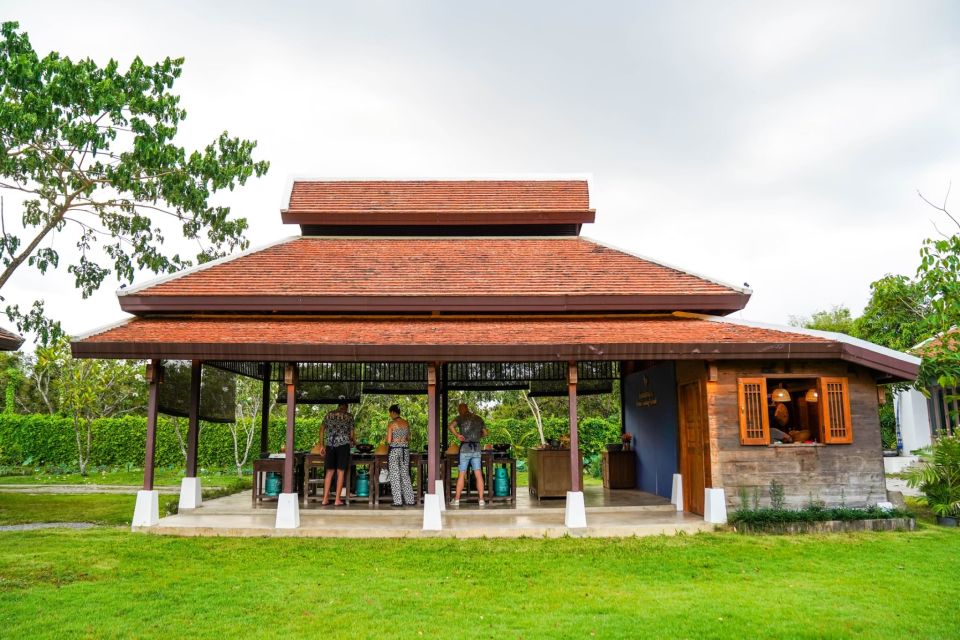
This experience is built like a day in three chapters: meet up, learn ingredients, then cook with your hands. You’ll start with hotel pickup and drop-off (within about 10 km of Chiang Mai city center). Morning sessions tend to start around 8:30–9:00 AM, and afternoon sessions around 11:30 AM–12:00 PM, with the exact pickup time arranged for your session.
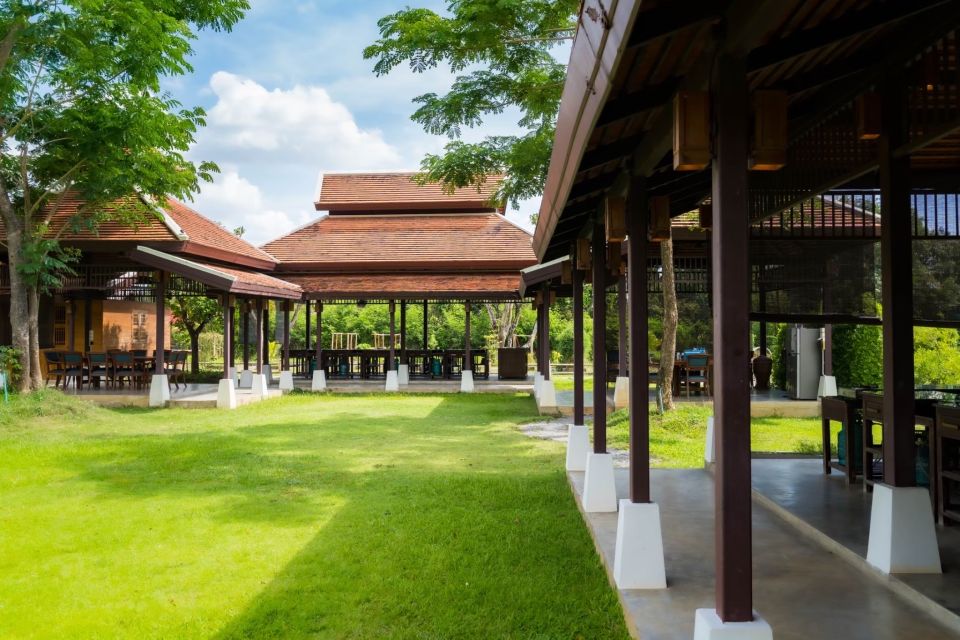
Once you’re gathered, you’ll get a welcome drink and head into the cooking setup at the school’s Lanna Pavillions. The group stays small, capped at 10 people, which matters more than it sounds. In bigger classes, one instructor can only give so much attention. Here, you’re more likely to get the kind of corrections that turn “I made something Thai-ish” into “I can reproduce this at home.”
You also choose from a menu ahead of time. For a half-day class, you cook three or four dishes. For a full-day class, you add two extra courses. The most practical part is that you’re not trying to cram every Thai dish on Earth. You cook a focused set, so the techniques (and flavors) actually stick.
And yes, you’ll leave with tools to repeat it later: an e-recipe book is included, so you’re not relying on memory.
You can also read our reviews of more cooking classes in Chiang Mai
The Market Visit That Actually Explains the Flavors
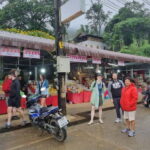
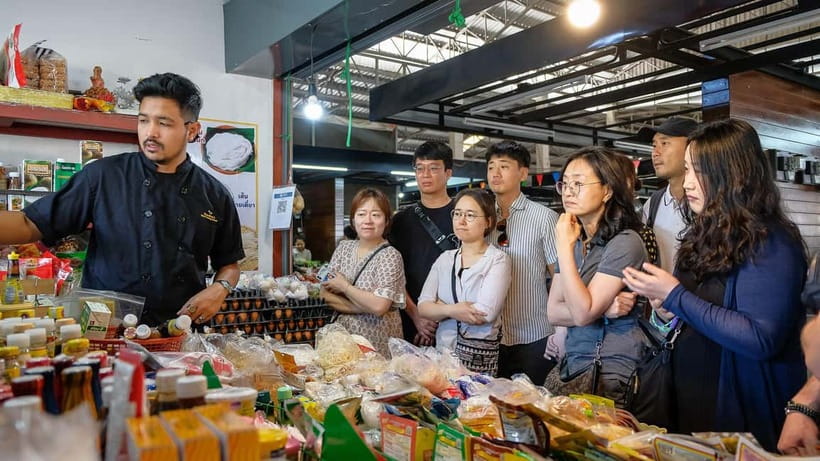
The market stop isn’t just a photo break. You’re learning how Thai ingredients work together—what to look for and why certain items show up again and again.
You’ll travel with a guide who talks you through the important ingredients for the dishes you’ve chosen. Then you get some time to roam the market and buy what you need. That time is valuable because it changes the way you cook later. Instead of treating ingredients as mysterious “Thai things,” you learn what they look like, what they’re used for, and how they connect to your dish.
In practice, this is the difference between following a recipe and understanding a flavor system. When you later make Tom Yum Koong or curry, you’ll know what’s doing the heavy lifting—aromatics, herbs, and the balance that gives Thai food its punch.
If you want vegetarian or halal options, those are available, so you can keep the class aligned with your dietary needs instead of forcing substitutions.
Organic Farm Tour: Herbs, Veggies, Eggs, and Chicken Time
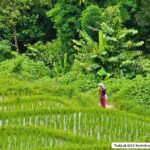
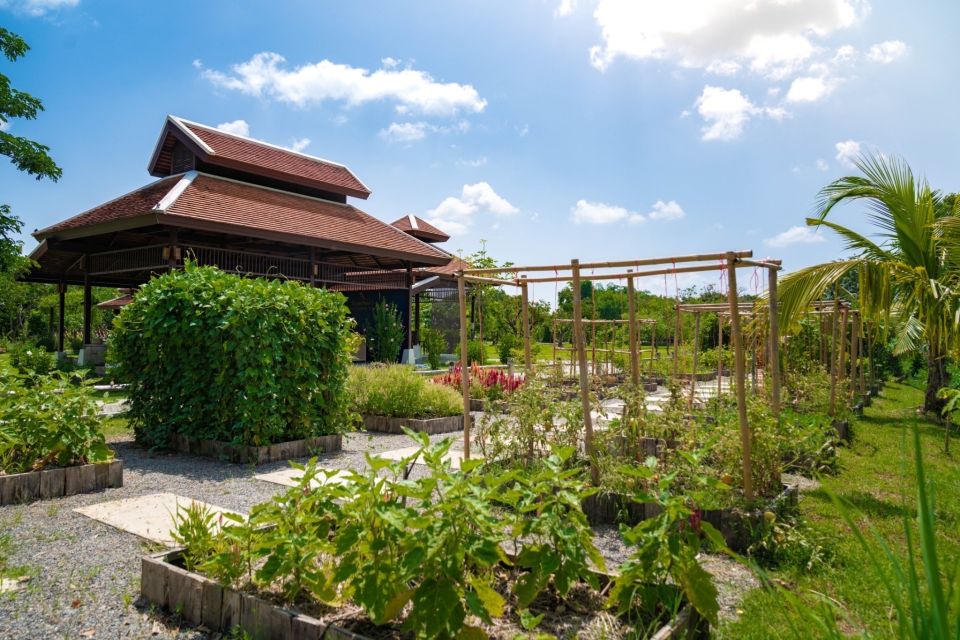
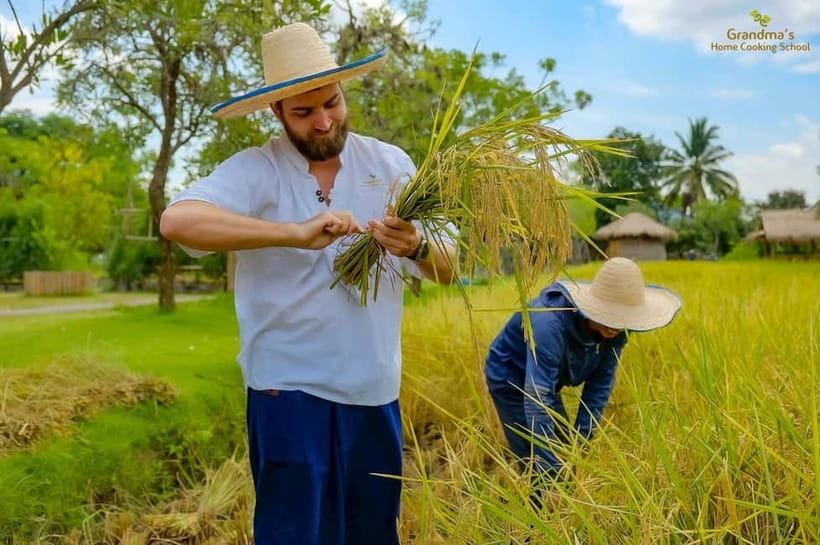
The farm visit is the memorable, sensory part of the day. You’ll walk through an organic farm where you get to learn about Thai herbs and vegetables as they’re actually growing—not just what they’re called.
You’ll be encouraged to pick fresh vegetables and you’ll also collect eggs for your dishes. There’s something satisfying about that loop: ingredient goes from plant to basket to kitchen. It also makes the classroom feel less like a demo and more like a continuation of the farm tour.
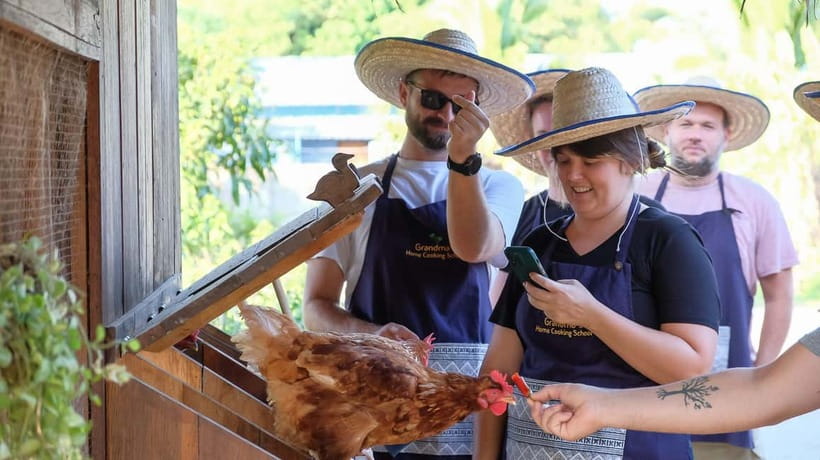
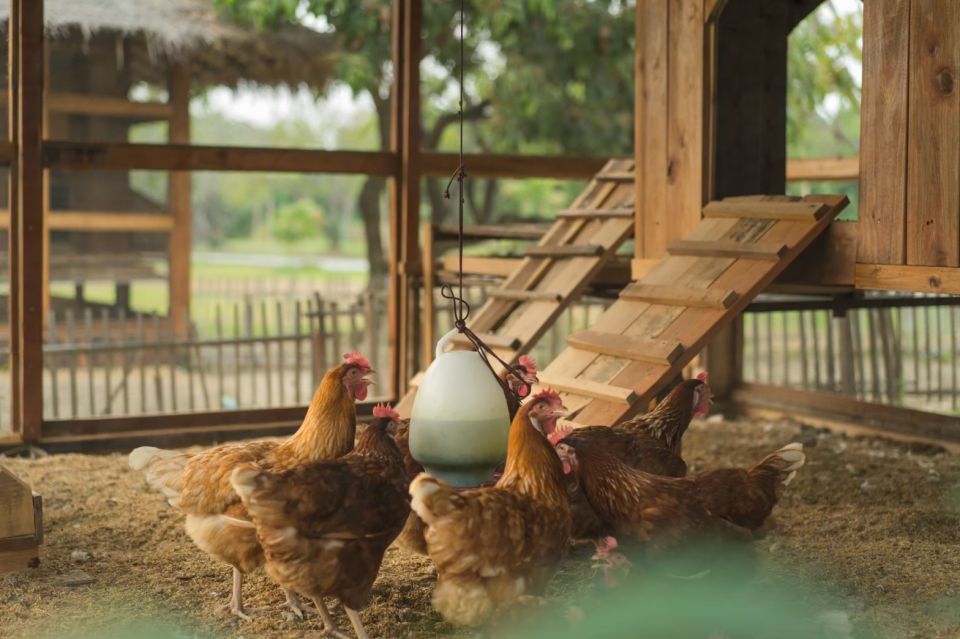
You may also experience farm activities like feeding the chickens. Some people even mention getting the chance to hold a chicken, which adds a fun, small-adventure feeling to the day. If you’re coming with kids or you just like interactive experiences, this is a strong reason to book.
Practical tip: plan to walk on farm paths. Comfortable shoes are more important than you’d think for a cooking class day.
How the Cooking Class Works at Your Own Station
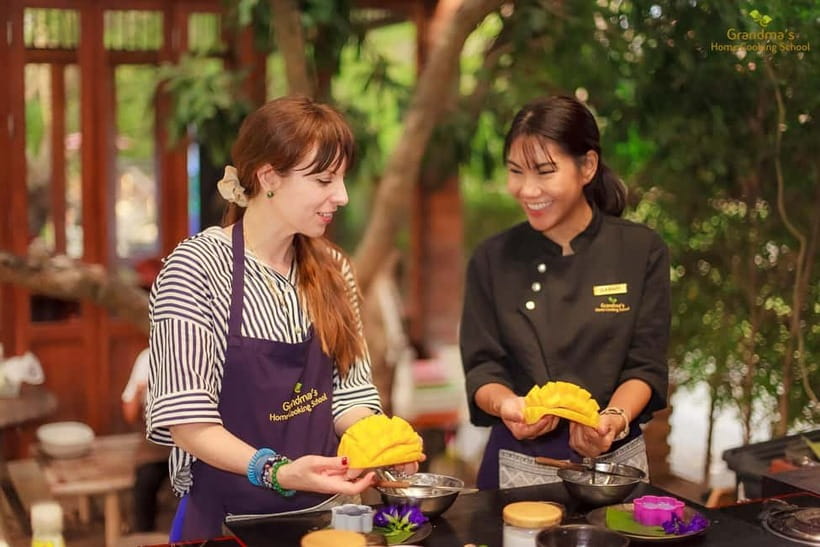
Once you’re back from the farm, it’s cooking time in earnest. A big reason this class gets such strong feedback is the individual cooking stations. Everyone cooks, everyone has a place, and you’re not stuck “helping” by watching over someone else’s shoulder.
An English-speaking instructor leads the process step by step. In the sessions mentioned, instructors like Garnet, Toon, Tay, Jimmie, Kiki, Joy, and Le Vin are named, and the common thread is that they teach with energy while still keeping the pace manageable.
Here’s what you should expect in the teaching style:
- You’ll get a demo-style explanation first, then you cook.
- You’ll be guided while you’re actually doing the cutting, mixing, and tasting.
- You’re encouraged to ask questions, especially if your flavors feel “off.”
The signature teaching moment is making curry paste with help from your instructor. This is one of those skills that seems intimidating until you do it. Once you’ve made it yourself, curry stops being a sauce you buy and becomes a process you can repeat.
Also, several people mention cooking in air-conditioned rooms as a comfort perk. If you’re worried about heat, it’s good to know the kitchen setup can be comfortable.
What You’ll Cook: Tom Yum Koong, Pad Thai, Curry, and More
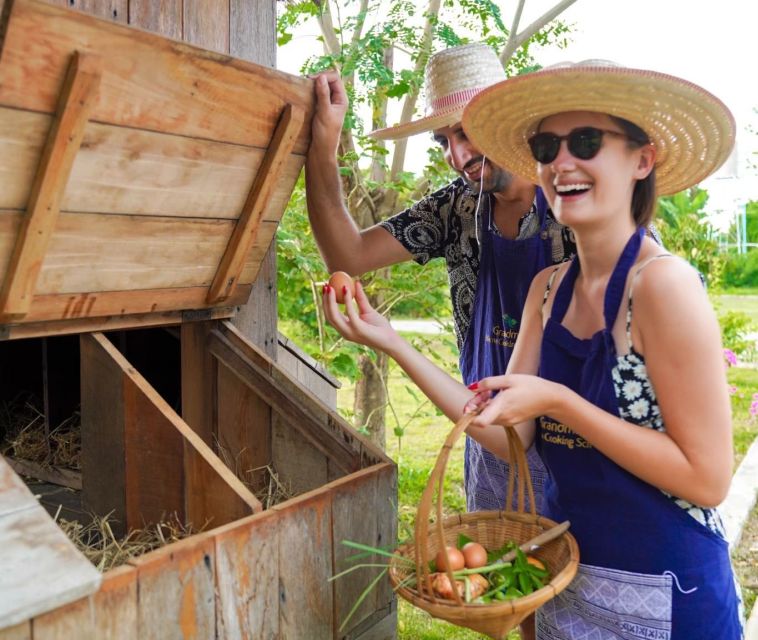
The menu choices vary by session, but the class is built around classic Thai dishes with a few signature highlights.
From the information provided, you can expect instruction for dishes like:
- Tom Yum Koong (spicy Thai soup with shrimp)
- Pad Thai
- Pad Kra Prao (Thai basil stir-fry)
- Curry (multiple options, depending on what’s available in your menu)
One specific menu setup described includes choosing:
- a soup (two options),
- Pad Thai (one option),
- and a curry (with several curry choices),
followed by mango sticky rice at the end.
That ending matters because it connects the savory dishes to a classic Thai dessert. Even if you’re not a dessert person, you’ll usually end up grateful you tried it, because it gives a complete meal arc.
Two more things to keep your expectations realistic:
- You’re cooking multiple dishes within a set time, so it moves.
- You’ll eat what you make. Portions are described as surprisingly filling, so you’ll want to go in with an appetite.
If you get to taste each dish and compare results within your group, it also helps you learn what you personally prefer (more lime, more chili, different herb levels). Thai cooking is about balance, and this class nudges you toward that mindset quickly.
You can also read our reviews of more tours and experiences in Chiang Mai
Full-Day Upgrade: Coconut Milk With a Coconut Grater
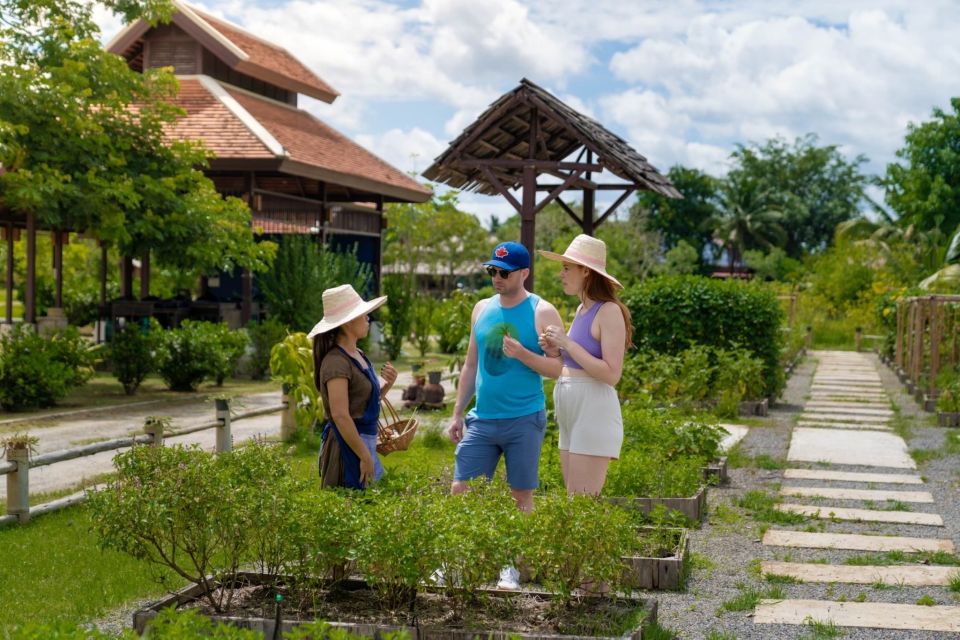
If you choose the full-day class, the highlight is traditional coconut milk making. You’ll use a coconut grater to create coconut milk for your curry and possibly mango sticky rice, depending on what your class includes.
This matters for more than novelty. Coconut milk isn’t just an ingredient; it’s part of how curry feels in your mouth and how flavors mellow or deepen. When you make it yourself, you understand the ingredient as a process. You also get a better sense for texture and how it affects the final dish.
The full-day format also gives you two extra courses beyond the half-day set. So if you’re the type who wants more cooking time, more chances to taste, and a deeper run through Thai flavors, full day is the logical pick.
If you’re short on time, though, the half-day class can still be a great introduction. You’ll cook a focused set of dishes and come away with techniques you can actually repeat.
Eating Together: Sharing Plates and Sampling Results
This class ends with a group meal. You’ll enjoy what you cooked, and there’s time to share and sample dishes from others in your group. That social part isn’t just for fun. It’s how you learn faster.
When you taste someone else’s version of the same dish, you pick up patterns like:
- what balance feels right to you,
- how fresh herbs change aroma,
- and how curry paste differences show up in the final sauce.
Some people also mention that there can be enough food to take leftovers home if you ask for containers. That’s helpful because the portion size can catch you off guard if you expected a light lunch.
Price and Value: What $33 Really Buys You
At around $33 per person, this class is priced like a smart “experience bundle,” not just a cooking lesson. The value comes from what’s included together:
- Pickup and drop-off within the Chiang Mai city limit area
- Market visit to learn and buy ingredients
- Organic farm visit including egg collecting and farm walking
- English-speaking instructor at the cooking stations
- Small group size capped at 10
- Welcome drink and an e-recipe book
If you tried to piece this together yourself—market tour, farm entry, cooking class, instructor—you’d likely spend more for less coordination. Here, the day is organized as one flow, so you don’t lose time switching between activities.
One trade-off to factor in: your time is scheduled tightly. You’re not wandering Chiang Mai freely. You’re doing this one well-run experience, and you’re meant to leave with recipes, skills, and ingredients you now understand.
Who Should Book This Cooking Class in Chiang Mai
This is a great fit if you:
- want hands-on Thai cooking instead of passive tasting,
- like the idea of a farm-to-plate experience (eggs and vegetables you picked),
- appreciate a class with small group attention,
- and want either a half-day introduction or a full-day deepening with coconut milk.
It’s also a strong choice for non-Thai residents, because this tour is applicable for non-Thai residents only. If you’re a visitor on that basis, you’re in the right category.
You might want to skip or reconsider if:
- you hate walking on uneven farm paths,
- you’re sensitive to heat and sun (you’ll need a hat),
- or you’re trying to keep meals light for the day. This class tends to deliver plenty.
Pets aren’t allowed, so plan around that if you’re traveling with animals.
Should You Book Grandma’s Home Cooking School?
I’d book this if you want a cooking class that teaches you more than recipes. The market visit plus farm tour gives context, and the small-group cooking setup helps you practice what you learn instead of just observing.
To make it go smoothly, do three things:
- Bring comfortable shoes and a sun hat.
- Come ready to eat. The food output is part of the experience.
- If you have dietary needs, choose vegetarian or halal options in advance.
Choose half-day if you want three to four dishes and a faster schedule. Choose full-day if you specifically want to make coconut milk with the coconut grater and cook two extra courses.
If you’re hoping to learn Thai cooking in a practical way, this is the kind of day where you leave with skills you can use, not just photos.
FAQ
How long is the Chiang Mai cooking class and farm visit?
It runs 4 to 6 hours, depending on the session you choose. Starting times vary, so you’ll want to check available options.
What’s the difference between half-day and full-day?
The half-day class has you cook three or four dishes. The full-day option adds two extra courses.
What dishes can I expect to cook?
The class includes popular Thai dishes such as Tom Yum Koong, Pad Thai, Pad Kra Prao, and curry. Your exact selections depend on the menu available for your session.
Do I really make curry paste?
Yes. You’ll create your own curry paste with guidance from your English-speaking instructor.
Is coconut milk included?
Coconut milk making using a coconut grater is part of the full-day class, where you use it for your curry and/or mango sticky rice.
Do I visit both a market and an organic farm?
Yes. You’ll visit a local market to learn about and buy ingredients, then go to an organic farm where you pick vegetables and collect eggs.
How big is the group?
The experience is a small group limited to 10 participants.
Are vegetarian or halal options available?
Yes. The class offers vegetarian and halal options.
What should I bring, and what should I avoid?
Bring comfortable shoes and a sun hat. Pets are not allowed.
Is this tour only for non-Thai residents?
Yes, it’s applicable for non-Thai residents only.