REVIEW · CHIANG MAI
Chiang Mai: Morning Cooking Class with Market Visit
Book on GetYourGuide →Operated by Galangal Cooking Studio · Bookable on GetYourGuide
Chiang Mai smells good before you even cook. This morning class pairs a real local market stop with an organic herb-and-vegetable garden, then turns that shopping into hands-on Thai dishes. I like how the day feels practical, not just show-and-tell, and you get to leave with recipes you can use later.
I especially like the English-speaking instruction led by New (sometimes written as Nu) and the calm way the class teaches core Thai flavor skills. I also love the choice built into the menu, from a starter like Som Tam or spring rolls to curry types like green, red, Massaman, or Panang.
One thing to consider: timing and pickup coverage can be strict. The driver waits no longer than 5 minutes after the scheduled pickup time, and some areas outside the pickup zone require you to make your own way.
In This Review
- Key things I’d underline before you book
- Why a Chiang Mai morning starts with ingredient shopping
- Hotel pickup and getting there on time (the one logistics piece that matters)
- Market walk: learning Thai flavor from what you can actually find
- Organic garden and herb picking: where the taste lesson gets real
- Inside Galangal Cooking Studio: how the lesson stays doable
- Appetizer, soup, stir-fry, curry paste, then dessert
- Starter choices (pick one)
- Main stir-fry options (pick one)
- Soup options (pick one)
- Curry paste and curry options (pick your curry style)
- Dessert options (choose one)
- What the PDF recipe book is actually good for
- Price and value: why $41 can feel like a deal
- Dietary needs and who this class really suits
- Final call: should you book this Chiang Mai morning cooking class?
- FAQ
- How long is the Chiang Mai morning cooking class?
- What is included in the price?
- Do I have to pay extra visitor fees?
- What time does pickup happen?
- What dishes will I cook?
- Can the class accommodate vegan, halal, or gluten-free diets?
- Can I skip the hotel transfer?
- Where is pickup offered in Chiang Mai?
- What should I bring, and what is not allowed?
Key things I’d underline before you book
- A morning market + organic garden combo so your ingredients aren’t random
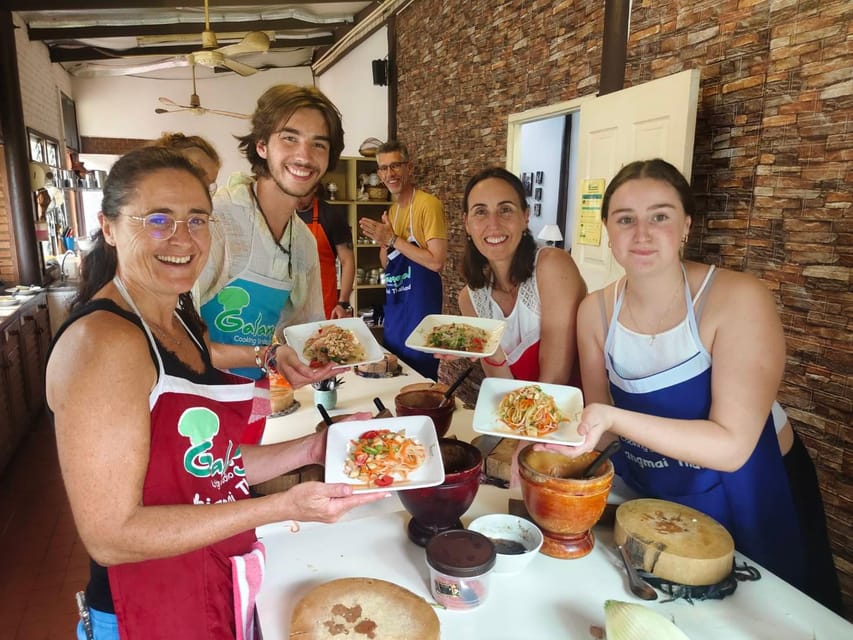
- Pick your dishes: starter, soup, stir-fry, curry paste, and dessert
- New/Nu teaches in clear English, with step-by-step guidance
- Six dishes plus dessert gives you real variety for the money
- PDF recipe book so you can cook again at home
- Dietary options available (vegan, vegetarian, halal, gluten-free, and allergies)
Why a Chiang Mai morning starts with ingredient shopping
This isn’t one of those classes where the food begins only after you arrive at the studio. Your morning starts with the fun part: walking through a local market and learning how Thai cooks actually build flavor. You’ll smell and see ingredients as they’re sold—so you understand what fresh herbs, aromatics, and sauces taste like before they hit the pan.
The market stop matters because Thai cuisine is ingredient-driven. When you learn which herbs you’re using and what they do, you don’t just memorize recipes. You start thinking like a cook: fragrant, sour, salty, spicy, sweet—balanced on purpose.
Then you get that second “aha” moment at the organic garden, where you can pick your own herbs and vegetables. It’s not only about being “green.” It teaches where flavors come from and why herbs in Thailand often taste brighter than what you might find at home.
You can also read our reviews of more shopping tours in Chiang Mai

Hotel pickup and getting there on time (the one logistics piece that matters)
The class includes hotel pickup and drop-off, with pickup offered for hotels in the old city area plus Santitham and parts of Huay Keaw Road (from Kad Suan Keaw to Maya Shopping Mall). It also covers some areas of Nimmandhaemin Road, Sirimongkrajan Road, Wat Ket Road, Chang Pheuk, Changklan, and Changmoi.
Pickup is scheduled between 8:30 and 9:00 AM, and the driver arrives before 9:00. You’re expected to wait in the hotel lobby 5–10 minutes before your pickup time, and the driver will not wait more than 5 minutes after.
Here’s the practical takeaway: if you’re staying slightly outside the pickup area, the provider may ask you to arrange your own transport to reach the market or cooking studio. You can also go directly to the cooking studio if you’d rather skip the transfer.
Market walk: learning Thai flavor from what you can actually find
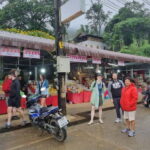
At the market, you’re shopping with a purpose. You’ll choose fresh ingredients that match the dishes you’ll cook later, and you’ll get a better sense of what’s common in Thai kitchens.
A big plus here is the pace. The day is planned around your cooking lesson, so the market doesn’t feel like a rushed shopping spree. You also get water, tea, and coffee as part of the included experience, which helps if you’re heading out hungry but not yet eating.
You should come with an empty stomach. That sounds intense, but it keeps the timing smooth: you don’t just watch food instructions—you’re ready to taste and cook right after the shopping.
If you’re the type who hates uncertainty, this is your spot. Knowing which ingredients you’ll later use makes the cooking class feel clearer, even if you’ve never cooked Thai food before.
Organic garden and herb picking: where the taste lesson gets real
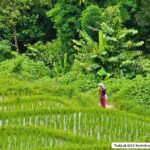
Next comes the organic garden and farm area. This is where the class turns from “shopping” into “how ingredients grow.” You’ll explore an organic vegetable garden, learn about organic farming practices in Thailand, and pick herbs and ingredients you can use during cooking.
Even if you’re not the type who reads about agriculture, this stop is useful. Herbs aren’t just decoration in Thai cuisine. They bring the fragrance that makes dishes taste alive. When you pick them yourself, you’re more likely to remember the flavors and how they change when cooked.
Also, this is one of those moments that feels authentic because it’s not built solely for tourists. You’re seeing the source, not only the end product.
Inside Galangal Cooking Studio: how the lesson stays doable
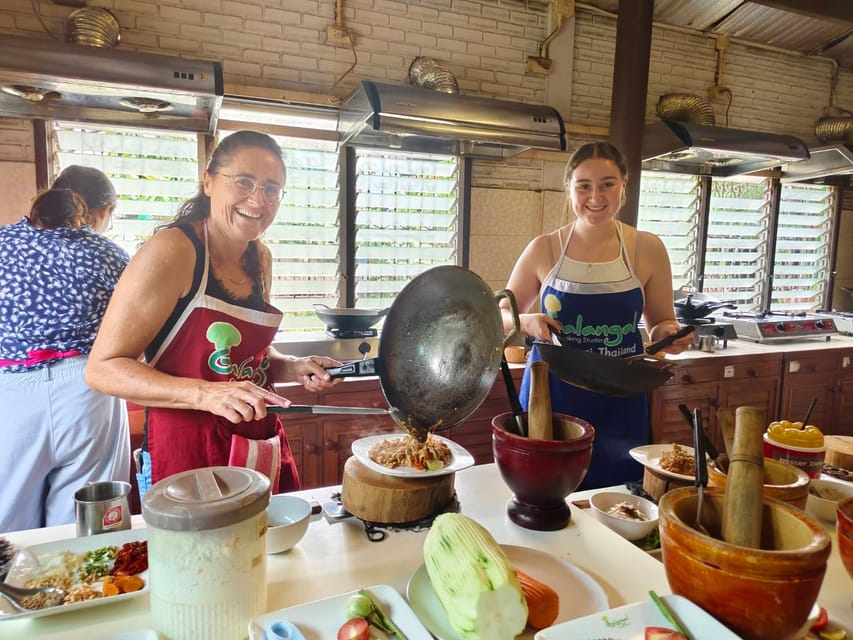
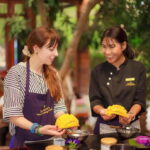
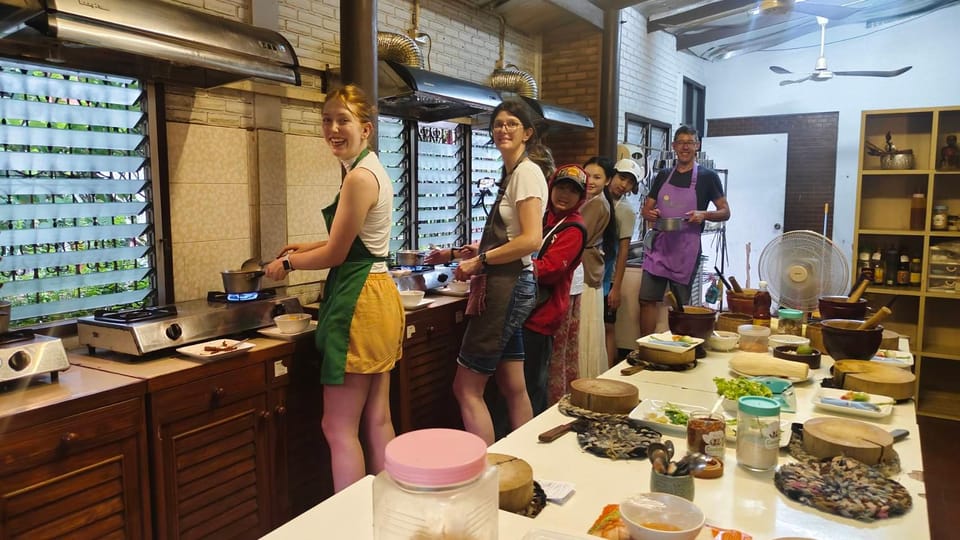
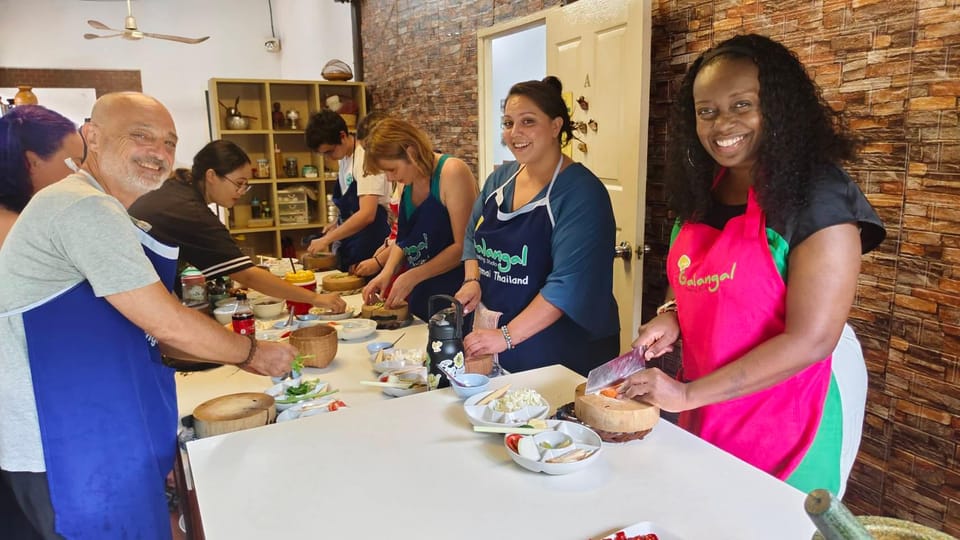
Your cooking happens at the studio, with an Indoor-Kitchen and air-conditioned dining room used for the later dessert part of the meal. The class is taught in English, and the staff is set up to guide both first-timers and more experienced cooks.
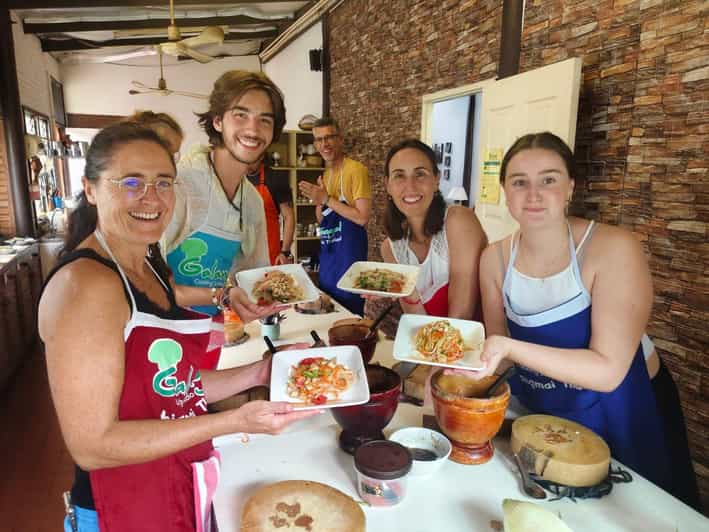
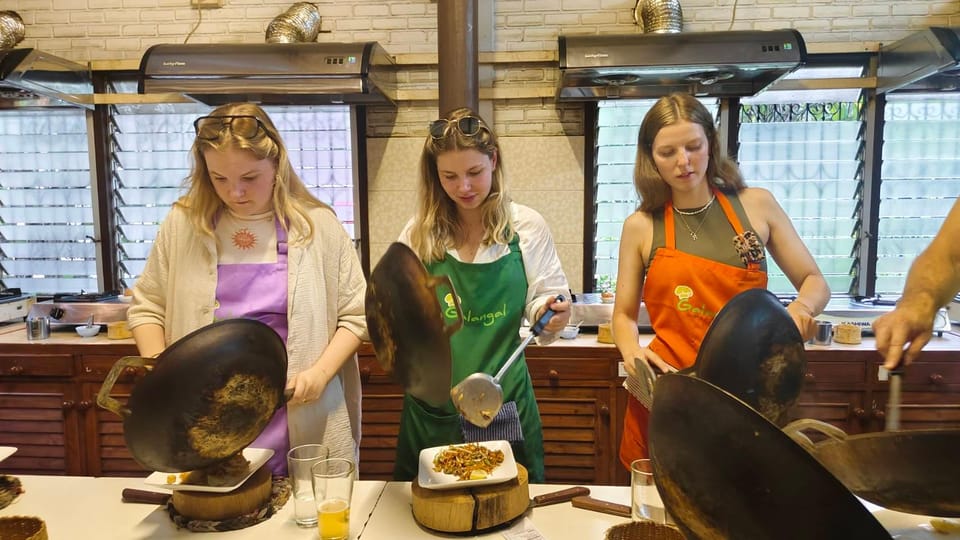
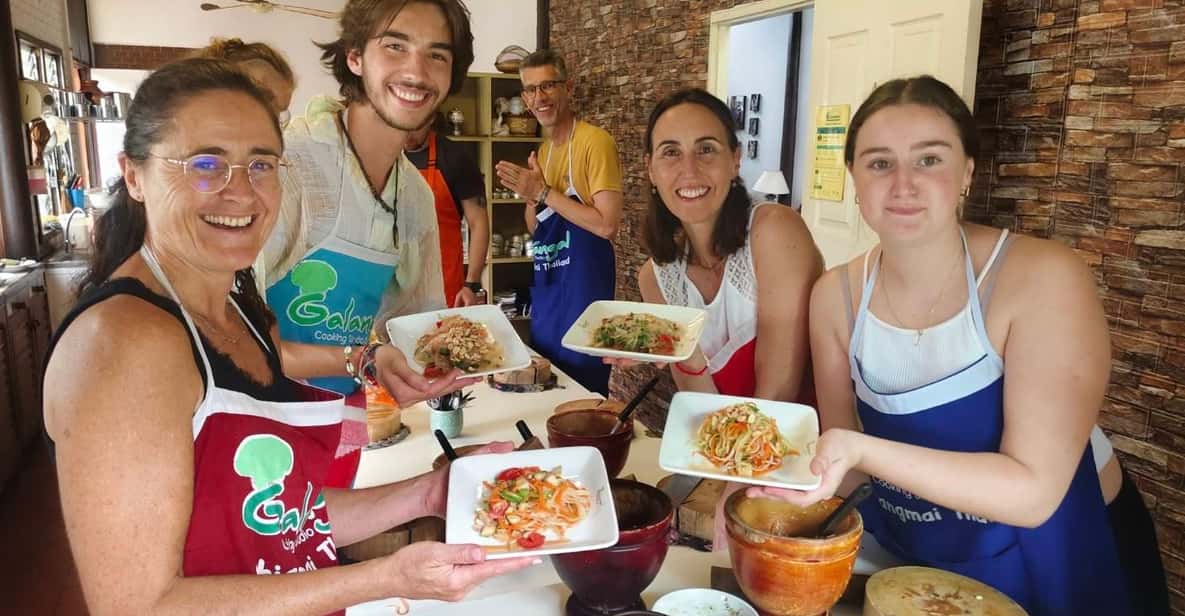
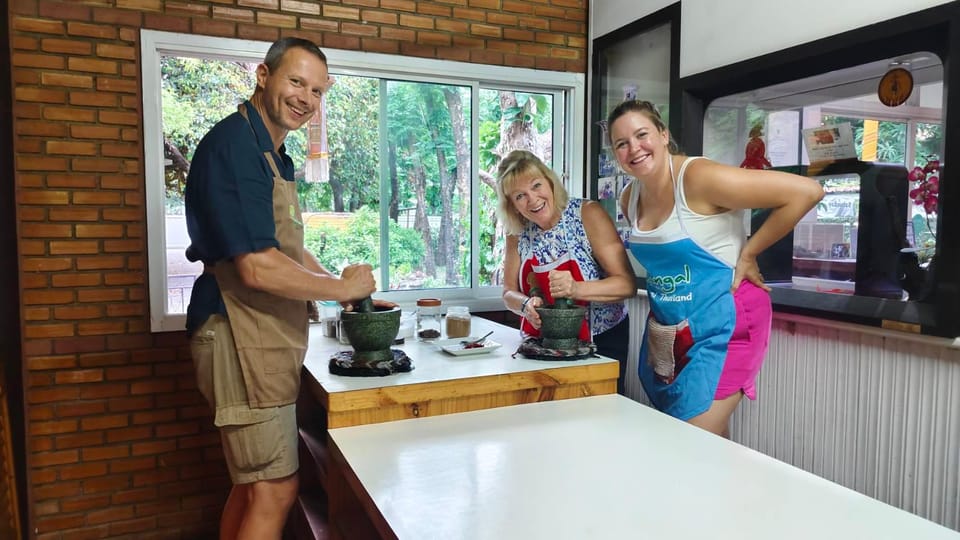
The setup is practical: you learn Thai cooking skills, then you practice them through actual dishes. The class is designed so you’re not just stirring endlessly for entertainment—you’re making real components: a starter, soup, stir-fried dish, curry paste, and dessert.
From the feedback I kept noticing, New/Nu’s teaching style gets high marks for clarity and support. One of the consistent themes is that she explains what ingredients are and how to handle them, so you can follow even if you don’t know Thai pantry basics.
And you’re not left wondering what you did wrong. You can ask questions and adjust as you cook, which is a big deal if you’re nervous in the kitchen.
You can also read our reviews of more tours and experiences in Chiang Mai


Appetizer, soup, stir-fry, curry paste, then dessert
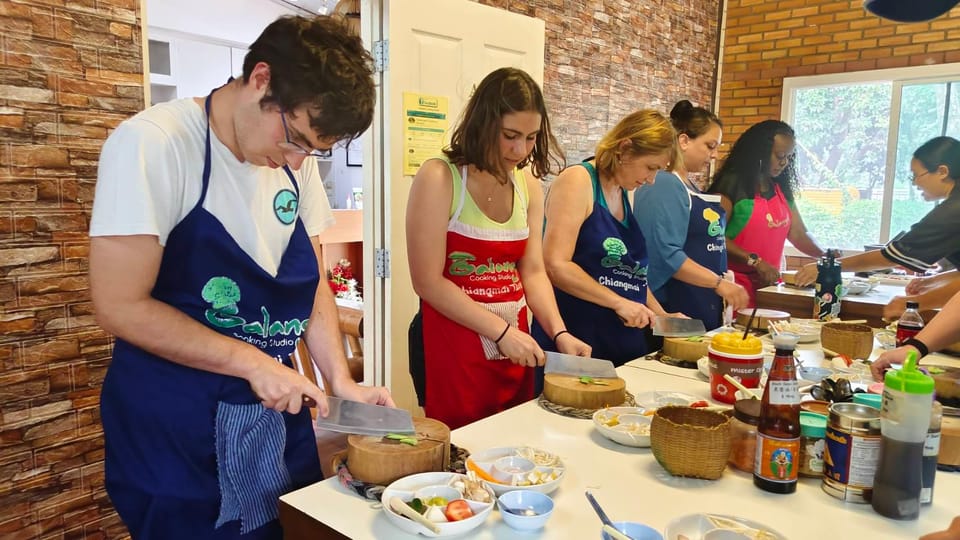
This class is built around choice. You’ll cook a total of six dishes, selecting from options across multiple categories. Here’s what you can choose, and why each piece is worth your time.
Starter choices (pick one)
You can start with:
- Som Tam (papaya salad)
- Por Pia Thod (spring rolls)
- Larb Kai (chicken salad)
- Yam Woon Sen (glass noodle salad)
This is a smart structure because starters teach Thai balance. For example, papaya salad has that sweet-sour-salty-spicy profile that shows up in Thai flavor thinking. Spring rolls teach texture and wrapping. Larb teaches how herbs and seasoning get intense even when the dish is light.
Main stir-fry options (pick one)
For the main stir-fried component, you can choose:
- Pad Thai (Thai fried noodles)
- Pad See Ew (stir-fried chicken with fresh noodles)
- Kai Pad Med Mamuang Him Ma Pan (chicken with cashew nuts)
- Pad Kaphao Kai (minced chicken with holy basil)
This is where you learn technique, not just ingredients. Stir-fry is about timing, heat, and how sauces coat noodles or meat. Pad Thai and Pad See Ew are especially helpful if you want recipes you can reproduce easily at home—because they’re recognizable and ingredient swaps are usually workable.
Soup options (pick one)
Your soup choices include:
- Tom Yum Kung (hot and sour prawn soup)
- Tom Kha Kai (chicken soup with coconut milk)
- Tom Kha Je (vegan soup with coconut milk)
- Tom Zap Kai (hot and sour with chicken)
Soup is a gift to your future self. Thai soups often feel “restaurant-level” but are learnable when you understand the hot-sour-coconut balance. You’ll see how Thai herbs create aroma without needing complicated equipment.
Curry paste and curry options (pick your curry style)
You’ll also make curry paste and then choose between:
- green curry
- red curry
- yellow curry
- Massaman curry
- Panang curry
This is the most “Thai” part of the class. Curry paste is where many people skip learning at home. Here, you build the base, so you can later adjust heat and salt with confidence rather than guessing.
Dessert options (choose one)
For dessert, you can make:
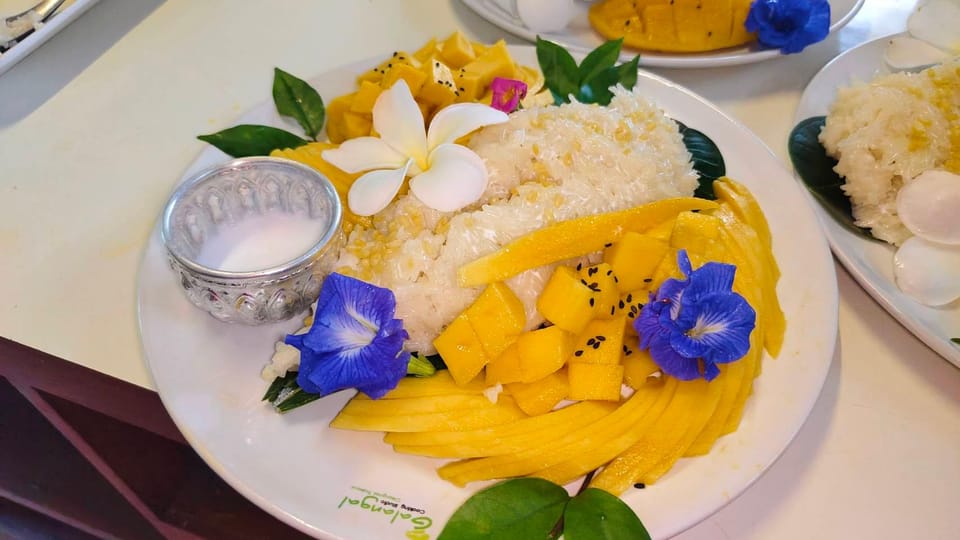
- mango sticky rice with ice cream
- Kuay Tod (fried banana)
Dessert gives the day a satisfying finish and helps you remember the flavor arc: savory, spicy, sour, then sweet and comforting. Plus, doing dessert in the air-conditioned dining room is a nice reset if you’ve already been outside in the morning air.
What the PDF recipe book is actually good for
At the end of the class, you eat what you made and receive a PDF recipe book. That’s not just a nice extra. It’s what turns a single morning activity into a skill you can repeat.
From what’s emphasized in the materials and feedback, the recipe book is intended to help you cook again at home. If you’re the kind of person who takes notes but still forgets sauce ratios later, a structured PDF can save you time.
Practical tip: take a quick look at the PDF right after the class while everything is fresh in your mind. Then when you cook at home, you’ll remember what the dish should smell like at each stage—especially helpful for curry paste and soups.
Price and value: why $41 can feel like a deal
The price is $41 per person for a 5-hour experience. You’re also getting hotel pickup and drop-off, instruction in English, water/tea/coffee, and all ingredients and equipment.
That’s the big value story: you’re not paying to watch. You’re paying to cook multiple dishes, learn ingredient roles, and get materials to replicate them later.
One extra cost to plan for: there’s a visitor adult fee of 500 baht per person (and 350 baht for children 6–12). It’s listed as not included, so don’t assume the class fee covers everything.
If you compare this to paying only for a cooking workshop, the market and organic garden components add real context. You’re learning how ingredients are selected and why Thai cooking tastes the way it does.
Dietary needs and who this class really suits
This class can work for many diets. It’s available for vegan, vegetarian, halal, and also supports gluten-free needs and allergies (as stated by the provider).
That flexibility matters because Thai cuisine can look intimidating on paper, especially if you avoid animal products or gluten. Here, you’re given options so you can still cook a full set of dishes.
It also seems to be a good fit for families. One review highlighted a 4-year-old being welcomed and cooking alongside the group. That suggests the environment can handle different ages better than some tightly controlled workshops.
Who should book:
- You want real Thai cooking skills, not just a food tour.
- You like hands-on learning with ingredient choices.
- You’re eager to take home recipes that actually match what you cooked.
Who might hesitate:
- You’re tight on time or easily thrown off by early mornings. The pickup window and short driver wait time mean you need to be ready.
- You’re staying outside the pickup zone and don’t want to arrange your own transport.
Final call: should you book this Chiang Mai morning cooking class?
Yes—if you want a morning that’s both practical and fun, this is a strong pick. The combo of market shopping + organic herb picking makes the cooking lesson feel grounded. Then you get to cook a broad set of dishes—starter, soup, stir-fry, curry paste, and dessert—and take home a PDF recipe book.
The main thing to get right is logistics: be at the lobby on time, and confirm whether your exact hotel address is in the pickup area. If it isn’t, you still can make it work by going directly to the market or studio.
If you like Thai food and want to learn the why behind the flavors, this class is one of the better values in Chiang Mai for turning curiosity into repeatable cooking.
FAQ
How long is the Chiang Mai morning cooking class?
It lasts about 5 hours.
What is included in the price?
The experience includes hotel pickup and drop-off, an instruction-led cooking class, market tour depending on interest, water/tea/coffee, all ingredients and equipment, and PDF versions of the recipe book.
Do I have to pay extra visitor fees?
Yes. Visitor adult fee is 500 baht per person, and visitor child (ages 6–12) is 350 baht per person. These are listed as not included.
What time does pickup happen?
Pickup is scheduled between 8:30 AM and 9:00 AM. The driver arrives before 9:00 AM, and waits no longer than 5 minutes after the scheduled pickup time.
What dishes will I cook?
You cook a total of 6 dishes. You choose a starter (Som Tam, spring rolls, Larb Kai, or Yam Woon Sen), a main stir-fry (Pad Thai, Pad See Ew, cashew chicken, or holy basil chicken), a soup (Tom Yum Kung, Tom Kha Kai, Tom Kha Je, or Tom Zap Kai), and a curry (green/red/yellow/Massaman/Panang). You also make dessert (mango sticky rice with ice cream or fried banana).
Can the class accommodate vegan, halal, or gluten-free diets?
Yes. The experience is available for vegan, vegetarian, halal, and gluten-free needs, including support for allergies.
Can I skip the hotel transfer?
Yes. You can come directly to the cooking studio if you do not want a hotel transfer.
Where is pickup offered in Chiang Mai?
Pickup is offered for hotels in the old city, Santitham, and along Huay Keaw Road from Kad Suan Keaw to Maya Shopping Mall, plus some areas on Nimmandhaemin Road, Sirimongkrajan Road, Wat Ket Road, Chang Pheuk, Changklan, and Changmoi.
What should I bring, and what is not allowed?
Bring personal medication. You should come with an empty stomach. Alcohol and drugs are not allowed.