REVIEW · CHIANG MAI
Chiang Mai: Doi Suthep Temple & Hmong Village Tour
Book on GetYourGuide →Operated by Joinusthai · Bookable on GetYourGuide
Gold shines in the mountains. This tour pairs Wat Phrathat Doi Suthep with the famous high lookout over Chiang Mai, so you get temple glamour plus a big-sky panorama in just a few hours. I also like the way the 3,520-foot viewpoint makes the trip feel more than a checklist stop, because you can see how the city spreads through the valley.
The main drawback to consider is the village portion: it’s short, and the shopping/craft element can feel a bit pushy if you prefer slow browsing.
In This Review
- Key Tour Highlights to Know
- Wat Phrathat Doi Suthep: The Temple Stop That Justifies the Drive
- Cable Car or 306 Naga Steps: How to Choose Your Best Way Up
- The Golden Pagoda and Lanna Details: What You’re Looking At
- Chiang Mai from 1,056 Meters: How to Get the Best Views
- Hmong Village Visit: Clothing, Daily Life, and the Shopping Reality
- How the Tour Feels in Motion: Pickup, Drive Time, and Group Pace
- Value for $22: What You’re Actually Getting
- Who This Tour Fits Best (and Who Should Skip It)
- Quick Packing List That Saves Stress
- Should You Book This Chiang Mai Tour?
- FAQ
- How long is the Chiang Mai Doi Suthep & Hmong Village tour?
- What does the $22 per person price include?
- Is the cable car included, or do I have to climb the stairs?
- What is the main viewpoint height?
- How much time do you spend at the Hmong village?
- Is there an extra ticket cost at the Hmong village?
- What are the pickup areas and times?
- Where will you be dropped off?
- What should I bring to the tour?
- What clothing is not allowed at the temple?
Key Tour Highlights to Know
- Golden pagoda at Wat Phrathat Doi Suthep in Lanna style with engraved gold details
- Naga staircase vs cable car: 306 steps with a mythical serpent theme, or a ride up
- Big panoramic views from a mountain top at about 3,520 feet
- Hmong hill tribe village visit focused on everyday life and colorful traditional clothing
- Bargaining time for textiles and handicrafts, with an optional village museum ticket
Wat Phrathat Doi Suthep: The Temple Stop That Justifies the Drive
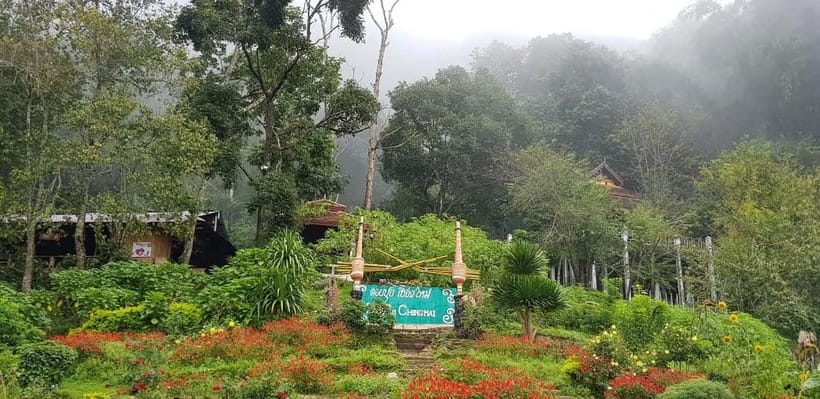
Doi Suthep is the kind of place that makes the whole morning feel worth it. Even before you reach the pagoda, the mountain approach is scenic, with rolling hills and winding roads that gently slow you down. Then the temple area delivers: bright gold, ornate architectural details, and that classic Chiang Mai feeling of being high above it all.
If you care about atmosphere, this stop hits two things fast. First, you’re not just seeing a building—you’re seeing a spiritual landmark that locals still visit. Second, the viewpoints do real work here. From the top, Chiang Mai looks like a real city, not just a map dot, and the scale helps you understand why Doi Suthep is such a magnet.
This is also the portion where your dress and footwear matter. You’ll want comfortable shoes because temple steps and uneven ground are part of the deal, and you should plan to cover up if you’re wearing something that reads as too revealing. The tour specifically notes that short skirts and sleeveless shirts aren’t allowed.
You can also read our reviews of more tours and experiences in Chiang Mai.



Cable Car or 306 Naga Steps: How to Choose Your Best Way Up
Here’s where the tour gives you a choice, and it changes the whole vibe of the temple visit.
At the bottom, you can take the cable car to reach the top, or climb the famous staircase of 306 steps. The stairs aren’t plain stone steps—they’re decorated with the mythical dragon-headed serpent theme (the Naga) snaking along the route. If you pick the stairs, you’ll get a more gradual approach to the pagoda and a built-in rhythm for photos.
If you pick the cable car, you’ll still enjoy the walk and the view, but you’ll save energy for actually spending time at the top. I like having both options because Chiang Mai days can feel warmer than you expect, and the temple area can be bright and sunny.
One practical tip: think about your camera habits. The Naga staircase is a photo moment, but it also means you’ll be stopping and starting. If you’re someone who wants to keep moving, cable car up and then slower wandering on the top may suit you better.
The Golden Pagoda and Lanna Details: What You’re Looking At
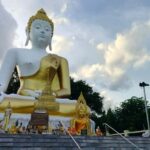
Once you’re at the top, the main visual draw is the golden pagoda of Wat Phrathat Doi Suthep. The structure is described as Lanna architecture style, with engraved gold plates and ornamental umbrellas flanking the main elements. It’s one of those scenes where you can stand in one spot and keep noticing different decorative layers.
This tour includes a guided visit at the temple, and that matters because the gold can look like pure aesthetics unless someone explains what you’re seeing. In one example from the tour experience, a guide named Taya was praised for making the visit informative, not just scenic. Even if your guide isn’t Taya, a good English explanation helps you connect the dots between architecture, symbolism, and why the site is still important.
Plan to spend most of your time doing two things: looking up and looking around. Looking up helps you catch the engraved details and the umbrella shapes. Looking around helps you catch the view line where the city spreads out below you.
Chiang Mai from 1,056 Meters: How to Get the Best Views
The view is the big payoff here: a viewpoint described at about 1,056 meters (3,520 feet). From that height, Chiang Mai doesn’t feel flat. You get a sense of the valley and how roads and neighborhoods stack up in layers.
Timing can help. Even without strict promises, mornings tend to feel clearer because the haze hasn’t had all day to build. That’s one reason an early pickup works. You’re not rushing just to arrive on time—you’re trying to catch the most readable skyline.
Also, give yourself permission to linger. The tour duration is only about four hours total, and the temple portion moves efficiently. But the viewpoint is one place where slow is worth it. If you’re only snapping photos without taking in the geography, you’ll miss the point of going up there in the first place.
Bring sunscreen and water, especially if you’re the type who takes time with photos. The height and sun can be deceiving, and temples are often brighter than city streets.
Hmong Village Visit: Clothing, Daily Life, and the Shopping Reality
After Doi Suthep, you’ll head to a Hmong hill tribe village for a guided visit. This is where the tour shifts from big landmark energy to human-scale everyday life.
You’ll spend about 40 minutes here. That’s enough time to see colorful traditional clothing and learn some of the basics of daily life, but it’s not enough time to do a long, leisurely wander. If you love markets and you tend to ask lots of questions, you might feel the clock.
The good news: you don’t just watch from the sidelines. The tour explicitly notes opportunities to purchase textiles, ornaments, or handicrafts, and bargaining is part of the experience. That’s a chance to bring home something more personal than a generic souvenir—but it also means the village stop has an economy built into it.
There’s one optional cost to know about: a museum ticket at the Hmong village is mentioned as 20 Baht and optional. If you want every extra piece of context, it’s worth considering. If you’re more focused on the village atmosphere and don’t need more indoor content, you can skip it and keep your time for what’s outside.
One more reality check: because shopping is woven into the stop, don’t expect a totally laid-back market pace. If your ideal travel style is slow and independent, you’ll probably want to set a personal rule for yourself, like buying at most one or two items—or simply using the visit to learn and not purchase.



How the Tour Feels in Motion: Pickup, Drive Time, and Group Pace
This tour runs about 4 hours and is built for efficiency. You’ll be picked up from downtown areas, with specific windows depending on where you’re staying. The tour notes pickup between 8:00 and 8:30 am for Night Bazaar and Old Town areas, 8:30 to 9:00 am for Santitam and Nimman, and it also mentions free pickup from several named zones including Nimman Haemin and some Santitham locations.
What that means for you: you’ll be moving early, but you’ll also get the temple and view before the morning becomes too hot and hazy. It’s a good format if you don’t want to burn a full day on one destination, but still want to feel like you saw something real outside the city center.
Transport is a van, with time allocated for the scenic drive and transfers between stops. The pacing is active, not leisurely. That works well for many people, but it’s smart to be honest with yourself: if you hate feeling scheduled, you may find the day slightly tight.
Also check the tour rules if you’re traveling light but not minimal. The activity notes that luggage or large bags aren’t allowed, and pets aren’t allowed either. If you’re trying to pack like you’re going on an all-day trip, you’ll probably need to scale down.
Value for $22: What You’re Actually Getting
At $22 per person for a four-hour outing, the value comes from what’s bundled, not just the attractions. Your package includes hotel pickup and drop-off within downtown, a licensed English guide, Wat Phrathat Doi Suthep ticket & cable car, and travel accident insurance.
That cable car and temple ticket piece is a big part of the cost logic. If you tried to piece it together on your own—getting the right transport, paying for entry, and adding a guide—you’d likely spend more than the tour price in time and effort. Here, you’re paying for convenience plus a guided context.
The only clearly stated extra is personal spending, plus the optional 20 Baht museum ticket at the Hmong village. In other words, it’s a straightforward deal: you’ll buy what you want, but you aren’t stuck paying compulsory add-ons beyond the basics already included.
If you’re the kind of traveler who likes to learn while you look, the guide component makes the price feel even better. If you’re only after photos and don’t care about explanations, you may find it harder to justify the tour format versus going at your own pace.
Who This Tour Fits Best (and Who Should Skip It)
This is a great fit if you want:
- A fast, meaningful temple and viewpoint hit in the morning
- A guided explanation at Doi Suthep (especially helpful for reading the symbolism)
- An intro to the Hmong village with time to browse and bargain briefly
It’s not the best match if you:
- Want a long, relaxed shopping session at the village
- Hate any sense of time pressure
- Prefer to skip temple rules like clothing restrictions and step-heavy walking
Also, if you’re traveling as a wheelchair user, the tour notes wheelchair accessibility, but it also lists that non-folding wheelchairs aren’t allowed. If you’re in that category, it’s smart to confirm what type of chair fits their rules before you go.
Quick Packing List That Saves Stress
You’re going to be outside, walking, and in sun. Keep it simple:
- Comfortable shoes
- Water
- Sunscreen
- Camera
Also keep clothing in mind. The tour states short skirts and sleeveless shirts aren’t allowed, which can matter at Doi Suthep.
Should You Book This Chiang Mai Tour?
Book it if you want a clean half-day plan that combines Wat Phrathat Doi Suthep, a cable car or 306-step choice, and that major 3,520-foot viewpoint without needing to organize transport. The price makes sense because entry and cable car are included, plus you get a guide and downtown pickup.
Skip or choose another option if you’re mainly in it for a long, slow village experience. The village stop is short, and shopping is part of the structure. If you’re okay with that tradeoff—learn a bit, see the clothing, buy maybe one item or just browse—you’ll likely feel satisfied.
If you want my “best move” advice: plan to enjoy the temple and views first, treat the village as a cultural stop (not a full market day), and wear shoes you trust on stairs.
FAQ
How long is the Chiang Mai Doi Suthep & Hmong Village tour?
The tour lasts about 4 hours total.
What does the $22 per person price include?
It includes hotel pickup and drop-off within downtown, the Wat Phrathat Doi Suthep ticket and cable car, a licensed English tour guide, and travel accident insurance.
Is the cable car included, or do I have to climb the stairs?
Cable car access is included. You can also choose to climb the 306 steps to the temple instead.
What is the main viewpoint height?
The panoramic viewpoint is listed as about 3,520 feet (1,056 meters).
How much time do you spend at the Hmong village?
You’ll have a guided visit of about 40 minutes.
Is there an extra ticket cost at the Hmong village?
Yes, there may be an optional museum ticket at the Hmong hill tribe village for 20 Baht.
What are the pickup areas and times?
Pickup depends on your area. Night Bazaar and Old Town are listed as 8:00 to 8:30 am, and Santitam and Nimman are listed as 8:30 to 9:00 am.
Where will you be dropped off?
The tour notes drop-off locations that include McDonald’s in Chiang Mai and another McDonald’s near 임호텔-타패점.
What should I bring to the tour?
Comfortable shoes, a camera, sunscreen, and water.
What clothing is not allowed at the temple?
Short skirts and sleeveless shirts are not allowed. Pets and large bags are also not allowed.