REVIEW · CHIANG MAI
Chiang Mai: Doi Inthanon Hiking & Elephant Sanctuary Program
Book on GetYourGuide →Operated by Living Green Elephant Sanctuary Chiang Mai and Chonburi · Bookable on GetYourGuide
Elephants and mountains, in one long day. This Chiang Mai program mixes a no-riding elephant sanctuary with Thailand’s highest mountain, plus a guided nature trail and a Karen hilltribe coffee farm, all wrapped into one full day.
What I like most is the chance to interact with rescued elephants in a free-roaming, respectful setup. You hand-feed and walk with them through forest, and you can watch them cool off in the water and mud without anyone forcing it.
One thing to plan for: it is a long day and you can feel the road time. Expect long drives both ways from Chiang Mai, colder air up at Doi Inthanon, and occasional timing compression at the sights depending on weather and traffic.
In This Review
- Quick hits: what to expect from this Chiang Mai day trip
- How the day runs: 7:00 to 19:00 and why timing matters
- Living Green Elephant Sanctuary: walking instead of riding
- What the elephant time feels like in practice
- Lunch and energy: the Pad Thai stop you’ll appreciate on a cold mountain day
- Doi Inthanon National Park: the summit views and the Twin Pagodas
- Pha Dok Siew nature trail: rice terraces, wildlife, and a waterfall break
- The Karen hilltribe organic coffee farm: a cultural pause with a taste
- Price and value: what $56 really buys (and what it doesn’t)
- Getting the most out of it: packing and comfort tips
- Guide quality and group size: why it can make or break the day
- Who should book this, and who should skip it
- Final call: should you book this Chiang Mai elephant and Doi Inthanon program?
- FAQ
- Is elephant riding included in this program?
- How long is the full day from Chiang Mai?
- What are the extra entrance fees at Doi Inthanon?
- What should I bring for elephant bathing and the hike?
- What is included in the $56 price?
- Who is this tour not suitable for?
Quick hits: what to expect from this Chiang Mai day trip
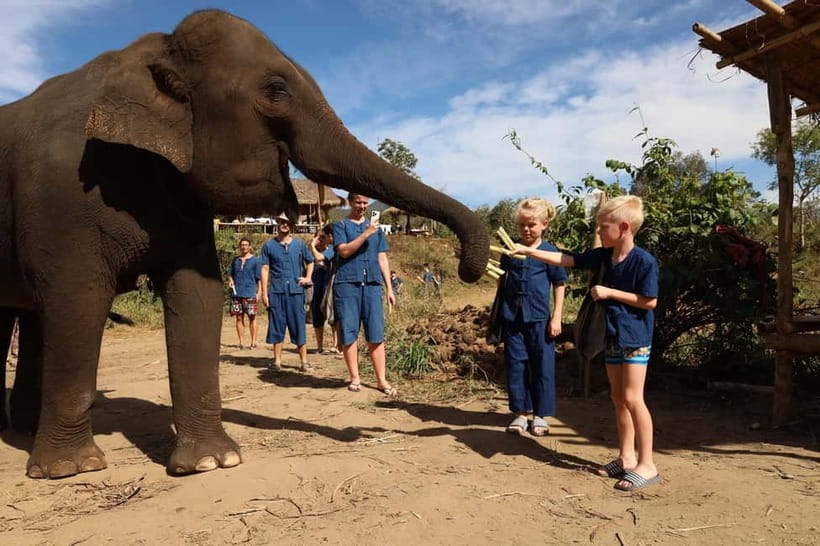
- Ethical elephant interaction: no riding, no chains, no performances, and elephants are never forced into the river or any activity
- Traditional Mo Hom clothing: change for part of the sanctuary visit and learn the individual elephant stories
- Doi Inthanon summit + Twin Pagodas: cool mist up high, then calm views at the pagodas and botanical gardens
- Pha Dok Siew nature trail: rice terraces, wildlife spotting, and waterfall time
- Karen organic coffee farm: a cultural food stop with coffee tasting tied to the hilltribe community
- Small group: limited to 12 participants, which usually makes the day feel less chaotic than big tours
How the day runs: 7:00 to 19:00 and why timing matters
This is built as an all-day program, roughly 07:00–19:00, including hotel pick-up and the drives between stops. You’ll start by leaving Chiang Mai, then spend multiple stretches in the van as you move from the sanctuary to Doi Inthanon and back.
The route itself is part of the experience: you’ll pass rural areas with rivers, rice fields, and banana plantations. Just know that travel time can stretch with traffic, and one or two stops may feel like they happen on a tight clock once you reach the mountain zone.
If you hate long transport days, this may be too much. On the other hand, if you want one ticket to cover elephants, hiking, and a major national park summit without planning anything yourself, this format is exactly the point.
You can also read our reviews of more hiking tours in Chiang Mai
Living Green Elephant Sanctuary: walking instead of riding
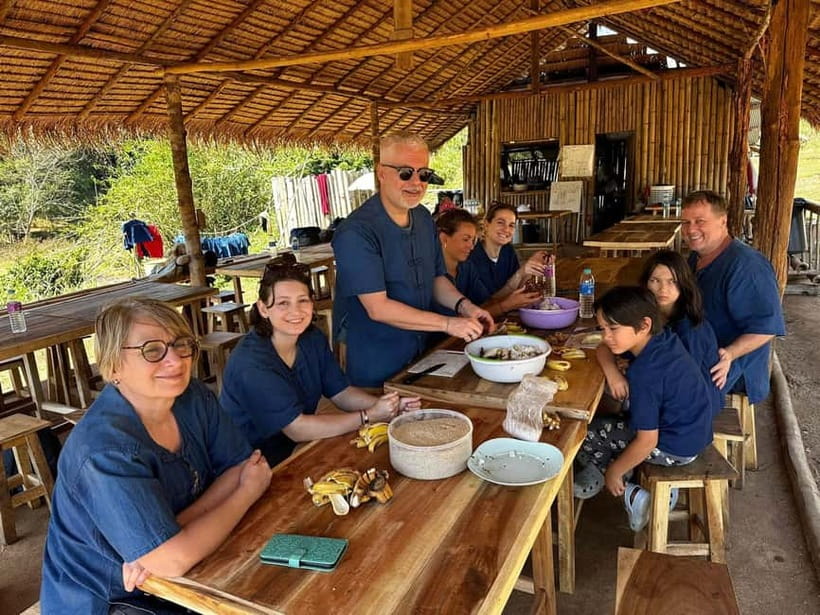
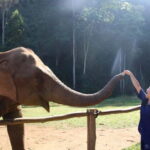
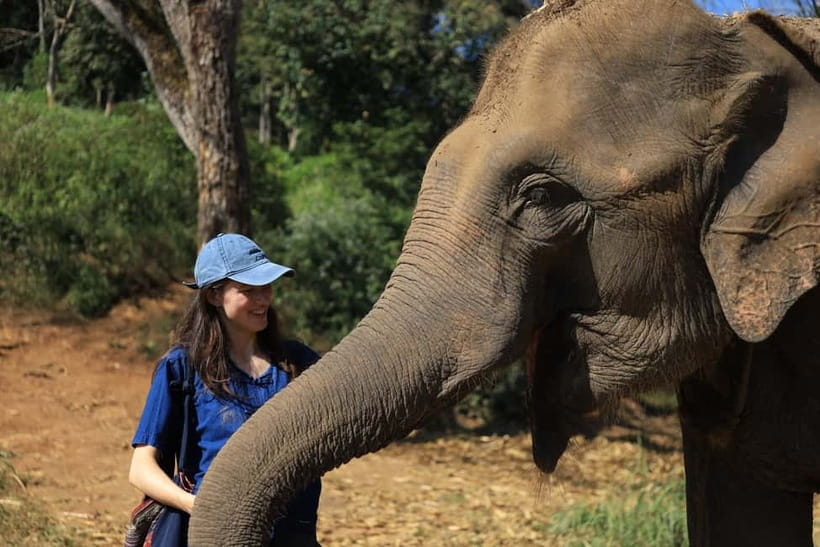
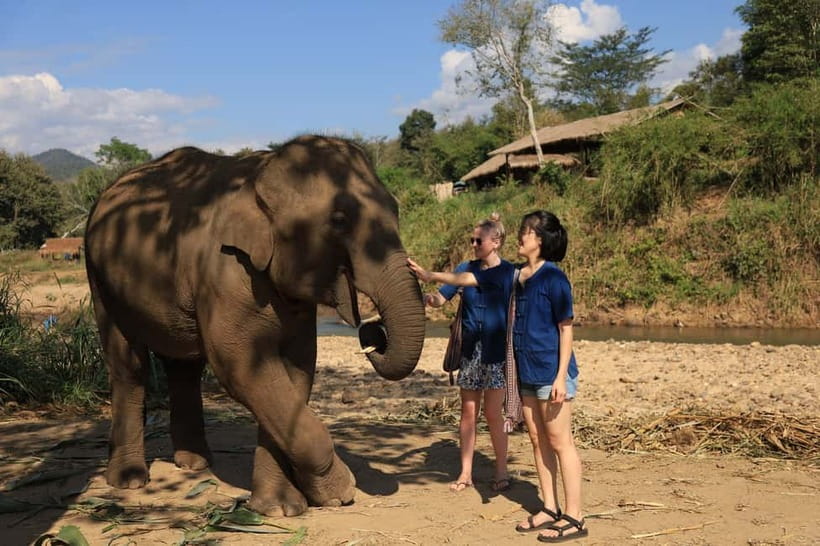
This is the heart of the day. At Living Green Elephant Sanctuary, the focus is on rescued elephants living in a natural environment where they can move around freely. There’s no riding, no chains, and no performance-style entertainment.
You’ll change into traditional Mo Hom clothing and get a briefing about the elephants you’ll meet. From there, your interaction is simple and direct: feed them by hand, walk alongside them through the tropical forest, and observe their social behavior.
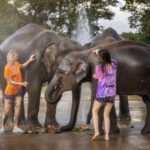
A standout is the bathing and cooling-off time. Some elephants may prefer to enter the water; others may stay back. The program is clear that elephants are never forced into the river or any activity, which matters because real animal welfare includes choice.
Now, a quick reality check before you book: these are domesticated rescues, not elephants roaming totally wild in the way people sometimes imagine. What you can count on is a sanctuary-style environment and close, respectful contact that keeps you from turning wildlife into a thrill ride.
English guides lead the day, and different days may feature different guide names like Rainbow, Jon, Nott, Piete, Mod, or PETE (the common thread is that this program is designed to be explained, not just visited). Group size stays small, so you’re not constantly pushing through crowds.
What the elephant time feels like in practice
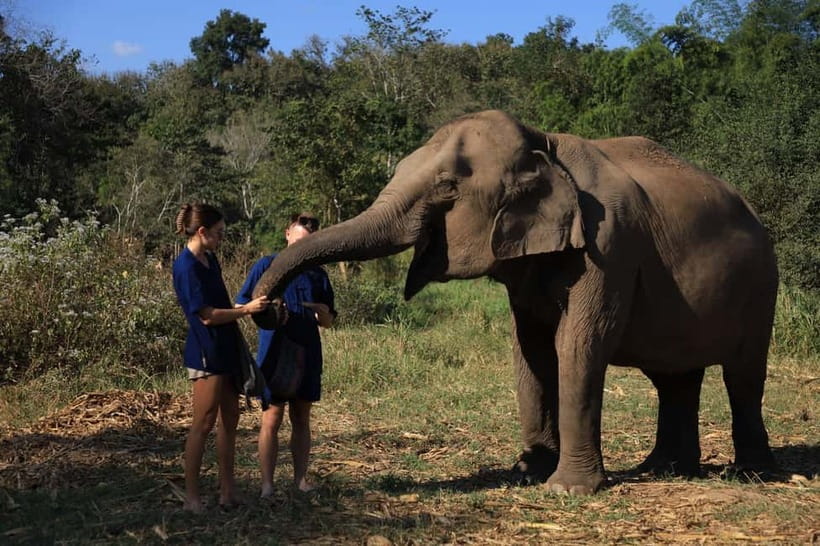
Here’s how the experience usually lands emotionally. You’re not watching from behind a railing. You’re on the path with the elephants, following caretakers’ guidance, learning what their movements mean, and seeing how they respond to people calmly.
You’ll likely spend enough time to notice individual personalities. Some elephants are curious. Some are cautious. Some want to stay close to caretakers. That variety is one reason the day works even if you’ve seen elephant photos before.
Also pay attention to the instructions about contact. You’ll be told what is allowed and what isn’t. The sanctuary rules include guidance like no littering and no smoking or drugs, and the program explicitly avoids forced participation in bathing.
If you want to take great photos, plan for quick moments rather than constant posing. Elephant behavior is its own schedule, not yours, so bring your camera with fresh batteries and expect to earn the good shots.
Lunch and energy: the Pad Thai stop you’ll appreciate on a cold mountain day
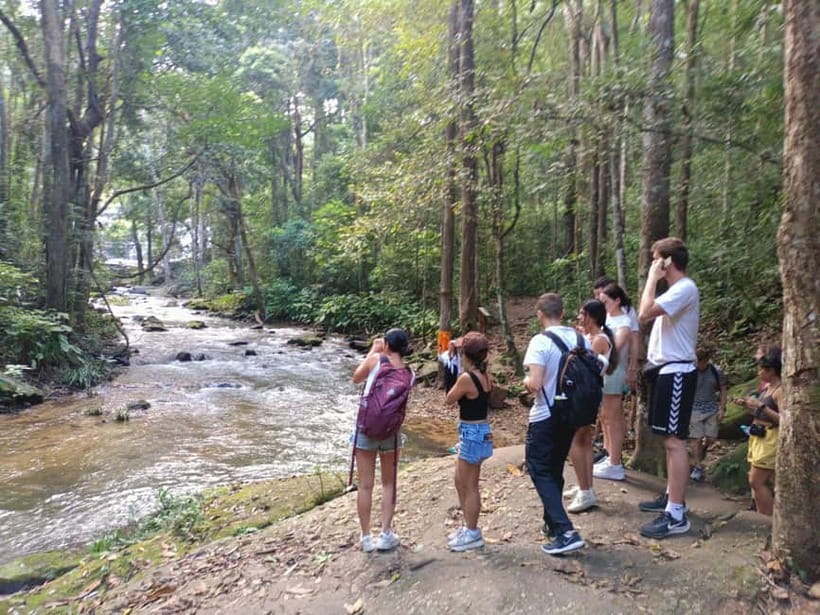
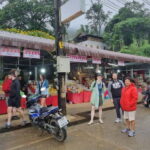
After the sanctuary, there’s an authentic Pad Thai lunch included in the program. It’s the practical kind of meal: filling enough to fuel the next stretch and simple enough that you’re not stuck feeling heavy during hiking.
This is also when the day starts shifting from warm, humid jungle vibes into cooler mountain air. A lot of people underestimate how quickly the temperature can change at Doi Inthanon, so consider lunch time your cue to layer up for the next hours.
If you’re hoping for a long, slow meal, don’t. This tour is structured to keep moving. The upside is you get a full mix of elephants, major sights, and an actual nature hike without needing to book separate day trips.
Doi Inthanon National Park: the summit views and the Twin Pagodas
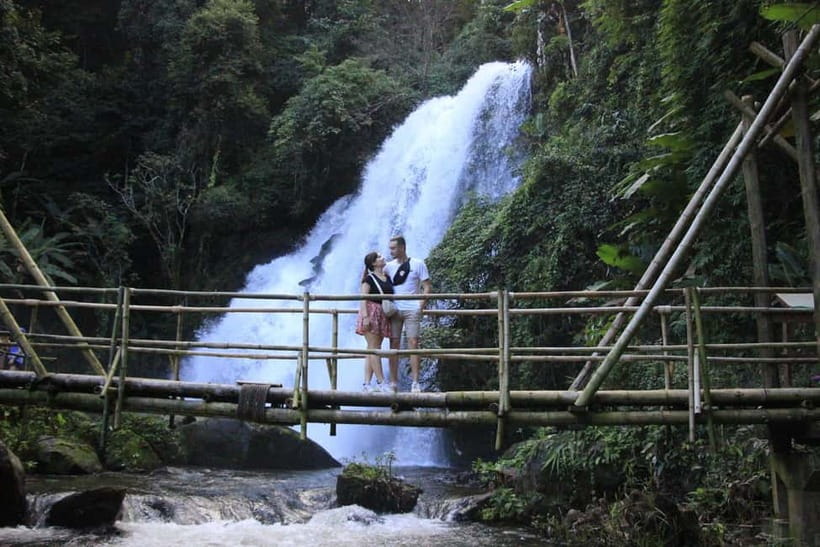
Next comes Doi Inthanon, reached by about a 30-minute drive from the lunch area. Doi Inthanon is Thailand’s highest mountain, and the higher you go, the more you feel the cool mist.
At the summit area and surrounding slopes, the views are why the day exists. You’ll get panoramic lookouts, and the air feels different up there—lighter, cooler, and often cloudier than you expect from Chiang Mai.
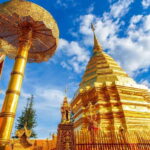
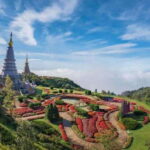
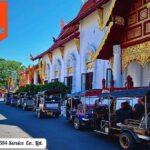
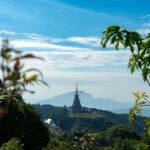
Then you’ll visit the Twin Pagodas and the botanical gardens. These stops are quieter than the summit viewpoints, and that contrast helps. One moment you’re at altitude and wind, the next you’re strolling among manicured gardens and temple architecture designed for stillness.
One practical note: some people feel the pagoda and temple time can feel a little rushed, especially if the weather changes or the group moves at a pace set by the day’s conditions. If that worries you, keep your expectations realistic and savor the fact that you’re fitting a lot into one outing.
Entrance fees apply at the park level. Adult Doi Inthanon entrance is listed as 300 THB, and Phra That entrance as 100 THB; child fees are 150 THB and 50 THB for ages 4–8. These aren’t included in the tour price, so it’s worth budgeting a bit extra.

Pha Dok Siew nature trail: rice terraces, wildlife, and a waterfall break
After the main sights, you head into the guided hike on the Pha Dok Siew nature trail. This is where the tour becomes more than sightseeing.
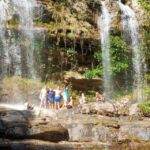
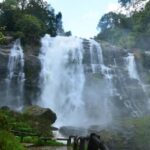
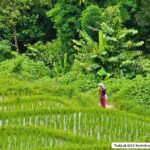
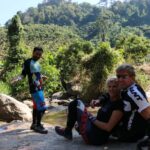
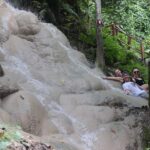
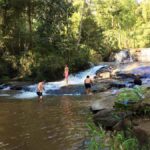
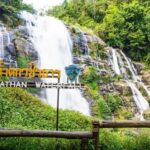
You’ll walk through lush areas and you can spot things like rice terraces, plus the chance for rare wildlife sightings depending on the day. There’s also a waterfall stop, which functions like your built-in reset button: cool air, wet rocks, and a chance to breathe out after walking.
How intense is the hike? It depends on conditions and group pace. Some people describe it as enjoyable and straightforward. Others mention it can feel more aggressive than expected or a bit rushed because multiple groups share the trails.
The best way to handle that uncertainty is to be prepared, not tough. Wear hiking shoes (not just sneakers), use insect repellent, and bring water. You’re not only walking for views; you’re walking through a living ecosystem.
If you care about the nature commentary, know that language can affect how much you understand. Even with an English-speaking guide, the quality of explanations can vary based on the local hike guide and the day’s logistics. Still, you’ll likely get enough context to appreciate what you’re seeing.
The Karen hilltribe organic coffee farm: a cultural pause with a taste
Later in the day, you visit an organic Karen hilltribe coffee farm. This stop adds more than a drink. It gives you a glimpse of how a hilltribe community ties agriculture to daily life, and it typically includes coffee tasting.
People often enjoy this part because it’s a change of pace from temple steps and forest trails. It’s also a chance to ask practical questions about farming and processing if your guide has time and you’re curious.
Some days, the coffee farm portion can feel longer or more challenging than the initial nature trail segment. That doesn’t mean it’s extreme, but it does mean comfortable shoes still matter.
There’s a slight risk of timing pressure here too. If the group is moving quickly toward the return trip, the tasting portion might be more of a quick introduction than a deep lesson. If you really care about coffee specifics, go in ready to enjoy it as part of a broader cultural stop rather than a full workshop.
Price and value: what $56 really buys (and what it doesn’t)
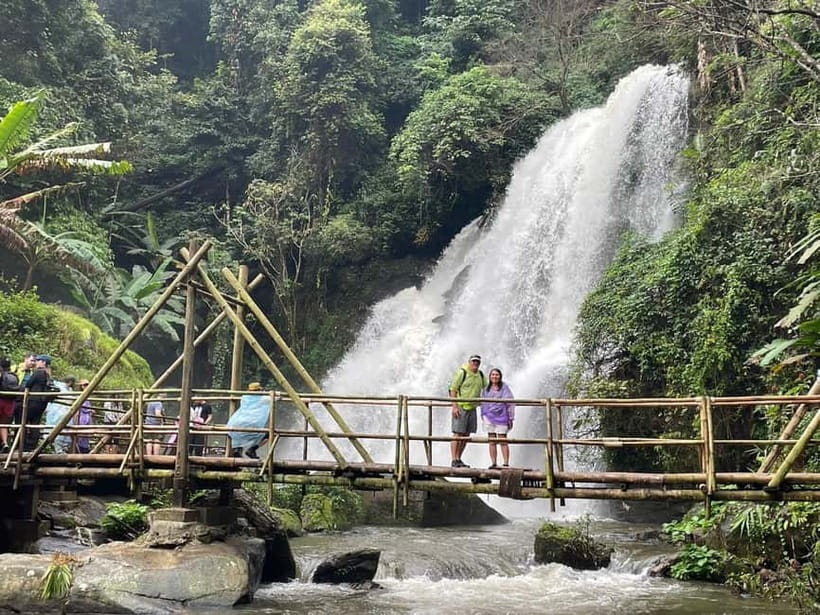
At $56 per person for a roughly 12-hour day, the value comes from how packed the itinerary is. For that price, you’re getting hotel pick-up and drop-off, traditional clothing for the sanctuary segment, elephant feeding and bathing experience, lunch (Pad Thai), Twin Pagodas and botanical gardens time, a guided hike, and the Karen coffee farm visit.
What can change your total is the entrance fees at the national park. Doi Inthanon entrance is 300 THB for adults (150 THB for children ages 4–8), and Phra That entrance is 100 THB for adults (50 THB for children ages 4–8). These are not included, so keep a little cash aside.
Is it worth it? If you’d otherwise have to arrange transport between Chiang Mai, Doi Inthanon, and the sanctuary, then yes, this price is often reasonable. The big win is convenience plus guided pacing, especially with small group size and an English guide.
If you are already comfortable arranging your own transport and tickets and you want total control over timing, you might do it cheaper. But most people don’t feel like doing that on the same day they hike to a summit.
Getting the most out of it: packing and comfort tips
Pack like you’re doing two different climates in one day. At the sanctuary you’ll likely be in warm conditions, and at Doi Inthanon you can hit cold air fast.
Bring:
- A jacket or warm sweater for the mountain portion
- Swimwear plus a towel and a change of clothes for elephant bathing time
- Hiking shoes, sunscreen, hat, and insect repellent
- Water and a camera
One detail that matters for elephant time: you may get wet. Having dry clothes ready for the ride back makes the last hours far more pleasant.
On transport, expect a van. Some people found seating tight or uncomfortable, especially if you’re tall. If you’re prone to motion sickness, it can help to be ready for a winding, steep drive segment. I’d rather you show up prepared than spend the day bracing through turns.
Also follow the stated rules: no smoking, no alcohol or drugs, and avoid littering. The program notes you should not feed animals or touch plants beyond what the guide instructs for the elephant segment.
Guide quality and group size: why it can make or break the day
This tour can feel either magical or merely good depending on how the guide manages the day’s flow. The good news is the program is designed around having an English-speaking guide, and several guide names come up in people’s experiences: Rainbow, Jon, Nott, Piete, Mod, and PETE.
When a guide is strong, you get more than logistics. You learn why the elephants came to the sanctuary, how their social groups work, and what to watch for during feeding and bathing. It also helps during the hike so you don’t feel like you’re just walking between photo stops.
When communication is weaker due to language barriers, people may miss some explanations on the trail. Still, the elephant and Doi Inthanon parts are strong enough that you’re not left with nothing.
Small group size matters here. Limited to 12 participants, you’re usually not fighting for attention or space.
Who should book this, and who should skip it
Book this if you want:
- An ethical elephant sanctuary day with walking and hand-feeding, not riding
- A real national park day at Doi Inthanon, including summit and Twin Pagodas
- A guided nature hike plus an added cultural stop at a Karen organic coffee farm
- One full-day plan instead of juggling multiple bookings
Skip it (or choose a different style of trip) if:
- You’re under 8, pregnant, or have back problems, mobility impairments, or heart problems (the program lists these as not suitable)
- You expect elephants to be fully wild in the true sense of remote nature
- You’re sensitive to long van rides and tight seating
Also be honest about your stamina. It’s a long day with hiking and multiple stops. Even if the hike isn’t brutal, you’ll still feel the hours.
Final call: should you book this Chiang Mai elephant and Doi Inthanon program?
If your ideal Chiang Mai day includes ethical elephant time plus a mountain hike and major sights, this is an efficient, well-priced option. The sanctuary approach (no riding, no chains, no performances, and no forced bathing) is the kind of structure that makes your interaction feel respectful rather than staged.
I’d especially recommend it if you’re short on time and don’t want to plan separate transport to Doi Inthanon. But go in with realistic expectations: it’s a long day, weather can change quickly, and some segments can feel a bit rushed when schedules tighten.
If you want a single ticket that covers animals, altitude views, temples, nature walking, and coffee culture, then yes, it’s a solid book.
FAQ
Is elephant riding included in this program?
No. This program is a no-riding sanctuary experience, with interaction based on feeding and walking plus observation of bathing. Elephants are also stated to be never forced into the river or any activity.
How long is the full day from Chiang Mai?
The program runs about 11–12 hours, with the full-day time window listed as roughly 07:00–19:00. Your total time includes hotel pick-up, transportation, and the scheduled activities.
What are the extra entrance fees at Doi Inthanon?
Doi Inthanon National Park entrance is listed as 300 THB for adults and 150 THB for children ages 4–8. There is also a Phra That entrance fee listed as 100 THB for adults and 50 THB for children ages 4–8.
What should I bring for elephant bathing and the hike?
Bring a towel, swimwear, change of clothes, hiking shoes, hat, sunscreen, insect repellent, and water. The guide also recommends a warm jacket or sweater because conditions at Doi Inthanon can be cold and change quickly.
What is included in the $56 price?
Included are hotel pick-up and drop-off, traditional northern clothing for the sanctuary visit, elephant feeding and bathing experience, a local meal (Pad Thai), Twin Pagodas and botanical garden visits, Pha Dok Siew nature trail hiking, and a visit to an organic Karen hilltribe coffee farm.
Who is this tour not suitable for?
It is not suitable for children under 8, pregnant women, people with back problems, those with mobility impairments, or people with heart problems.