REVIEW · CHIANG MAI
Chiang Mai Elephant Village Life: Long Neck & Bamboo Rafting
Book on GetYourGuide →Operated by My Holiday Centre Company Limited · Bookable on GetYourGuide
Elephant time in Chiang Mai can feel personal. This 8-hour outing mixes ethical elephant care with a jungle walk to Mae Wang Waterfall and a peaceful bamboo raft ride.
I like how close you get to the day-to-day life of local elephant caretakers (mahouts), and I also like that the program is built around the elephants’ choices, not a performance schedule.
One thing to factor in: the tour title highlights long-neck culture, but the day includes a Karen Hill Village stop rather than guaranteeing a long-neck-focused segment.
In This Review
- Key things to know before you go
- A Day With Mahouts: Feeding, Walking, and Elephant Baths
- Elephant Care First: No Riding, No Chains or Hooks
- Guided Tour Timing: How the 3 Hours Works in Real Life
- Mae Wang Waterfall Walk: A Mountain Reset
- Karen Hill Village Visit: Culture After the Waterfall
- Bamboo Rafting on a Quiet River: The 45-Minute Reset
- Price and Logistics: What $70 Includes in Chiang Mai
- What to Bring: Swimwear, Shoes, and Bug Protection
- Who This Tour Fits Best (and Who Should Reconsider)
- Should You Book Chiang Mai Elephant Village Life: Long Neck & Bamboo Rafting?
- FAQ
- Is elephant riding included or allowed?
- Are the elephants chained or hooked?
- How long is the tour?
- What’s included in the price?
- Where does hotel pickup happen?
- What activities are part of the day?
- What should I bring?
- What’s not allowed?
- Is there free cancellation?
Key things to know before you go
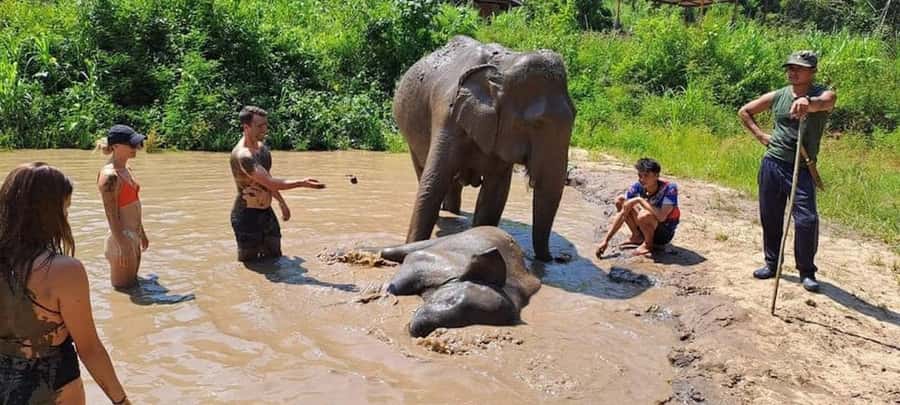
- Mahout-led elephant time: feeding, walking, and elephant bathing are the core of the day
- No riding, no tricks: elephant interaction is hands-off and behavior-led
- Mae Wang Waterfall stop: you get real hiking time, not just a photo pause
- Karen Hill Village: cultural visit comes after the waterfall trek
- Bamboo rafting: a short 45-minute float is a slow, calm finale
- Transport details matter: you’ll ride a 12-seater van, then switch vehicles for the last stretch
A Day With Mahouts: Feeding, Walking, and Elephant Baths
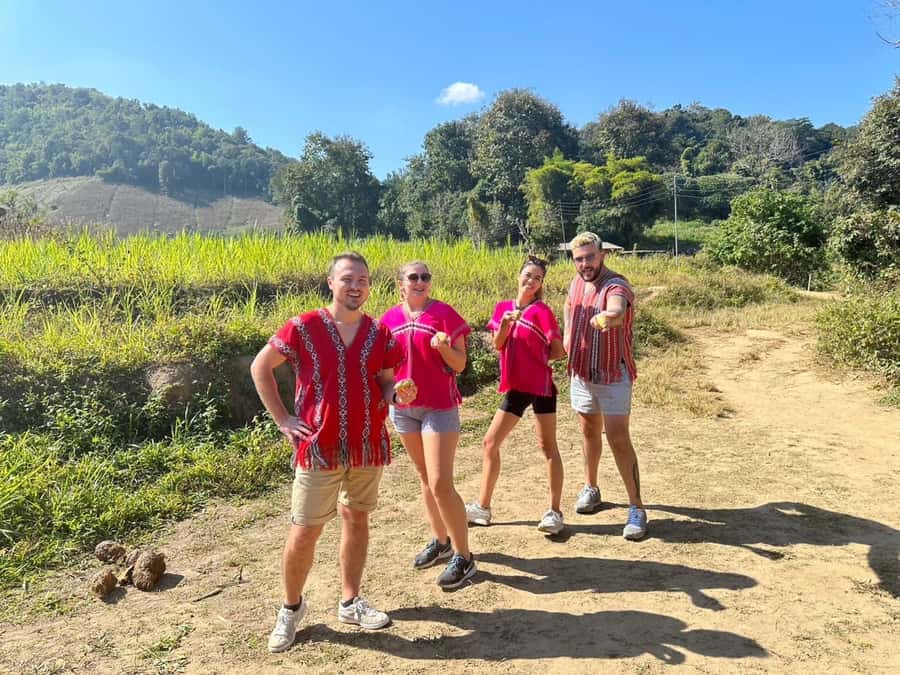
This is the kind of Chiang Mai elephant day that starts earlier than you’d expect from a “tour,” because the work and rhythm begin right away at the village area. After hotel pickup, you head out to a mountain-side setting where mahouts explain how elephants fit into Northern Thailand families and routines.
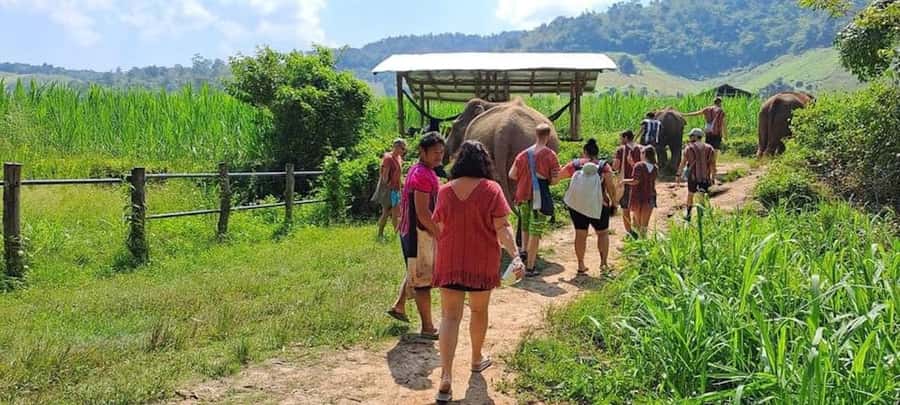
Once you’re there, the elephant care portion is more than a quick meeting. You prepare and feed the elephants, then walk alongside them through the surrounding area. This part feels grounded: you’re moving at elephant speed, watching how they respond to the people and the space around them.
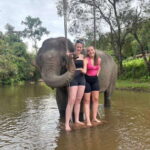
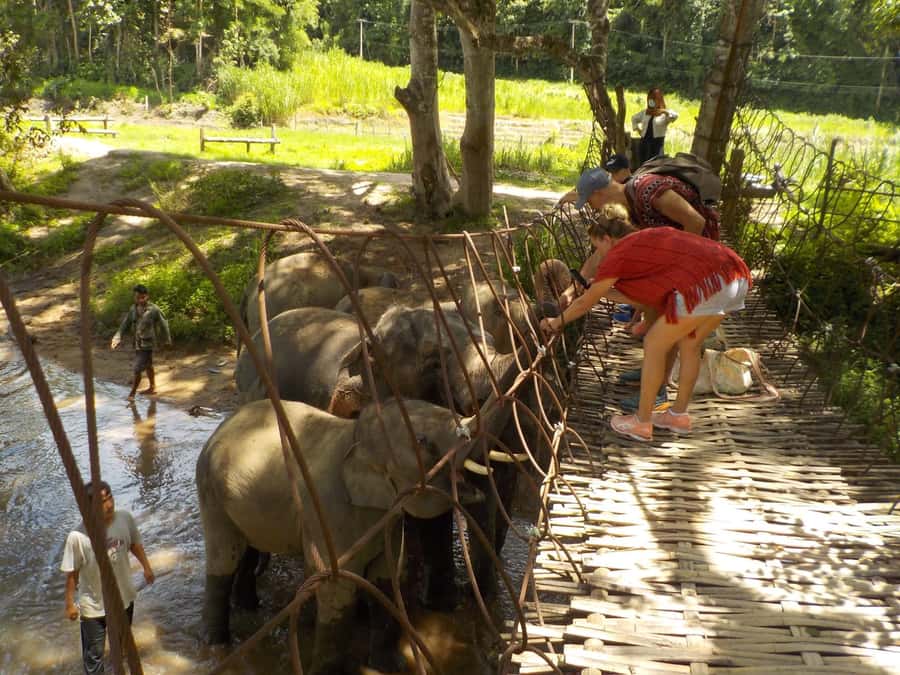
Then comes the highlight most people remember clearly: joining the elephants in the river for a playful, refreshing bath. It’s not staged like a show. It’s more like you’re invited into the flow of the day, with the water doing what water does—cooling you off and keeping things relaxed.
You can also read our reviews of more tours and experiences in Chiang Mai.


Elephant Care First: No Riding, No Chains or Hooks
If you’re choosing an elephant experience in Chiang Mai, you should care about how animals are treated—not just where they’re located. Here, the information you’re given is reassuring: the elephants are rescued, there are no chains or hooks, and elephants aren’t forced into specific actions.
You’ll also get a clear rule set before you go: elephant riding is prohibited, and the park won’t pressure elephants to perform activities during your visit. That matters because it shifts the experience away from “look what the animal can do” toward “watch how the animal lives.”
It also means you should plan mentally for variability. The exact activities depend on what elephants want to do that day. Some days may feel more river-heavy; others may feel more walking-and-feeding focused. I like that this tour doesn’t pretend you can control wild behavior—it respects it.
One more practical note: since you’re not riding, your “effort level” is tied to walking and moving through outdoor areas. The good news is the bathing part can be a natural break, and you’ll have time to cool down after the treks later in the day.
Guided Tour Timing: How the 3 Hours Works in Real Life
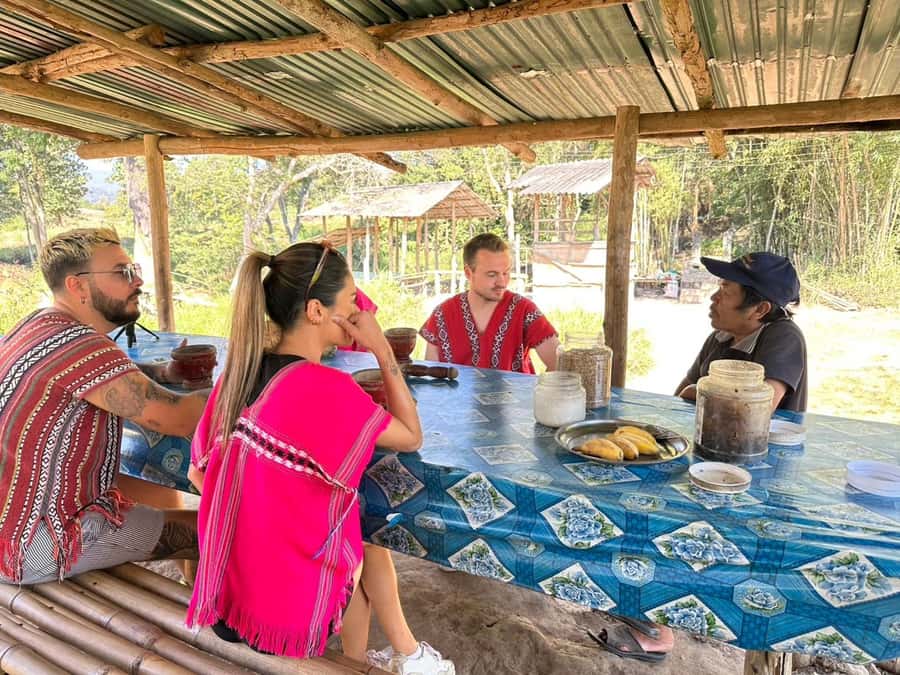
Right after pickup, you’ll spend about 3 hours with the guide as the elephant portion ramps up and the day’s flow gets explained. This block matters because it sets expectations. You learn what the mahouts do, how feeding works, and what to do (and not do) around the elephants.
From a traveler’s perspective, this is where the day can make or break your mood. If you show up sleepy or under-prepared, you’ll feel rushed. If you arrive ready to be outside, you’ll likely find the pacing comfortable—slow enough to watch, active enough to feel like you did something real.
In my view, the “guide-led” structure is also part of the value. You’re not just looking at animals; you’re understanding daily elephant caretaking as a local practice, with context for what you’re seeing in the jungle and water.
Mae Wang Waterfall Walk: A Mountain Reset
After the elephant time, the program moves into the Mae Wang Waterfall area. You’ll visit and walk for about 1.5 hours, which is a sweet spot: long enough to feel like you’ve gotten out of town, short enough that you don’t need a full hiking day.
This stop is great for two reasons. First, it gives you a break from the elephant bathing gear cycle and lets your body reset. Second, you get a real nature moment where your senses shift away from animals and toward the sound and cool air of water in the forest.
Wear this like a pro tip: you’ll likely want shoes that can handle slippery surfaces. You’ll be in sandals sometimes, but having hiking shoes for the walk helps a lot. Bring insect repellent too. Mountain greenery can be buggy, and you’ll thank yourself later.
If you’re the kind of person who loves a good “short hike with a payoff,” this is that. And if you’re more cautious on uneven ground, you can still enjoy the waterfall without trying to move fast. The goal is to relax, soak in the forest vibe, and cool off.
Karen Hill Village Visit: Culture After the Waterfall
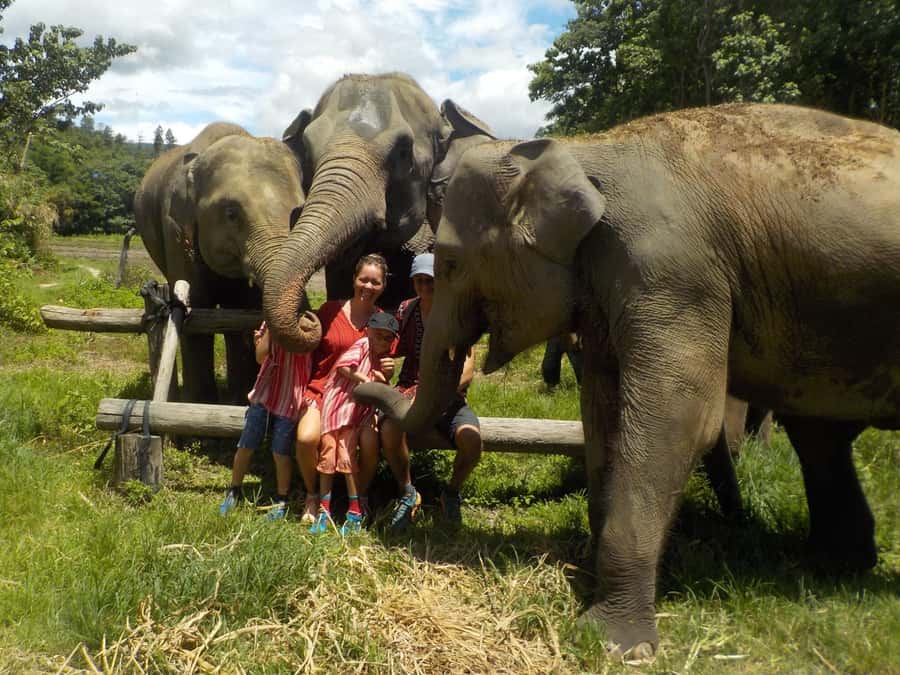
Next is the Karen Hill Village visit for about 1.5 hours. This is your cultural stop, and it rounds out the day so it doesn’t feel like one long wildlife block.
If the long-neck theme is why you booked, here’s the reality check: the info you’re given doesn’t promise a long-neck performance-style segment. What it does promise is time at the Karen Hill Village. That can still be meaningful—especially if you approach it as a community visit rather than a guarantee of seeing a specific feature on demand.
In practice, you’ll likely get guided context and a chance to observe everyday life at the village. Keep your expectations respectful and flexible. Cultural stops work best when you’re curious, not when you’re hunting for one exact photo moment.
Also remember this is still an active day. You’ll have elephant time, a waterfall walk, and then the village. If you’re sensitive to heat or want energy for questions, consider pacing your pace: take breaks, sip water, and don’t feel like you must fill every minute.



Bamboo Rafting on a Quiet River: The 45-Minute Reset
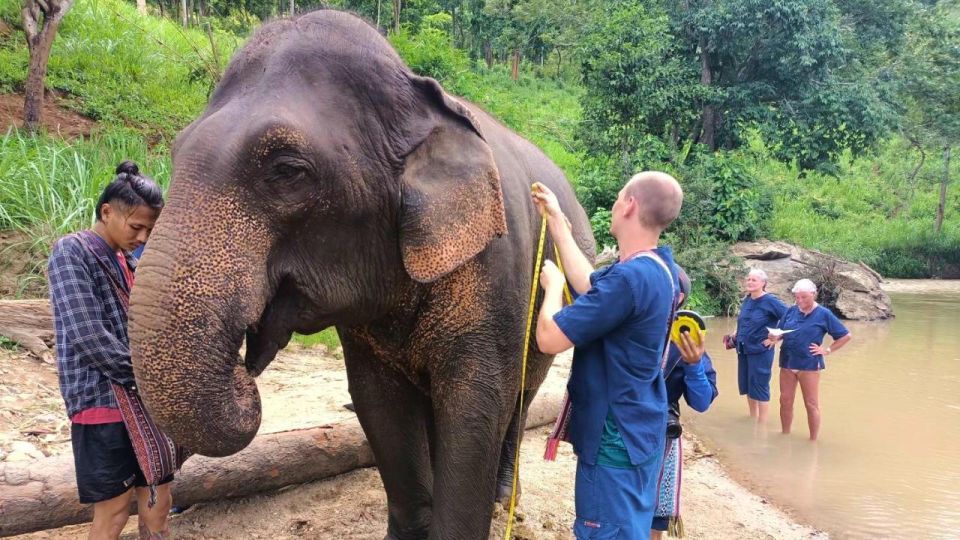
After the village stop, you’ll shift to something totally different: bamboo rafting for about 45 minutes. This is the slower, calmer finale that balances the earlier active parts of the day.
The rafting itself is a great way to end because you don’t need to think too hard. You just sit back and let the scenery and river sounds take over. It also feels like a breather after walking and changing clothes a few times.
If you’re wondering about comfort, plan for damp conditions. Swimwear and a change of clothes are your best friends here, and sandals can work for transitions. Just keep an eye on where you step when getting on and off the raft, since surfaces can be slick.
This segment also adds value because it gives you a “Thailand outdoors” experience beyond elephants and waterfalls. It’s part of the rhythm: meet caretaking traditions, enjoy forest water, then float through river life.
Price and Logistics: What $70 Includes in Chiang Mai
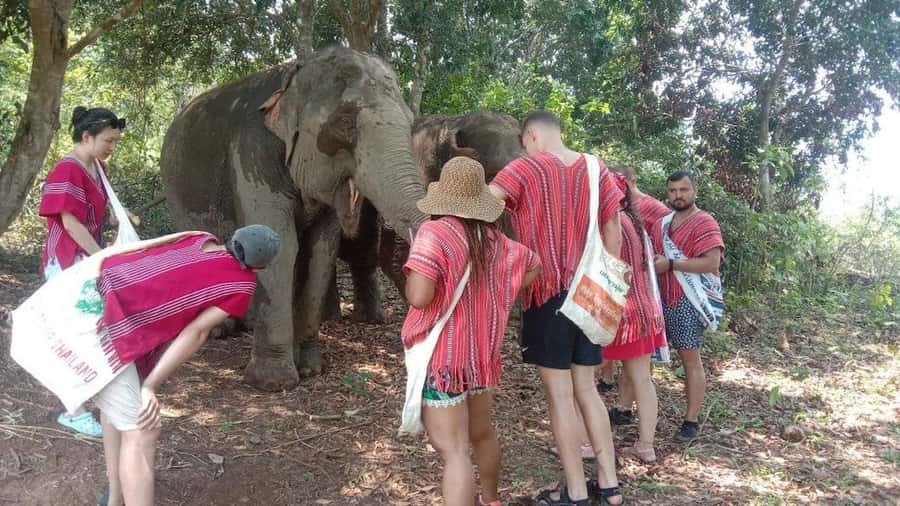
At $70 per person for an 8-hour day, you’re not just paying for entry. You’re paying for a guided, multi-stop schedule with included transfers and key meals.
Here’s what’s included that helps justify the price:
- Round-trip hotel transfers in Chiang Mai
- An English-speaking tour guide
- A complimentary local meal
- Drinking water
And on top of that, you’re getting a full day of elephant interactions plus Mae Wang Waterfall and bamboo rafting. If you were to piece this together separately—transport, a guide for elephant care rules, and coordinated timing—the cost can climb quickly.
Logistics are also part of the “feel” of the day. You’ll travel in a 12-seater air-conditioned van, then switch to a roofed 4×4 truck for the last 10 minutes to reach the sanctuary. That last transfer is short, but it’s worth noting because it can affect comfort if you’re sensitive to bumpy rides.
Pickup is included for accommodations within 5 km of Chiang Mai Old City. If you’re farther out, you’ll have a surcharge for transport. If you want an easier start, plan to be within the pickup radius or accept that the travel time could be longer.
What to Bring: Swimwear, Shoes, and Bug Protection
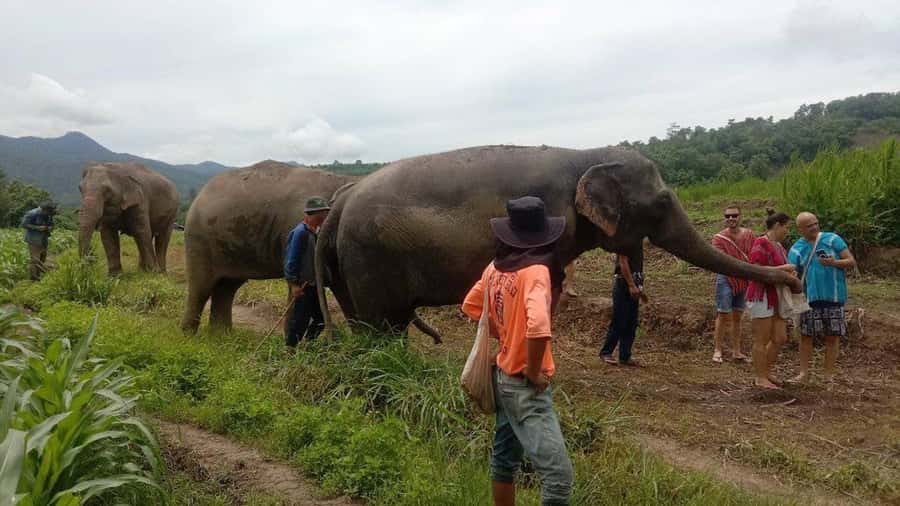
This is a wet-and-wild outdoor day, so your packing list matters. Bring:
- Swimwear and a change of clothes
- Sandals plus hiking shoes
- Sunscreen and comfortable clothes
- Insect repellent
A good strategy: wear or bring something you don’t mind getting wet. The elephant bathing and river time can leave you damp, and you’ll want a dry layer afterward for the waterfall walk and village visit.
Also, follow the rules: no pets, no luggage or large bags. Keep your essentials easy to carry. That makes transitions faster and reduces stress when you’re moving between water, walking areas, and the rafting pickup point.
If you show up prepared, you’ll spend less time thinking about gear and more time paying attention to what the mahouts are doing and how elephants respond around people.
Who This Tour Fits Best (and Who Should Reconsider)
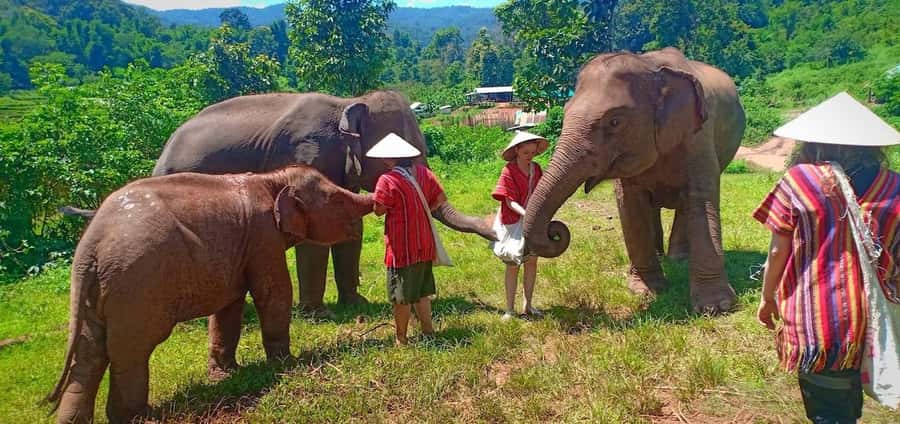
This experience is a strong match if you want hands-on time with elephants and you care about humane practices. The rules—no riding, no hooks or chains, and no forced performances—mean the day is built around animal welfare rather than animal showmanship.
It also fits well if you like a mixed itinerary. You’ll get animal care, a waterfall hike, a village visit, and a river float. It’s not only about wildlife, and it’s not only about walking either.
Reconsider if your top priority is a guaranteed long-neck viewing moment. The title includes long-neck, and the schedule includes a Karen Hill Village stop, but the specific long-neck segment is not spelled out in the details you receive. If you want that cultural element to be the main focus, you’ll want to confirm what you’ll actually see during your time there before booking.
Finally, this day isn’t a couch-and-cocktail itinerary. It includes walking and outdoor conditions, and it’s a long day at about 8 hours. If you’re recovering from an injury or hate uneven ground, plan for gentler walking at Mae Wang Waterfall and keep your shoe choice conservative.
Should You Book Chiang Mai Elephant Village Life: Long Neck & Bamboo Rafting?
If you’re choosing between elephant experiences in Chiang Mai, I’d book this one if your “must” list includes ethical elephant care, hands-on time with mahouts, and a full day that doesn’t stop at just one activity. The no-riding policy and the note about rescue elephants, plus the emphasis on elephants’ own choices, are the biggest reasons this tour makes sense.
I’d also feel good about the value because the day bundles transfers, an English-speaking guide, a local meal, and multiple major stops—including Mae Wang Waterfall and bamboo rafting—into one price.
Book with eyes open if long-neck viewing is your single top reason. The day includes Karen Hill Village time, but the exact long-neck emphasis isn’t guaranteed in the information provided. If you’re okay treating it as a village cultural stop within a wider elephant-and-water day, you’ll likely enjoy the balance.
FAQ
Is elephant riding included or allowed?
No. Elephant riding is prohibited on this tour.
Are the elephants chained or hooked?
The information you receive says there are no chains or hooks at the sanctuary.
How long is the tour?
The duration is 8 hours.
What’s included in the price?
Round-trip hotel transfers in Chiang Mai, an English-speaking tour guide, a complimentary local meal, and drinking water are included.
Where does hotel pickup happen?
Pickup is included for accommodations within 5 km of Chiang Mai’s Old City. Transport from farther locations has a surcharge.
What activities are part of the day?
You’ll meet and interact with the elephants with feeding, walking, and bathing time, visit Mae Wang Waterfall, visit Karen Hill Village, and go bamboo rafting.
What should I bring?
Bring swimwear, a change of clothes, sandals, hiking shoes, sunscreen, comfortable clothes, and insect repellent.
What’s not allowed?
Pets are not allowed, and you should not bring luggage or large bags.
Is there free cancellation?
Yes. You can cancel up to 24 hours in advance for a full refund.