REVIEW · CHIANG MAI
Chiang Mai: Kingkong Smile Zipline with Lunch and Transfers
Book on GetYourGuide →Operated by KING KONG SMILE ZIPLINE · Bookable on GetYourGuide
Flying through Chiang Mai’s trees stays unforgettable. Kingkong Smile is built around long, high rides through forests and valleys, with a safety setup that feels reassuring from the moment you gear up. I like that you choose your intensity up front, and the day ends with a proper Thai buffet outdoors, not just a quick snack.
What really makes this stand out is the twin cable system, trained staff, and safety training that keep the focus on flying, not fretting. I also love the choice between the Ultimate and Extreme courses, because you can match your comfort level to the number of platforms and the long final runs, including a reported 1,200-meter zipline on the Extreme route.
The one drawback to consider is simple: this is still ziplining with real height and exposure. If you’re sensitive to heights, wind, or curvy mountain roads, you’ll want to read the “not suitable” notes carefully and think about motion sickness support for the drive.
In This Review
- Key things I’d prioritize before you go
- Kingkong Smile: What Makes These Ziplines Feel Different in Chiang Mai
- Ultimate vs Extreme: Picking the Right Course for Your Nerves and Time
- Ultimate Package: A big day without going “all in”
- Extreme Package: More platforms, longer rides, bigger finish
- The Six-Hour Day Flow: Pickup, Course Time, Lunch, Return
- Safety Setup That Helps You Focus on Flying
- The Views and the 1200-Meter Moment That People Remember
- Lunch at the End: Thai Buffet, Outdoors, and What to Expect
- Transfers in the Mountains: Comfort Tips That Actually Matter
- Price and Value: Is $61 Worth It?
- Who Should Book Kingkong Smile Zipline (and Who Should Skip It)
- Should You Book This Zipline Day?
- FAQ
- What is the duration of Chiang Mai: Kingkong Smile Zipline with Lunch and Transfers?
- Does the tour include hotel pickup and drop-off?
- What do I get included in the price?
- How long is the zipline and when is lunch served?
- What should I bring with me?
- What languages are the guides/instructor?
- Who is this zipline not suitable for?
Key things I’d prioritize before you go
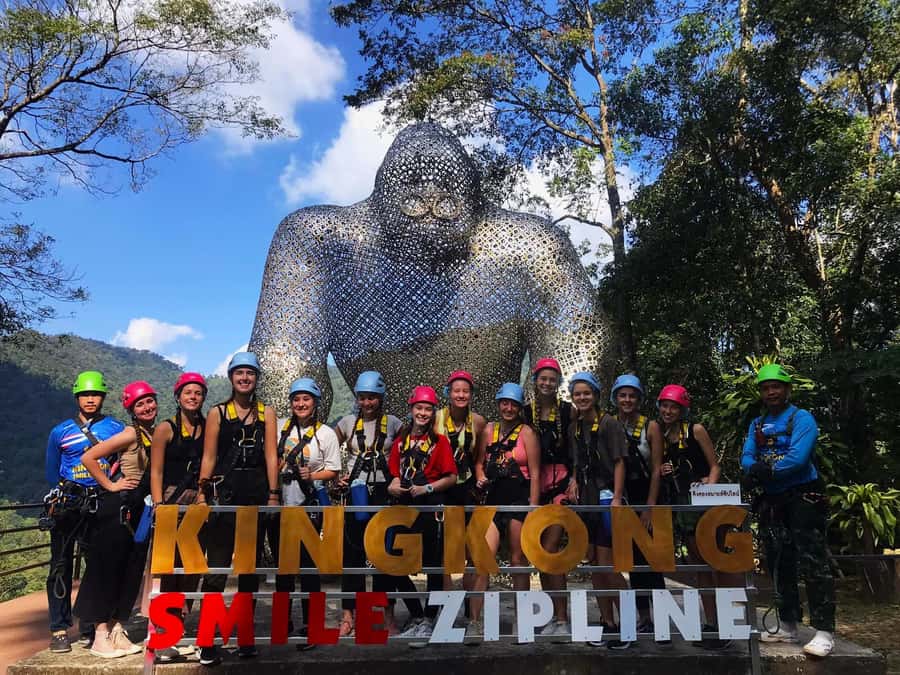
- Twin cable safety system with trained guides, plus safety training and equipment.
- Two course options: Ultimate for a solid overview, Extreme for more platforms and longer zips.
- Hotel pickup and drop-off keeps the day easy, with a join-transport schedule.
- Thai buffet lunch outdoors gives you a real recovery meal after the adrenaline.
- Long rides and late-course highlights mean the Extreme option can feel like the payoff run.
- Photo add-ons are popular if you don’t want to manage your phone while flying.
Kingkong Smile: What Makes These Ziplines Feel Different in Chiang Mai
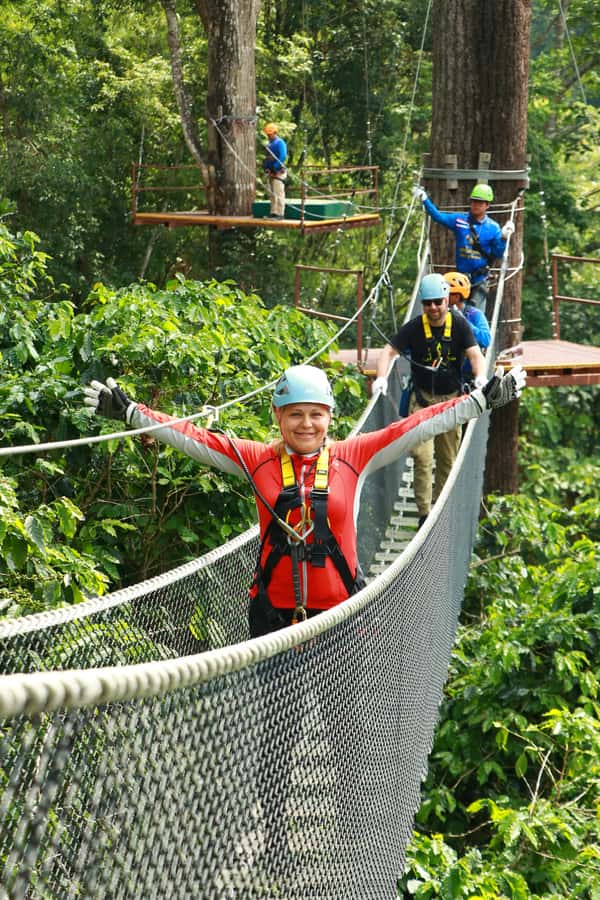
Kingkong Smile Zipline takes place in the mountain area around Maetonluang village, and the whole vibe is about nature plus motion. You’re not just doing a few “taster” zips. The promise here is longer and higher rides, including the long, high reputation the operator carries for Chiang Mai.
The practical reason I like this kind of zipline day is that you get a full block of activity without needing to plan logistics. Your day is handled end to end: pickup, transfers, course time, lunch, and then back to your hotel. That matters in Chiang Mai, where coordinating with drivers on your own can turn into a half-day project.
And the forest view is the real reward. You ride above green stretches, and the course design pushes you to look out at the mountains, treetops, and valleys rather than just focus on your feet.
You can also read our reviews of more tours and experiences in Chiang Mai

Ultimate vs Extreme: Picking the Right Course for Your Nerves and Time
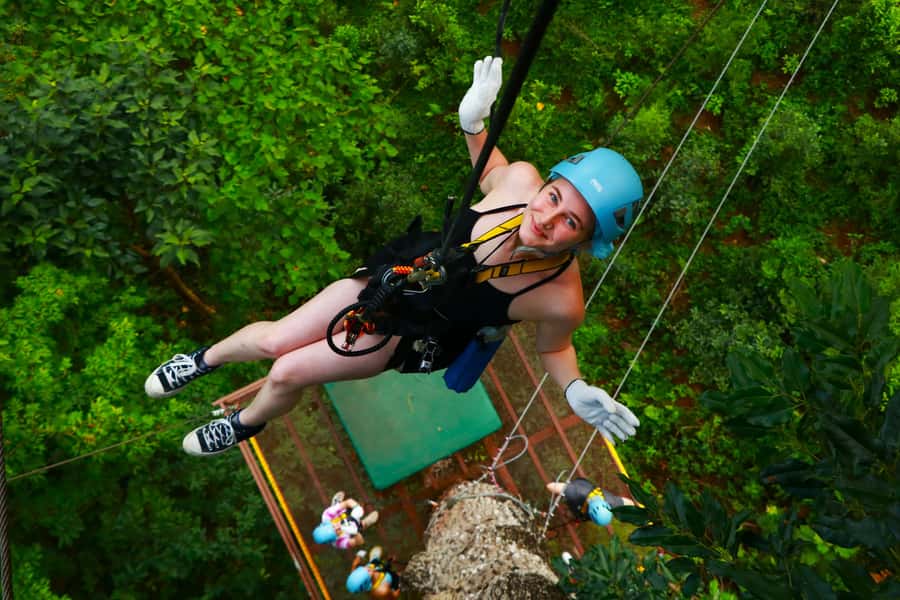
This is the most important decision you’ll make.
Ultimate Package: A big day without going “all in”
The Ultimate option includes 19 platforms and 9 ziplines, plus rope climbing and walks across glass bridges. It’s a strong choice if you want variety—rope skills, a few scarier moments like the glass sections, and enough long rides to feel like you earned them.
If you’re nervous about heights but curious, Ultimate can help you test the waters. Many people feel “fine” after the first couple of zips and then realize they could have pushed further. Starting with Ultimate is a sensible hedge.
Extreme Package: More platforms, longer rides, bigger finish
The Extreme package steps up with 38 platforms and 17 ziplines. It also adds rope nets, extra sky bridges, photo spots, and it’s the route that includes the standout 1,200-meter zipline.
The best way to think about Extreme is as a payoff experience. Multiple guides and teams emphasize that the end of the course is where the longest moments happen, so if you’re trying to maximize the “wow” factor, Extreme is the safer bet.
A quick note: if you’re prone to motion sickness, the longer you spend in the mountains, the more you’ll notice the road on the way up and down. That doesn’t change the zipline itself, but it affects your comfort during transfers.
The Six-Hour Day Flow: Pickup, Course Time, Lunch, Return
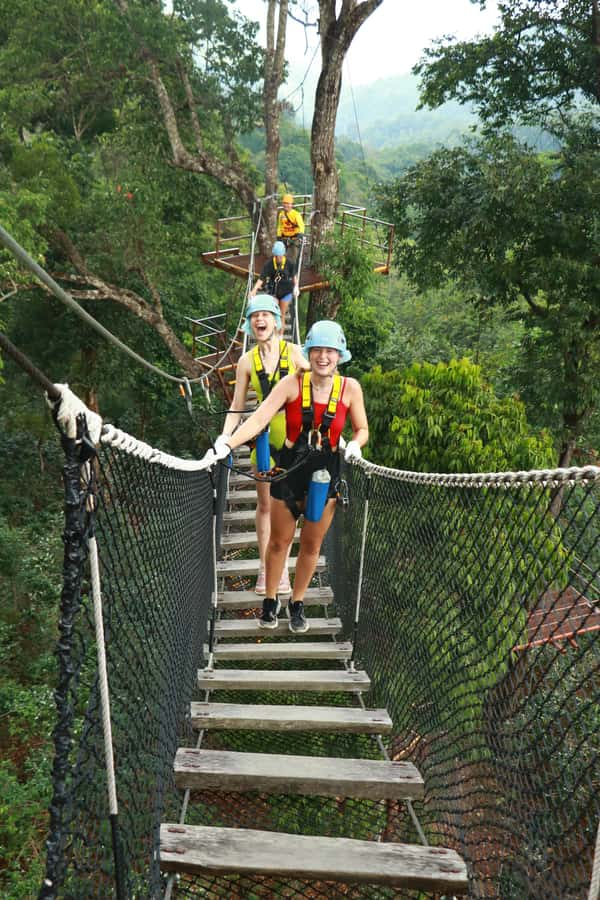
The total experience runs about 6 hours, with the course and meal taking center stage. Here’s what the timing structure usually feels like.
1) Pickup and van transfer (about 1.5 hours):
You’ll start with hotel pickup within Chiang Mai city. The provider emails to confirm your precise pickup time, and you’ll want to be ready in the lobby at least 10 minutes early. The drive to the zipline site is in mountainous terrain.
2) Zipline course time (about 2 hours):
Once you arrive, you get set up and then you run the course. The exact number of ziplines differs by package, but you’re still looking at a couple of hours of flying, walking sections, and platform-to-platform movement.
3) Lunch (about 30 minutes):
After you finish zipping for the day, you eat a Thai lunch buffet outdoors. It’s built for refueling and not for fancy dining.
4) Return transfer (about 1.5 hours):
Then you head back by van for drop-off in Chiang Mai city.
One detail worth knowing: this is join transportation. Vehicle departure and return times are scheduled even if the program timing shifts a bit. So if you’re the kind of person who hates any schedule uncertainty, you’ll still want to keep your plan flexible.



Safety Setup That Helps You Focus on Flying
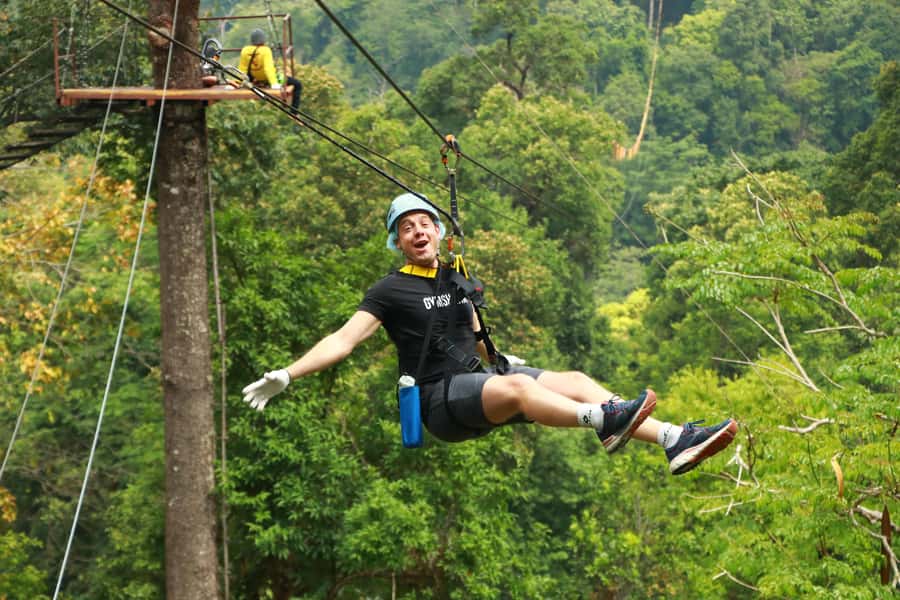
Safety is a major selling point here, and the details are the kind that actually change how you feel once you’re strapped in.
You get:
- Safety training before you start
- Safety equipment and new gloves
- A twin cable system (two cables instead of one)
- Trained staff guiding you throughout
- First aid insurance
The twin cable design is the big practical difference. It reduces the mental load when you’re up on platforms, because you’re not relying on a single line. Combined with staff instructions and consistent guidance, it makes the experience more manageable even if your stomach takes a minute to calm down.
Also, the staff tone matters. In the experiences people describe, guides often use humor and encouragement to reduce panic. When you’re afraid of heights, that “keep moving” attitude from a guide can be the difference between freezing and enjoying the next zip.
The Views and the 1200-Meter Moment That People Remember
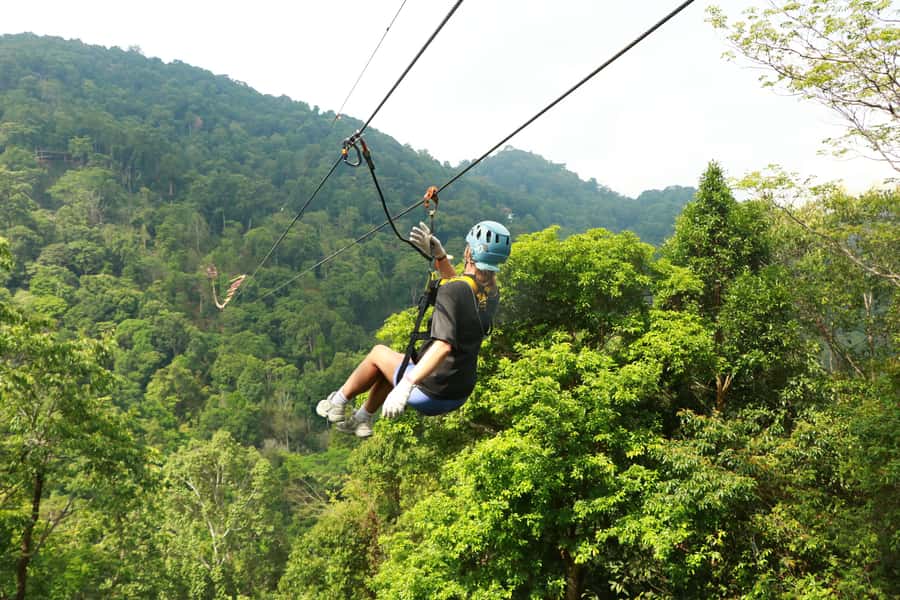
Ziplining is fun in motion, but it sticks because of what you see.
On this course, you fly over forested areas, and you get repeated chances to look out over mountains and valleys rather than only zipping over flat ground. The overall structure is designed so the best long rides come later, which is why the Extreme option gets recommended so often.
If you do Extreme, you’re signing up for a longer string of flying. That can sound exhausting, but it also means you get time to settle into the feeling. One person noted that on the longer ziplines, a guide flying alongside them helped them feel more confident, which is exactly the kind of support that turns fear into control.
Photo-wise, the course includes spots meant for taking pictures, and many people opt for an add-on photographer. The logic is simple: you don’t want to manage your phone while you’re focused on balance, harness checks, and enjoying the ride. There’s a practical trade-off, though: if you lock your phone away, you need to be comfortable with not having it during the moment.
Lunch at the End: Thai Buffet, Outdoors, and What to Expect
Lunch comes after your zipline run, and it’s a Thai buffet served outdoors. The upside is that it gives you a break without ending the day early. You also get a meal that fits Thailand food style—rice dishes, Thai staples, and soup.
What you should mentally prepare for:
- The buffet is generally described as filling.
- Some people find it basic, and a couple mentioned it could be cold.
- The portion helps you recover so you can handle the drive back without feeling wiped out.
If you’re picky, do what I do in similar outdoor meal situations: go for the comfort foods first (rice, noodles, soup), eat steadily, and don’t rely on one dish being your favorite. It’s not trying to be a gourmet restaurant, and that expectation keeps you happy.
And yes, you’ll also likely have drinks with the meal, so it’s a real landing point after the adrenaline.
Transfers in the Mountains: Comfort Tips That Actually Matter
You’re going to spend time in a van heading into hilly, curvy terrain. That means two things for your comfort.
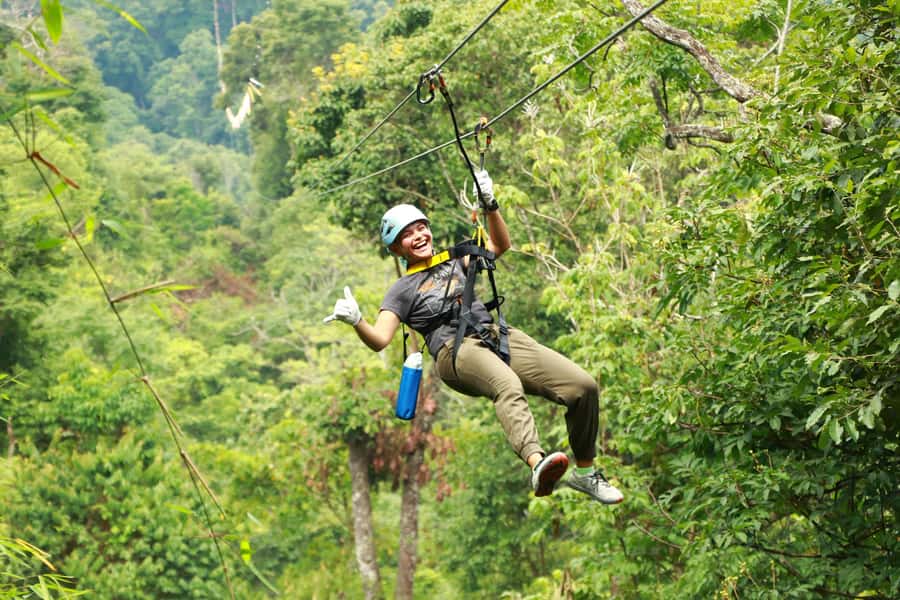
First, bring the right clothes and footwear. You’ll want closed-toe sports shoes and comfortable layers. The day involves walking between platforms and then sitting to eat afterward, so your feet need to be ready for both.
Second, if you’re prone to car sickness, plan for it. One person specifically warned that the road going up the mountain is windy and curvy, recommending motion sickness support like gravol. If you’ve felt carsick in the past, don’t gamble on your luck.
Finally, keep your timing in mind. You might be waiting in a group setting for pickup coordination and then later for course organization. If your schedule is tight, it helps to avoid stacking another activity immediately after drop-off.
Price and Value: Is $61 Worth It?
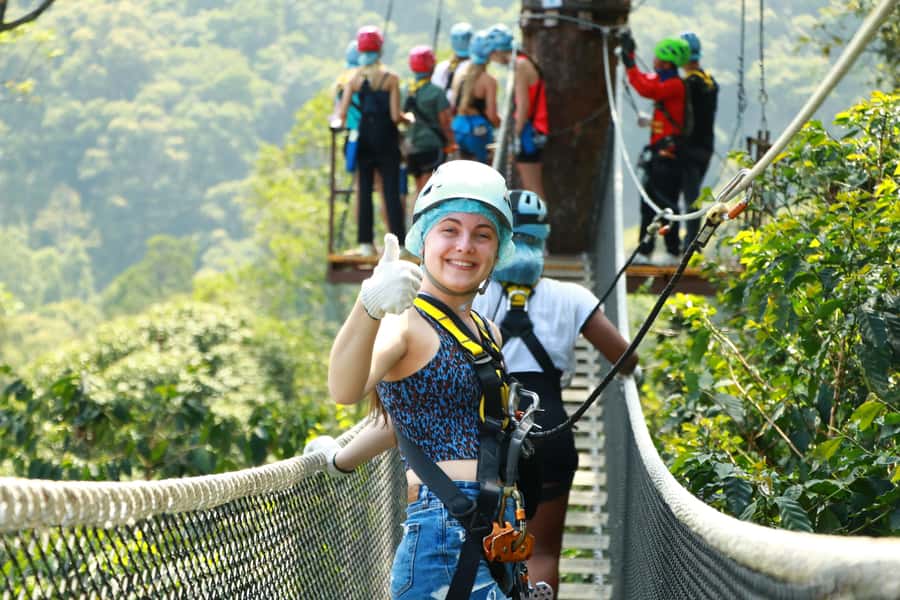
At about $61 per person for this 6-hour experience, the value depends on what you want out of the day.
Here’s the value math in plain terms:
- You’re paying for hotel pickup and drop-off
- The cost includes a Thai lunch buffet
- You get trained guides, safety training, safety equipment, and new gloves
- You also get insurance coverage noted as first aid insurance
- Water is included
So you’re not just paying for ziplines. You’re paying for guided, structured time in a high-activity setting with transportation and meal built in. For a Chiang Mai day trip, that “do it all” convenience is a major part of why this works.
Where people can add cost:
- Photo packages can be purchased. If you want your best shots and don’t want to handle your phone during flights, it can be a smart add-on.
- There’s also a choice between Ultimate and Extreme. Extreme costs more, but the included long rides and extra platforms are precisely what many people feel they missed when they didn’t choose Extreme initially.
My practical advice: if you’re even slightly tempted by the long, late-course zips, lean Extreme. If you’re unsure about heights and want a confidence-builder day first, Ultimate is the safer psychological move.
Who Should Book Kingkong Smile Zipline (and Who Should Skip It)
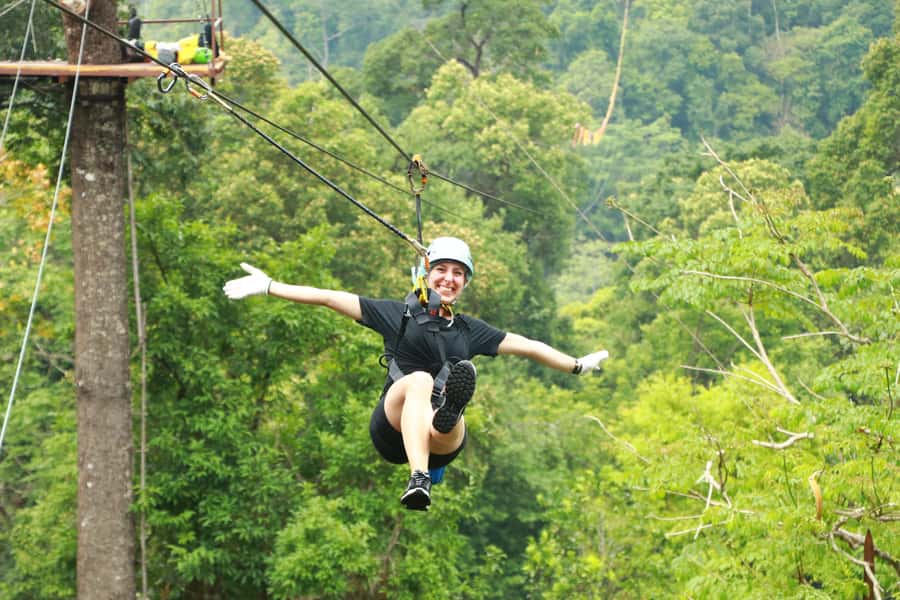
This experience is best for adults and older kids who can handle height and physical activity. The key “not for you” list is clearly stated, and it’s worth respecting.
Not suitable if you are:
- Under 10 years old
- Pregnant
- With back problems
- With mobility impairments
- Afraid of heights
- With epilepsy
- Under 120 cm (3 ft 9 in)
- Over 65 years
- Over 110 kg (243 lbs)
- With high blood pressure
- With low fitness
- With motion sickness
(Also, if you have mild motion sickness, you might still be able to manage it with support, but the operator lists it as not suitable.)
If you want a zipline day in Chiang Mai that feels like a real adventure through the forest, this fits well. It’s also ideal for people who like a guide-driven experience, especially when the guides use humor and reassurance.
Guide names that stood out from experiences include:
- Kwan (described as an amazing guide)
- Best
- Tommy
- Noop
Even without knowing who you’ll get, the pattern is clear: a friendly, confident guide makes the difference.
Should You Book This Zipline Day?
Book it if you want a guided, high-energy Chiang Mai nature experience with real structure: transfers, safety training, a meaningful Thai lunch buffet, and enough zipline time to feel like you did more than a single thrill run.
Skip it if:
- Height fear is a deal-breaker for you.
- You know you get seriously car sick on windy roads.
- You fall into any of the operator’s not-suitable categories.
If you’re torn between Ultimate and Extreme, here’s the rule I’d use: choose Ultimate if you’re building confidence. Choose Extreme if you want the longest rides and you’re ready for a longer course with a bigger finish.
If you do book, plan your day like a pro: wear long pants and long sleeves, bring sunscreen, bring sports shoes, and keep your phone strategy simple. You’ll remember the flight more than you’ll remember what was in your pocket.
FAQ
What is the duration of Chiang Mai: Kingkong Smile Zipline with Lunch and Transfers?
The experience lasts about 6 hours.
Does the tour include hotel pickup and drop-off?
Yes. Pickup and drop-off are included from hotels within Chiang Mai city. You’ll need to provide your hotel name so the provider can confirm the pickup time.
What do I get included in the price?
Included are hotel transfers, 1 bottle of water, a Thai lunch buffet, trained guides, safety training, new gloves, safety equipment, and first aid insurance.
How long is the zipline and when is lunch served?
You’ll have about 2 hours of ziplining, followed by lunch for about 30 minutes.
What should I bring with me?
Bring sunscreen, a long-sleeved shirt, sports shoes (closed-toe), long pants, and your passport (a copy is accepted).
What languages are the guides/instructor?
The instructor and guides are listed as English and Thai.
Who is this zipline not suitable for?
It’s not suitable for children under 10, pregnant women, people with back problems or mobility impairments, people afraid of heights, people with epilepsy, anyone under 120 cm, people over 65, people over 110 kg, people with high blood pressure, people with low fitness, and people with motion sickness.