REVIEW · CHIANG MAI
Chiang Mai: Doi Inthanon, Waterfalls, & Tribal Villages Tour
Book on GetYourGuide →Operated by Oh-Hoo · Bookable on GetYourGuide
A day in the mountains sounds simple. Then Doi Inthanon hits you with real altitude, real waterfalls, and real people. I like how this tour keeps you moving through Thailand’s highest peak area and also gives time for Karen and Hmong hill tribe culture instead of just quick photo stops. The best part, for me, is the guide-led storytelling—often with guides like Bobo, Choo, PJ, and Nammy who manage to make history feel practical. One drawback to plan for: fog can steal the view from the top, and the day can still feel like a lot of driving.
You’ll start with hotel pickup (Old Town and Nimman zones) and ride up toward 2,565 meters. That climb changes the whole feel of Chiang Mai, from warm city evenings to cooler mountain air. Guides often help you understand what you’re seeing at the pagodas and in the villages, and that turns the day from scenic sightseeing into something you can actually explain later. Still, there are trade-offs: lunch is a set menu, and in at least one case it was called a bit bland.
Here’s the good news: the day is built for one-day visitors. You get a strong mix of nature plus culture, with enough stops to make it feel worth the time, even if you’re not traveling for weeks. Just remember this isn’t for everyone—pregnancy and mobility limits are a no-go, and vehicle comfort can vary.
In This Review
- Key things that make this tour worth your time
- Doi Inthanon’s peak area and King Inthawichayanon’s forest idea
- Waterfall time: Wachirathan and Sirithan in the same day
- The King and Queen pagodas: tickets, dress code, and photo spots
- Karen and Hmong village visits plus the hill market stop
- How the 10-hour flow works: pickup, driving, stop times, and fog
- Guides like Bobo, Choo, PJ, Ping, and Nammy make the day
- Lunch and the practical reality of a set menu
- Price value at $36 plus the fees you still need to budget
- Who should book this, and who should skip it
- Should you book the Chiang Mai Doi Inthanon tour?
- FAQ
- What does the tour price include?
- What extra fees should I expect on the day?
- Where is pickup available?
- What time is pickup?
- How long is the tour?
- What should I bring with me?
- Is there a dress code for the pagodas?
- What if I’m traveling with a child?
- Is this tour suitable for everyone?
- What languages are the guides?
Key things that make this tour worth your time
- Doi Inthanon’s 2,565 m viewpoint gives you the mountain “you really went there” moment
- King Inthawichayanon’s forest vision ties the scenery to a real conservation story
- Wachirathan or Sirithan waterfalls bring the day a proper waterfall payoff
- Karen and Hmong village + market stops offer daily-life glimpses, not just temple photos
- Pagodas with a dress code mean you’ll need pants/covered shoulders and closed-enough shoes
- Guide quality matters here, and names like Bobo, Choo, PJ, Ping, Bee, Oi, Maxie, and Soo show up in the reviews
Doi Inthanon’s peak area and King Inthawichayanon’s forest idea
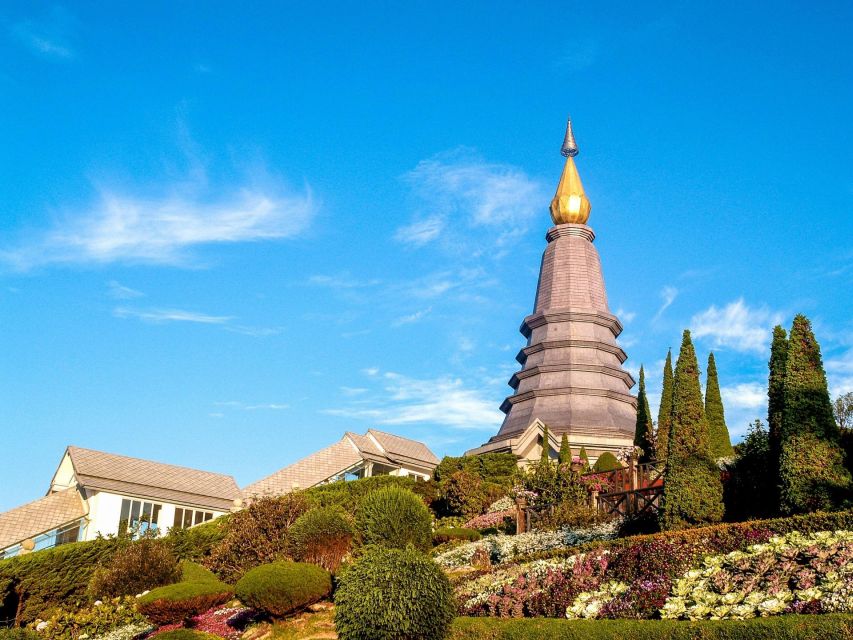
Doi Inthanon is the kind of place that changes your pace. The day starts in Chiang Mai, then slowly turns into something cooler and greener the higher you go. You’re taken up to Thailand’s highest peak region (2,565 meters), so even if you don’t hike a ton, you still feel the altitude shift.
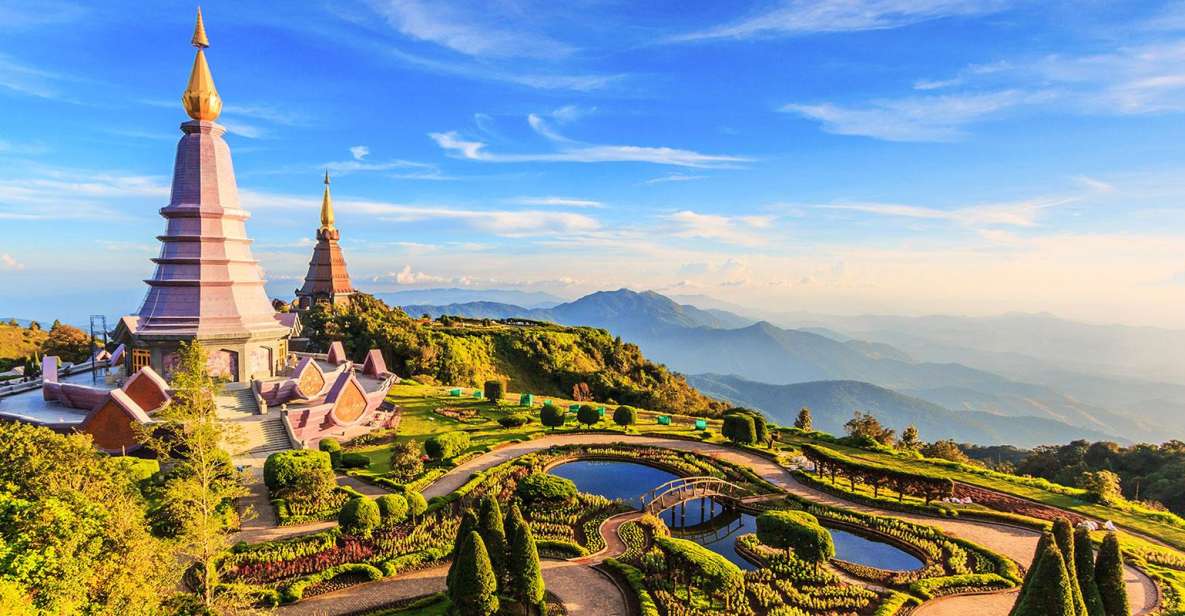
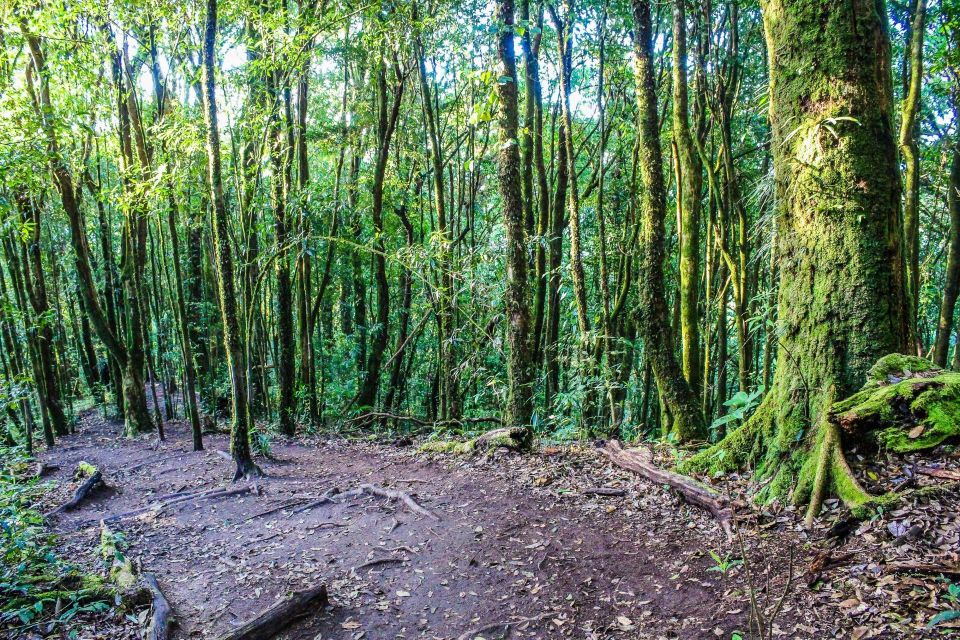
What I found smart about this tour is that it doesn’t treat the mountain as scenery-only. It connects the forest around you to the legacy of King Inthawichayanon, whose forest conservation vision is part of the stop narrative. That context matters because otherwise you just stand near trees and take pictures. With the story, the forest becomes the point—why it’s protected, and why the views and gardens are laid out the way they are.
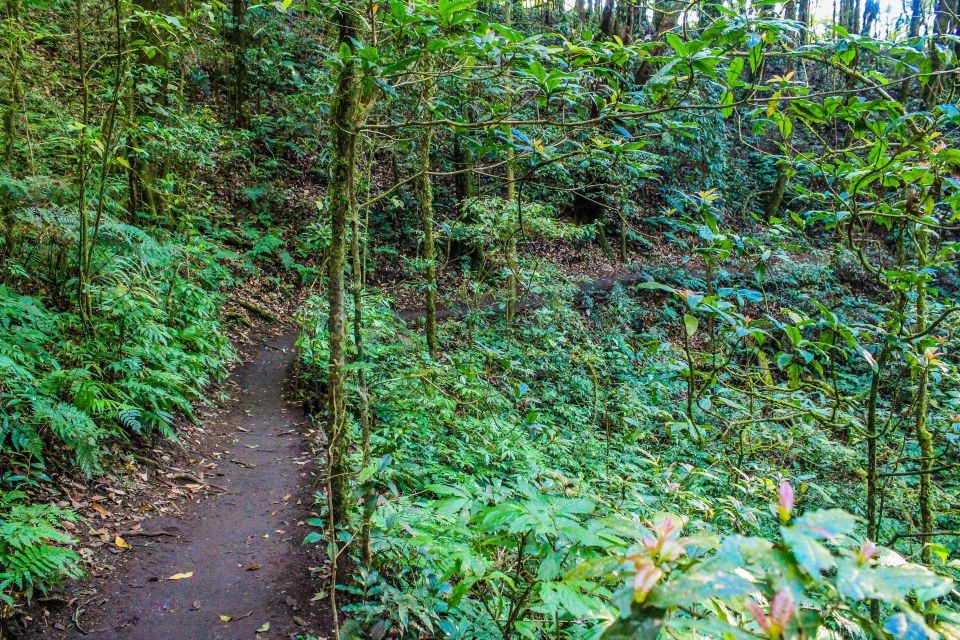
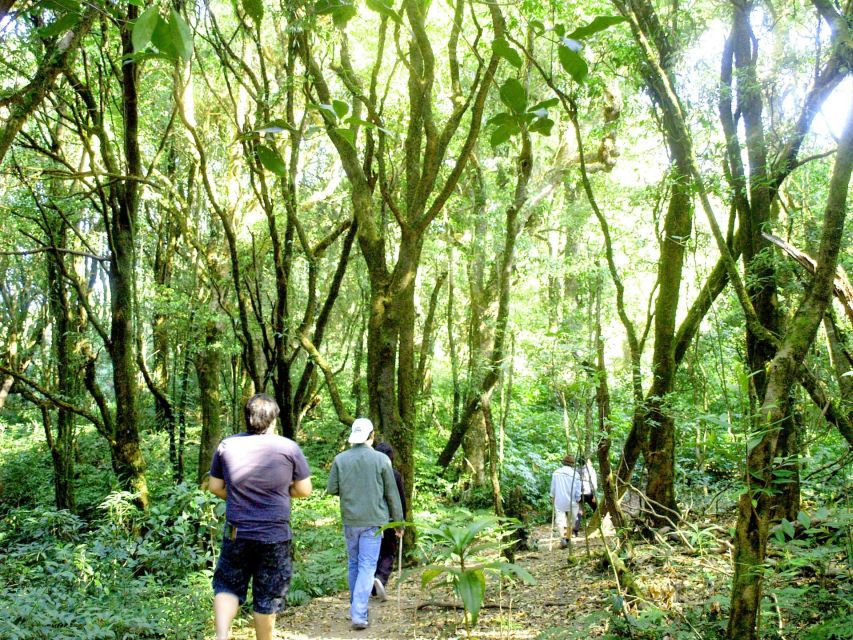
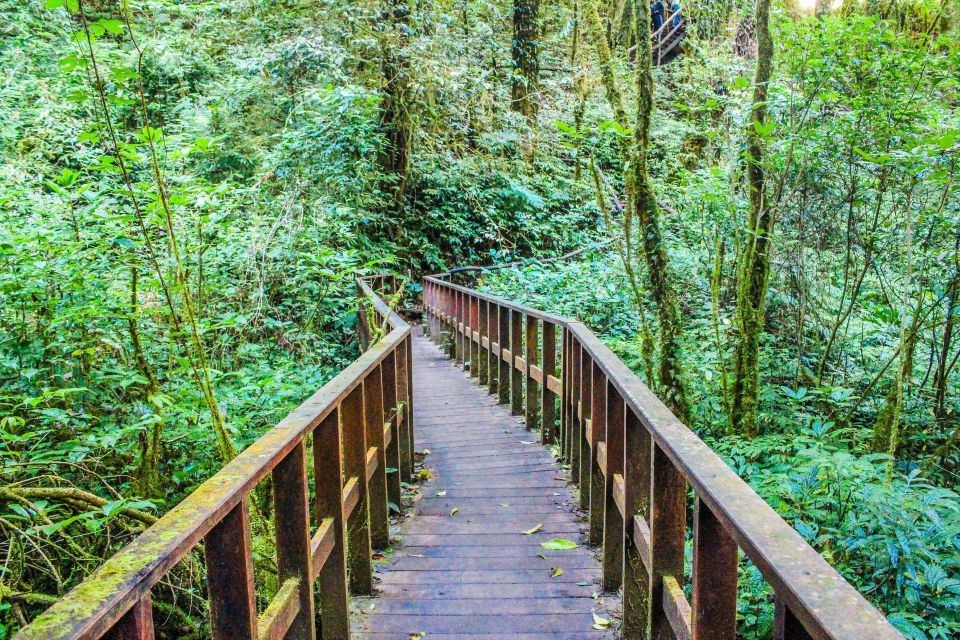
You’ll also get a chance to walk nature trails during the day. Many stops are not marathon hikes, but they’re enough to break up the drive and let you experience the park air. Expect cool air up top, and bring layers if you run cold.
You can also read our reviews of more tours and experiences in Chiang Mai.



Waterfall time: Wachirathan and Sirithan in the same day
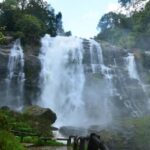
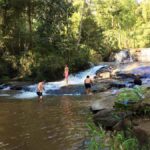
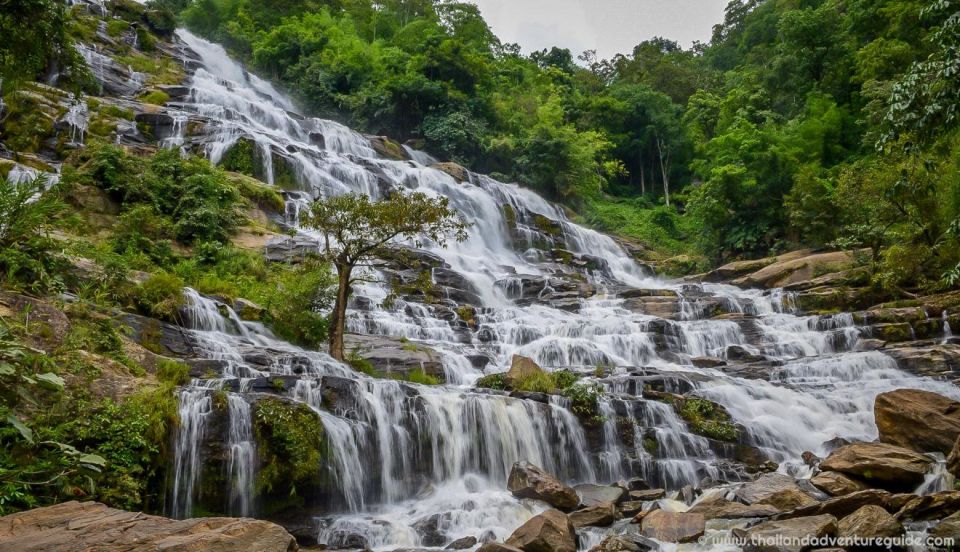
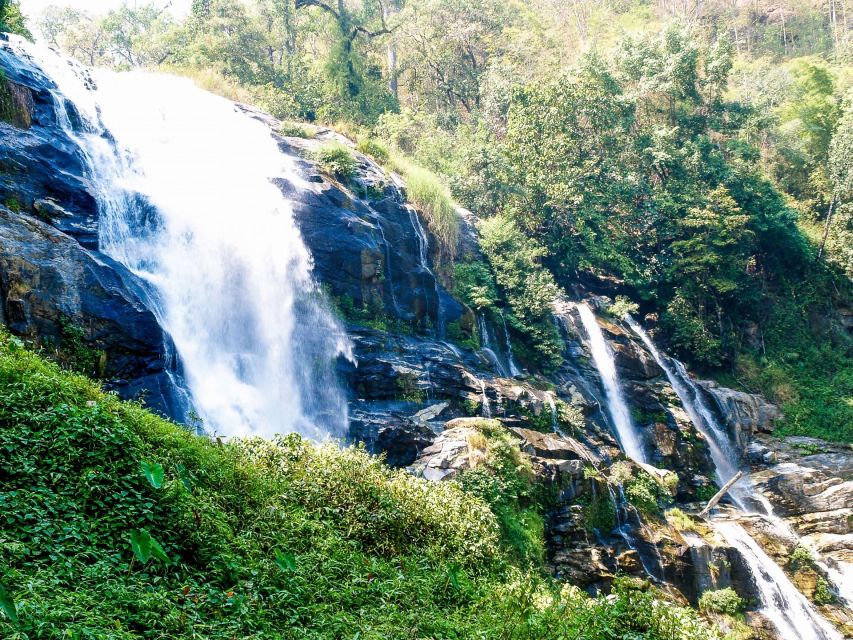
The tour’s big nature hit is the waterfall section, with stops around Wachirathan or Sirithan Waterfalls. This is where Doi Inthanon stops being “pretty” and becomes physical. You hear water before you fully see it, and after rain the falls can look especially dramatic.
One practical thing: plan your expectations around weather. When conditions are foggy, the peak views can be muted. But the waterfall part often still works because water still does its job. In reviews, people noted that the waterfalls were stunning after recent rain, and that the flow can be powerful when it’s been wet.
Also, don’t expect long waterfall hikes. The tour is built around a day of multiple stops, so your time at each location is limited. If you want a deep, all-day hike, you’d do better with a longer, more hike-focused option. If you want a waterfall moment without committing your whole day to one trail, this fits.
The King and Queen pagodas: tickets, dress code, and photo spots
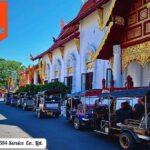
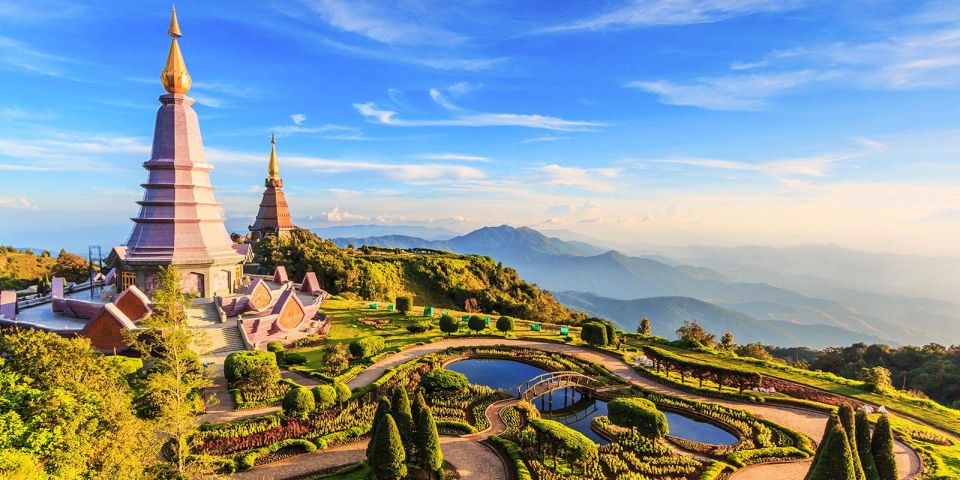
Two pagodas—known for royal architecture and hilltop views—are a signature finish in the Doi Inthanon experience. You’ll visit the King and Queen’s Pagodas, and the tour includes skip-the-line style handling, which can reduce time wasted in entry queues.
But here’s the important practical detail: the pagodas require admission tickets that are not included. Adults pay 100 THB, children 50 THB (and the child ticket category is for ages 3–6). That means you’ll want some cash on hand for tickets and any park entries.
Now the dress code. This is not optional if you want to avoid hassle at the entrance. You must dress in a casual dress code (or better). That means:
- No tank tops
- No short pants
- No flip-flops
- Sneakers are okay
It’s a small thing, but it can matter if you planned to travel light. I’d pack at least one decent pair of long pants and a T-shirt that you don’t mind keeping a little respectful for a temple setting.
Weather affects this stop too. If fog rolls in, the top views can be reduced. Still, even when the skyline is hidden, the pagodas themselves offer plenty to look at—structure, gardens, and the general sense of place.
Karen and Hmong village visits plus the hill market stop
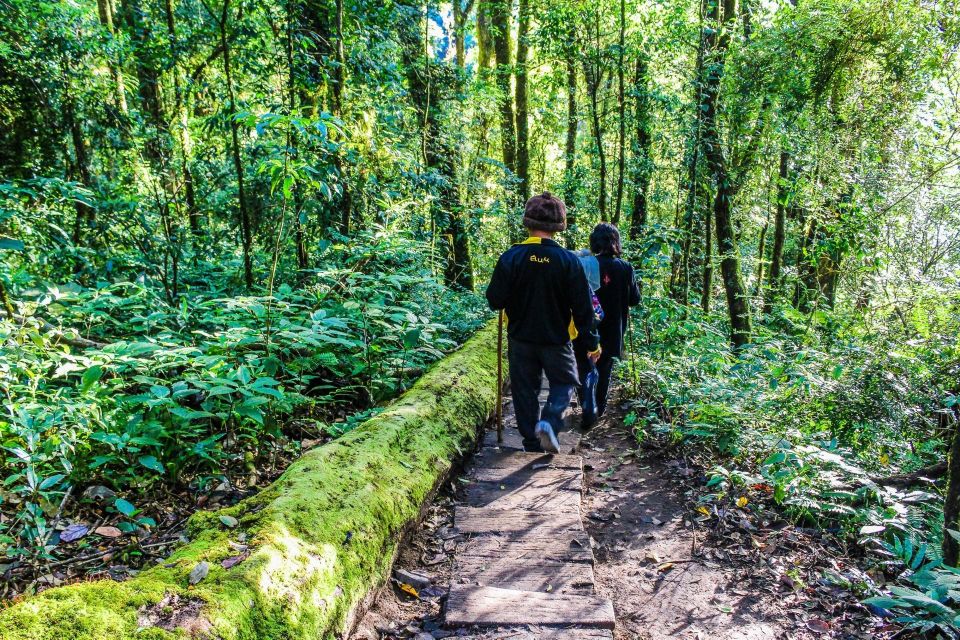
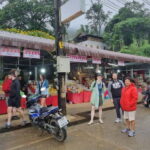
This is the cultural section of the day, and it’s handled via Karen and Hmong hill tribe encounters. You’ll visit a local market area as part of the program, then continue to village time.
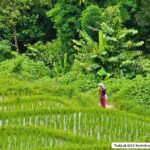
I like that this portion isn’t just a quick drive-by. The day’s rhythm gives you time to see everyday items and learn how people live and work. In reviews, the Karen village stop was often described as a surprising highlight, and guides tended to connect what you’re seeing to traditions and day-to-day roles.
One thing to keep real: these visits can sometimes feel like a short window into a complex culture. In at least one case, the tribal portion felt a bit underwhelming, and another reviewer wished the coffee or tea tasting had been given more attention. So if you’re hoping for a long, participatory cultural immersion, adjust your expectations a bit. You’re getting a guided snapshot.
If you do it with the right mindset, it can still be meaningful. Ask questions. Listen for the explanations about local life. And remember photography and interaction rules can be flexible depending on the community and the guide’s instructions—follow what your guide says.
How the 10-hour flow works: pickup, driving, stop times, and fog
This is a full day tour at 10 hours, with hotel pickup starting between 08:00 and 08:30. The operator confirms the exact pickup time by email, and you’re expected to meet the guide at your lobby at least 10 minutes early. If you arrive more than 10 minutes late, you risk being marked a no-show.
Because it’s a joint tour, your pickup happens in order. That means you might wait a little at the start, so don’t plan on rushing out for coffee at the exact moment. Once you’re in the van, the day is organized as a sequence: mountain viewpoints, gardens, waterfall stop(s), pagodas, then tribal village and market time, followed by the return to Chiang Mai.
The return is typically between 17:00 and 17:30, depending on your hotel and traffic.
Weather can be the wildcard. Fog is mentioned as a reason some people didn’t get the best view near the pagodas or top areas. You can’t control the weather, but you can control what you care about. If you’re mainly chasing panorama photos, bring a Plan B mentality. If you’re here for variety—waterfalls plus culture plus altitude—the day still delivers even with cloudy skies.
Also, expect a lot of driving. Some reviewers said the trip involved plenty of time on the road, and a few noted shorter walking times at each location (around 30–60 minutes). That’s not a bad thing for a one-day package, but it’s why you should treat it like a full sightseeing itinerary, not a slow nature walk.

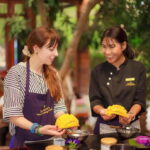
Guides like Bobo, Choo, PJ, Ping, and Nammy make the day
This tour lives or dies by the guide. The reviews are loaded with praise for guides—some people named their guides like Bobo, Choo, PJ, Maxie, Nammy, Ping, Bee, Oi, Andy, and Soo—and the common theme is energy plus clear explanations.
When guides are strong, you understand why the place matters. You hear stories about the royal pagodas and the park, and you get local context at the hill tribe stops. Reviews often call out guides being funny, friendly, and attentive—helping the group stay positive, especially when fog shows up.
That said, language consistency can be a mixed bag. The tour lists English and Thai, and in one case the guide’s English was described as hard to understand at moments. If English narration is a must for you, choose your expectations carefully and know that Thai bilingual guides can vary in pacing and clarity.
One more practical note: you’re also relying on the driver for comfort and safety on mountain roads. In one review, a seat in the back described as loose made corners and braking feel unsafe. That’s not the norm everywhere, but if you’re sensitive to motion or want the smoothest ride, it’s smart to request the best seat you can when boarding.
Lunch and the practical reality of a set menu
You get lunch (set menu) as part of the package. Most of the time, set lunches in tour programs are fine, but this one had a downside in at least one review: it was described as lackluster and like people were being fed in bulk.
So here’s my advice: don’t build your day around lunch. Treat it as fuel. If you’re picky about food, consider bringing a small snack for later in the afternoon, especially since you’ll return to your hotel after 17:00.
The good news is that the tour does include drinking water, so you shouldn’t be stuck thirsty between stops. On cooler mountain days, people sometimes forget to drink, so take advantage of it.
Price value at $36 plus the fees you still need to budget
At $36 per person for a 10-hour guided day with transport and included lunch, this is positioned as a value outing. You’re not paying separately for a guide, the air-conditioned vehicle, or basic coverage like insurance. That matters in Chiang Mai, where private day trips can quickly get expensive.
But you should budget for the extra park and pagoda fees:
- National park fee: 300 THB adult, 150 THB child
- King and Queen pagodas tickets: 100 THB adult, 50 THB child
Those fees aren’t huge compared with private options, but they are real costs you’ll want to plan. Having a little cash (or a plan to pay on arrival) is the easiest way to stay smooth.
For me, the best value is what you can cram into one day: altitude, two different nature moments (trails plus falls), a royal viewpoint stop, and hill tribe culture. If you’re short on time in Chiang Mai, this is one of those tours that makes sense because you’re getting a broad taste rather than one narrow highlight.
Who should book this, and who should skip it
This tour is a solid fit if you want:
- A one-day mountain escape from Chiang Mai
- A guided mix of nature + royal sites + hill tribe culture
- Hotel pickup convenience without planning a mini road trip yourself
- A day where the guide explains what you’re looking at (especially if your guide is strong, like many named in reviews)
I’d be cautious if:
- You hate long drives and prefer fewer stops
- You need a lot of walking time
- You’re counting on clear views at the peak, because fog can happen
- You have mobility limits or pregnancy (this tour is listed as not suitable for both)
If you’re traveling with mobility needs, skip it. If you’re going with anyone who gets motion sick, pick your seat carefully and consider bringing what helps you personally.
Should you book the Chiang Mai Doi Inthanon tour?
Book it if you want a well-structured day that hits the big Doi Inthanon highlights—2,565-meter views, waterfalls, pagodas, and Karen/Hmong culture—without you doing the logistics. The guide factor is huge here, and the reviews highlight that many guides are funny, helpful, and genuinely invested in explaining the day.
Don’t book if you want deep hiking, a slow travel pace, or you know fog and cloudy skies will ruin the whole trip for you. Also, if comfort in vehicles matters a lot, be aware that experiences can vary.
If you go in with the right mindset, this is a great way to turn one day into a memorable mix of Thailand’s mountain edge and cultural stops.
FAQ
What does the tour price include?
The tour includes round-trip transportation by air-conditioned car or minivan from Chiang Mai Old Town and Nimman, lunch (set menu), drinking water, a tour guide, and insurance.
What extra fees should I expect on the day?
You’ll pay the national park fee (300 THB per adult, 150 THB per child) and King and Queen pagodas admission tickets (100 THB per adult, 50 THB per child). These are not included.
Where is pickup available?
Pickup is available for all hotels within Chiang Mai’s Old Town and Nimman areas.
What time is pickup?
Pickup starts between 08:00 and 08:30. The exact pickup time is confirmed by email, and you should meet your guide in the lobby at least 10 minutes early.
How long is the tour?
It lasts about 10 hours, and it returns to your hotel around 17:00 to 17:30 depending on traffic and your location.
What should I bring with me?
Bring a passport or ID card (a copy is accepted).
Is there a dress code for the pagodas?
Yes. Dress casually (or better). No tank tops, no short pants, and no flip-flops. Sneakers are OK.
What if I’m traveling with a child?
Child ticket age is between 3 and 6 years. If the booking details don’t match when you show up, you may need to pay the additional charge upfront.
Is this tour suitable for everyone?
It is not suitable for pregnant women or people with mobility impairments.
What languages are the guides?
The tour guide speaks English and Thai.