REVIEW · CHIANG MAI
Taste of Chiang Mai: Michelin Guide Street Food Tour
Book on GetYourGuide →Operated by KO TRIP CNX · Bookable on GetYourGuide
Michelin Guide food on a street stall? That sounds right up my alley. This 2-hour Chiang Mai experience pairs Michelin Bib Gourmand favorites with a local guide who knows where to stand, what to order, and how to read the market’s rhythm.
I really like the handpicked Michelin dishes focus, so you’re not guessing what’s good. You’ll get standout bites such as Thana Ocha’s Hakka-style pink noodle (Yen Ta Fo) and then shift into market life around Warorot Market (Kad Luang), with guides like Nat/Natt often singled out for being fun, focused, and full of details.
One thing to consider: this is a short, tasting-first tour, not a 10-stop “eat everything” marathon. If you’re expecting a huge variety of bites, you might find the food list a little shorter than you want.
In This Review
- Key points worth planning around
- Michelin Bib Gourmand street food, but in plain human scale
- Price and time: $20 for tastings, not a buffet of ten dishes
- Lunch option route: Wat Saen Fang to Warorot Market and Thana Ocha
- Stop-by-stop feel (what it’s like)
- Dinner option route: KFC Nimman to One Nimman and White Market
- The food highlights you should recognize on sight
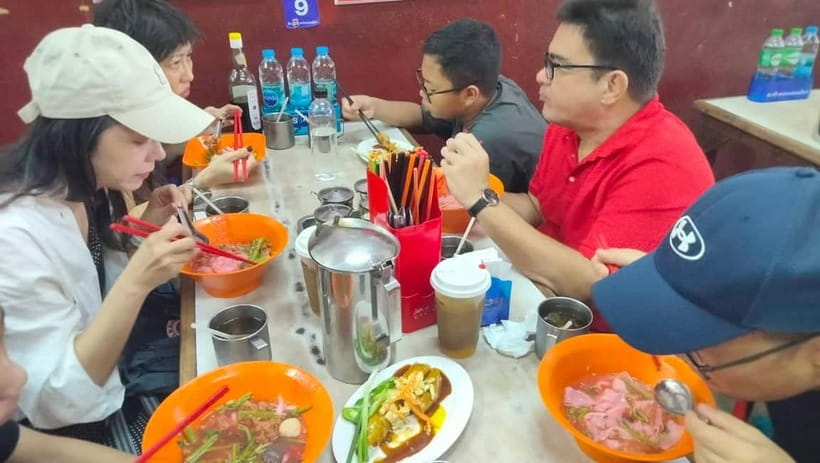
- Thana Ocha: Yen Ta Fo, pink Hakka-style noodles
- Lung Khajohn Wat Ket: Khao Kriab Pak Moh dumplings
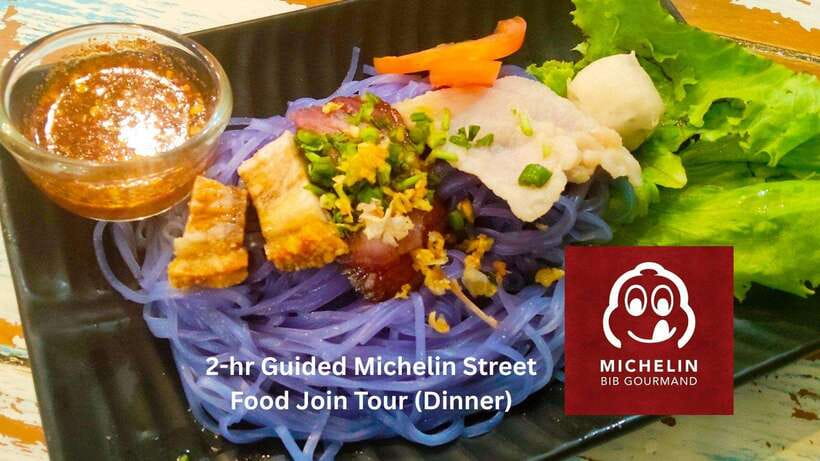
- Anchan Noodle: blue noodle
- Jia Tong Heng: Orh Nee plus Shui Jian Bao
- Why Nat/Natt-style guiding makes the difference
- Warorot Market: what you should do with your 10 minutes of walking time
- What to bring (and what can trip you up)
- Pace check: you’ll leave full enough, not stuffed
- Who this tour is best for
- Should you book Taste of Chiang Mai: Michelin Guide Street Food Tour?
- FAQ
- How long is the Michelin Guide street food tour?
- How much does the tour cost?
- Where do I meet for the lunch option?
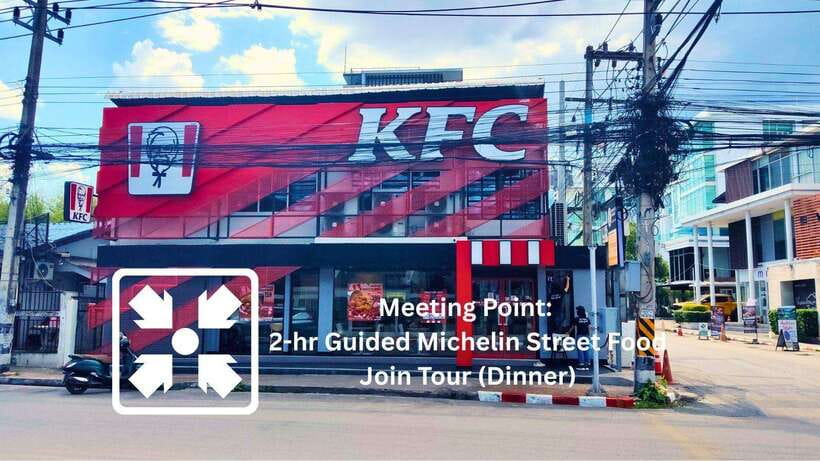
- Where do I meet for the dinner option?
- What’s included for the lunch option?
- What’s included for the dinner option?
- Do I visit Warorot Market on the dinner option?
- What language is the tour guide?
- Is it a private tour or a small group?
Key points worth planning around
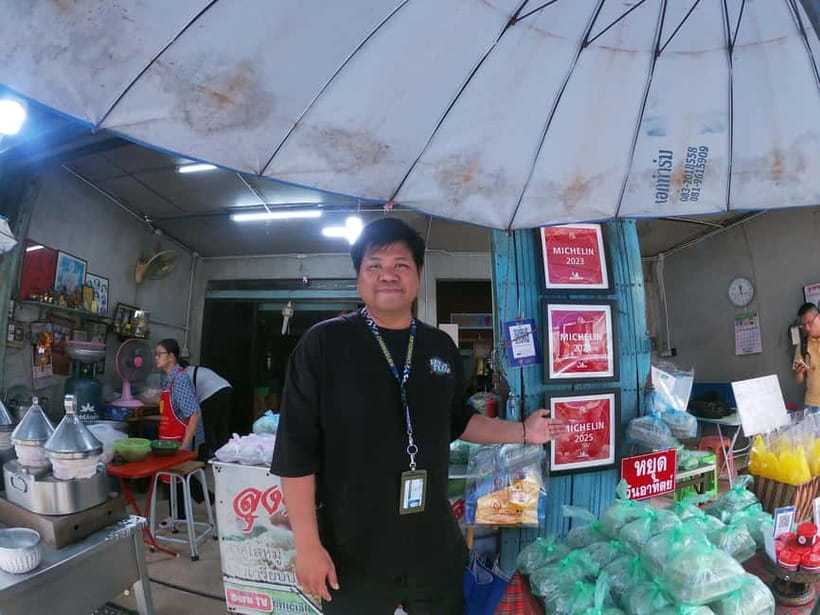
- Michelin Bib Gourmand tastings in a tight 2-hour format so you get value without dragging all day
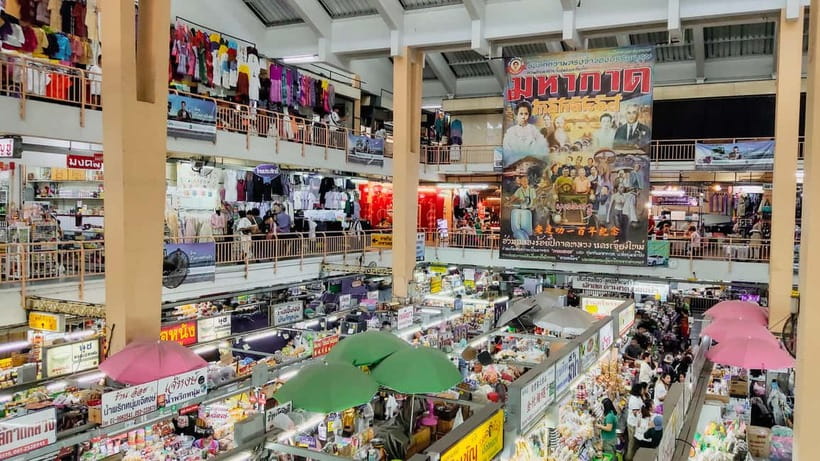
- Warorot Market (Kad Luang) on the lunch option, with guided walking and sight-seeing moments
- Thana Ocha’s Yen Ta Fo (pink noodles) is a named highlight tied to Michelin recognition
- Lung Khajohn Wat Ket’s Khao Kriab Pak Moh shows how classic Northern Thai street food gets made
- Nat/Natt-style guiding is consistently praised for clear explanations and lively market storytelling
Michelin Bib Gourmand street food, but in plain human scale
Chiang Mai food can feel like sensory overload if you don’t know where to start. This tour keeps things manageable: a small set of Michelin-linked dishes plus walking time to help you understand the local food scene instead of just collecting samples.
The Michelin angle matters for two reasons. First, Bib Gourmand means “good value” in Michelin-speak, so it’s not just fancy plating—it’s food locals actually chase. Second, the tour uses that Michelin filter to point you toward items that are worth your limited time (and appetite) in Chiang Mai.
That “guided tastings with a relaxed pace” piece is also practical. You’re not rushing from stall to stall to keep up. You get time to look, ask, and eat at a rhythm that feels more like going out with a friend than ticking boxes.
You can also read our reviews of more food & drink experiences in Chiang Mai
Price and time: $20 for tastings, not a buffet of ten dishes
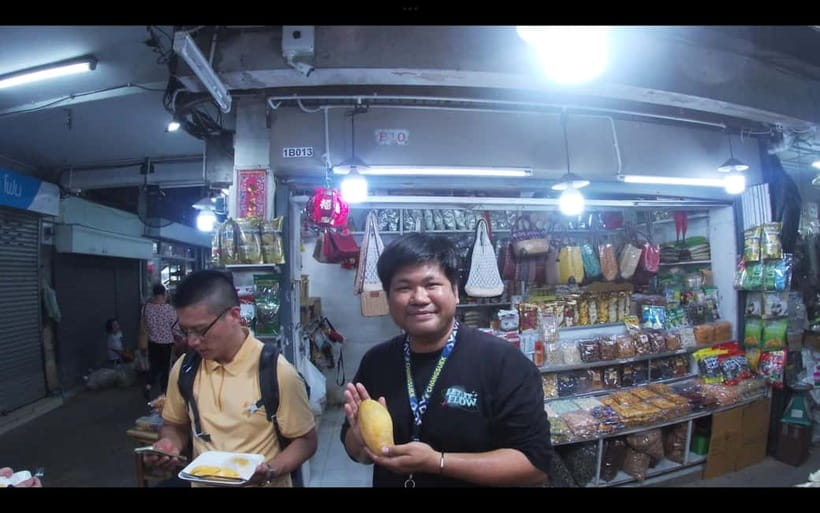
At $20 per person for about 2 hours, this is priced like a value-smart food outing. The key is what you’re paying for: not only the food, but the guide’s selection. When the tour has Michelin-linked targets—like Thana Ocha’s Yen Ta Fo and Lung Khajohn Wat Ket’s steamed rice skin dumplings—you’re buying help with “what to order” and “where to go.”
Here’s the realistic expectation you should set: you’re tasting a small number of set dishes. One person’s note described a limited set (a single soup, a fresh roll shared, and a fried dough snack), even though the market walk was a big highlight. That matches the tour’s overall design: focused tastings plus market atmosphere, rather than endless variety.
So, if your goal is to master Chiang Mai street food in a short window, this works. If your goal is to eat as much as possible for maximum quantity, you may want to pair this with your own evening street-food plan afterward.
Lunch option route: Wat Saen Fang to Warorot Market and Thana Ocha
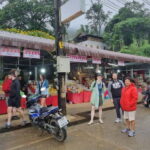
If you book the lunch version, your meetup point is at Wat Saen Fang (entrance gate), right by The Story 106 Co-Working Space & Cafe on Thapae Road. It’s a good start point because it puts you near the old-city flow of sights and food streets—so your stomach and your bearings both get warmed up fast.
From there, the tour shifts into the Warorot Market (Kad Luang) zone. You’ll do a short walk to the market area (part of the charm here is simply getting your eyes used to how busy food hubs work). Then comes the big food stop: Thana Ocha Noodle for tasting and guidance.
Stop-by-stop feel (what it’s like)
- Warorot Market walks: you’re not just dropped into a crowd. You get guided walking and a bit of sight-seeing, plus time to visit the food market.
- Thana Ocha Noodle (about 40 minutes): this is where you’ll slow down and focus on the tasting. The star mentioned for this tour is Thana Ocha’s Hakka-style pink noodle (Yen Ta Fo), described as a 6-years MICHELIN Bib Gourmand dish.
- Second Warorot Market moments: the tour loops back for a bit more wandering and atmosphere—enough time to connect the dish you ate with the market world it came from.
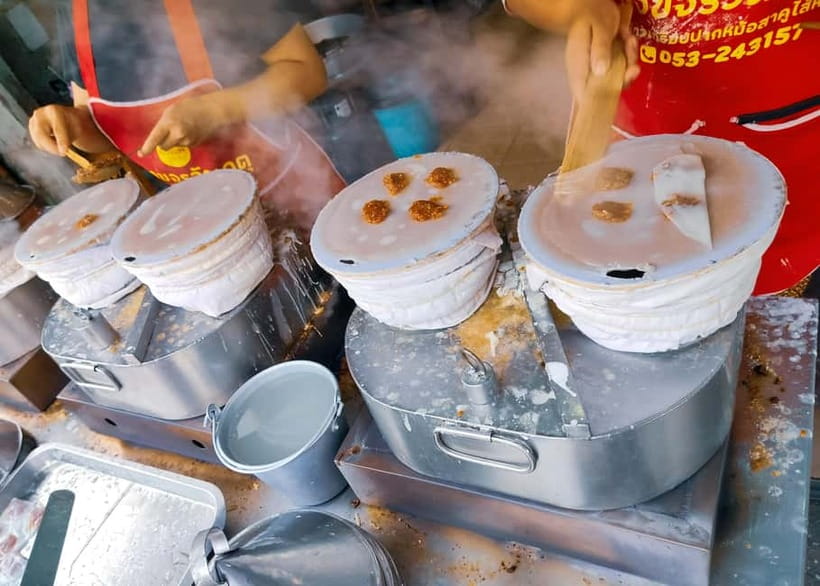
- Lung Khajohn Wat Ket (about 20 minutes): this is the other Michelin-linked tasting on the lunch route. You’ll get Khao Kriab Pak Moh, steamed rice skin dumplings, tied to a decades-old Wat Ket recipe (as the tour describes it).
What I like about this lunch sequence is that it teaches through contrast. You get a famous noodle dish, then you shift into a different style of Northern Thai comfort food, and you keep using the market as the visual classroom.
Dinner option route: KFC Nimman to One Nimman and White Market
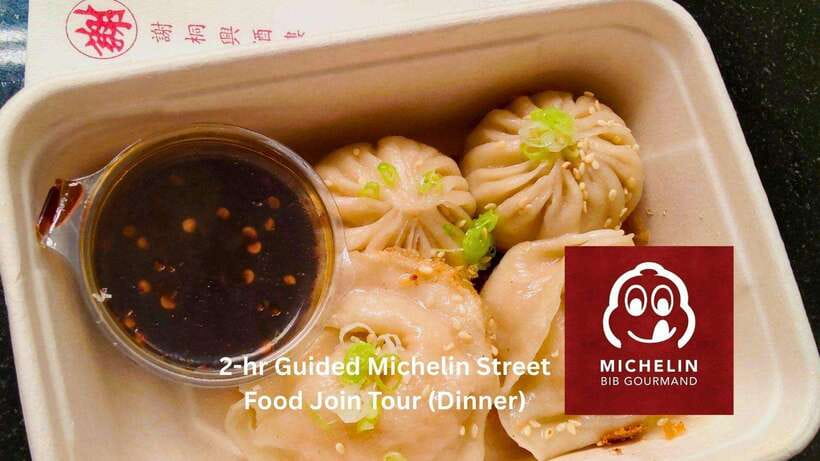
For dinner, your meetup is at KFC NIMMAN SOI 12. This option is structured differently. You won’t do a Warorot Market-style market visit during the tour itself.
Instead, the dinner flow centers on Michelin-linked dishes and then ends at ONE NIMMAN, where you can continue with a market-style stroll at its White Market after the tour. If you want dinner that feels a bit more controlled—less “street maze” and more “walk, eat, then easy browsing”—this version is a nice fit.
The tour’s dinner included dishes are built around a pair of Michelin Bib Gourmand targets:
- Anchan Noodle for a signature blue noodle
- Jia Tong Heng for the Teochew dish Teochew Yam Paste (Orh Nee)
It also includes Shui Jian Bao on the dinner selection.
If you’re staying around Nimman area, this option can feel smoother logistically since you’re starting right in that neighborhood.
You can also read our reviews of more tours and experiences in Chiang Mai
The food highlights you should recognize on sight
This tour is designed around specific names, so you’ll be able to follow along even if your Thai reading is still in progress.
Thana Ocha: Yen Ta Fo, pink Hakka-style noodles
The big named highlight is Thana Ocha’s Hakka-style pink noodle (Yen Ta Fo). This dish is described as a 6-years MICHELIN Bib Gourmand favorite. The point isn’t just color; the tour frames it as a distinctive, Northern Thai-style street-food take that’s rare enough to feel special, but common enough that you’ll want to learn how to order again later.
Lung Khajohn Wat Ket: Khao Kriab Pak Moh dumplings
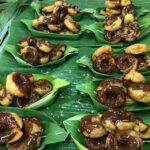
Another standout is Lung Khajohn Wat Ket and their Khao Kriab Pak Moh—steamed rice skin dumplings. The tour description calls out a long-running recipe tradition, which is useful context because it explains why people keep returning. When a place has repeat customers, it usually means the product stays consistent.
Anchan Noodle: blue noodle
On the dinner route, you’ll taste Anchan Noodle’s signature blue noodle. Even if you’re not sure what flavor profile to expect, Michelin-linked dishes like this are a strong bet for someone trying Chiang Mai’s street-food variety without risking a dud.
Jia Tong Heng: Orh Nee plus Shui Jian Bao
For dinner, Jia Tong Heng is tied to Teochew Yam Paste (Orh Nee), plus the included Shui Jian Bao. Orh Nee is a dessert-style comfort dish, so it helps balance the meal: savory first, then sweet or warm comfort after.
Why Nat/Natt-style guiding makes the difference
The most praised part of this experience is the guide. Names like Nat/Natt show up repeatedly in the strongest feedback, often tied to two things:
1) giving clear, specific explanations about food
2) sounding genuinely excited about sharing Chiang Mai street-food culture
That matters because street food isn’t only about taste. It’s also about pace, portioning, and how locals eat. A guide can teach you how to handle the experience without over-ordering or ending up stuck in a translation limbo.
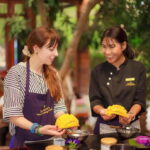
You’ll also get practical help beyond the bites. A common theme in the feedback is that the guide offers recommendations for other meals and places to eat during the rest of your stay, which is exactly what I want from a short food tour.
Warorot Market: what you should do with your 10 minutes of walking time
Warorot Market (Kad Luang) isn’t just “a place you pass.” On the lunch option, you get guided walking and some market visit time, plus sightseeing stretches between food stops.
Here are the smartest ways to use that time:
- Take a moment to watch how people order and wait. Then mimic that pace at your next stop.
- Ask what to try next, even if you think you already know. The guide’s job is to connect the dish you’re eating to the broader food scene around it.
- Use your camera, but keep it quick. You’ll get better photos when you’re not blocking traffic or getting in vendors’ way.
The tour also gives the market some context so it feels less like random chaos and more like a place with patterns.
What to bring (and what can trip you up)
This tour is simple, but Chiang Mai heat and street-food surfaces can get real fast.
Bring:
- Comfortable shoes (you’ll be walking)
- Hat, sunscreen
- Camera
- Cash (useful for snacks you might want outside the included tastings)
- Cash is specifically recommended, so don’t rely only on cards.
Tour rules also exclude some items and situations. Backpacks aren’t allowed, and the tour isn’t suitable for a range of health and mobility needs listed by the operator. Also, it isn’t designed for vegetarian or vegan diets, and it’s not suitable for people with food allergies or gluten intolerance.
If you have any dietary restrictions, your safest move is to double-check fit before you book. This experience is built around specific dish selections.
Pace check: you’ll leave full enough, not stuffed
A lot of the praise points to a nicely paced experience. That’s important for street food tours because it’s easy to overshoot and end up too full for the rest of your day.
This one is about two hours, includes water, and stays focused on the included Michelin-linked dishes. In plain terms: you should finish satisfied, able to walk away, and still have room for your next meal on your own terms.
Who this tour is best for
I’d point this one at:
- First-timers to Chiang Mai who want a fast start and a guide to help you order confidently
- Food lovers who like Michelin recognition but don’t want fine dining
- People staying near old-city or Nimman who can match the lunch or dinner meetup
It’s less ideal if:
- You’re strict vegan/vegetarian (the tour isn’t suitable per the tour info)
- You need the ability to accommodate food allergies (also not suitable)
- You want lots of different bites in one go (this is set tasting, not a buffet)
Should you book Taste of Chiang Mai: Michelin Guide Street Food Tour?
Yes, if you want high-confidence street food in a tight time window. This tour’s value comes from Michelin-linked picks, plus a guide who explains what you’re eating and why it matters.
I’d skip it (or at least re-plan) if you need a big variety of tasting items, or if your diet or health situation doesn’t match the tour’s stated limits. Also, if you already know exactly where you want to eat and you’re comfortable ordering Thai street food without help, you might not need a guided tasting.
For most people, though, this is a smart first foodie step: short enough to fit any schedule, structured enough to reduce risk, and local enough to feel like real Chiang Mai—not a tour-only show.
FAQ
How long is the Michelin Guide street food tour?
The tour lasts about 2 hours.
How much does the tour cost?
It costs $20 per person.
Where do I meet for the lunch option?
Meet at Wat Saen Fang (entrance gate next to The Story 106 Co-Working Space & Cafe on Thapae Road).
Where do I meet for the dinner option?
Meet at KFC NIMMAN SOI 12.
What’s included for the lunch option?
The lunch option includes Michelin Bib Gourmand selected dishes: a serving of Hakka-style pink noodle (Yen Ta Fo) and a serving of steamed rice skin dumplings.
What’s included for the dinner option?
The dinner option includes Michelin Bib Gourmand selected dishes: a serving of blue noodle and Shui Jian Bao, plus the Teochew Yam Paste (Orh Nee) dish.
Do I visit Warorot Market on the dinner option?
No. The dinner option doesn’t include a market visit, and the tour ends at ONE NIMMAN where you can visit its White Market after the tour.
What language is the tour guide?
The guide speaks English and Thai.
Is it a private tour or a small group?
The activity offers private or small groups, depending on what you book.