REVIEW · CHIANG MAI
Chiang Mai: Ethical Elephant Sanctuary & Thai Cooking Class
Book on GetYourGuide →Operated by Joy Elephant Sanctuary · Bookable on GetYourGuide
Jungle quiet, elephants roaming, and Thai food in one day. It is a long day, but it mixes ethical elephant time with a hands-on cooking class that feels practical, not touristy.
I especially like that you spend real time observing elephants’ behavior and habits around the Joy Elephant Sanctuary area, including feeding and watching them walk and forage. I also love the cooking portion led by Aim, which is interactive and gives you vegan and vegetarian options. One thing to plan for: it runs about 11 hours and the last stretch uses a roofed 4×4, so you’ll want to dress for heat, insects, and a long day.
In This Review
- Key Highlights at a Glance
- A Long Day in Chiang Mai: How the 11 Hours Flow
- Chiang Mai Food Market Stop: Flavor Prep Before You Cook
- Thai Cooking Class with Aim: Learn Thai Dishes You Can Actually Recreate
- Joy Elephant Sanctuary: Feeding and Observing Without the Noise
- Karen Clothing Moment: Culture You Experience, Not Just Watch
- Tea by the Waterfall and Wildlife Viewing Break
- Elephant Food and Snacks: Your Role in the Day
- Pickup, Van, and the 4×4 Switch: Plan for Comfort
- Price and Value: Is $88 Worth This Day?
- Who Should Book This, and Who Should Skip It
- Should You Book This Chiang Mai Elephant Sanctuary and Cooking Combo?
- FAQ
- Where does pickup happen?
- What’s the total duration of the tour?
- How do you travel to the sanctuary?
- What happens during the cooking class?
- Are there vegetarian or vegan options?
- What should I bring for the day?
- What’s included in the elephant sanctuary experience?
- Are pets allowed?
- Is the tour suitable for kids or wheelchair users?
- Is it possible to get a refund if plans change?
Key Highlights at a Glance
- Ethical elephant observation at Joy Elephant Sanctuary, with feeding and behavior-focused viewing
- Hand-on Thai cooking with Aim using fresh local ingredients, plus vegan and vegetarian options
- Food market stop in Chiang Mai to set you up with ingredients and flavor ideas
- Karen culture moments, including changing into traditional Karen clothing
- Waterfall break with herbal tea while elephants are nearby
- E-book recipes so you can recreate what you cook at home
A Long Day in Chiang Mai: How the 11 Hours Flow
This is one of those Chiang Mai days that starts early and stays active, even though the pace is not frantic. You rotate between three main experiences: a quick food market stop, a full Thai cooking session, and then elephant observation time in Mae Wang District—wrapped with a tea-and-waterfall break and two meals.
The big reason I like the structure is that it keeps your brain engaged. You’re not only watching elephants for hours. You get food context first (market and cooking), then you shift to nature and animal care practices, then you come back to your senses with tea by the waterfall.
The only drawback is endurance. You’re on the move from pickup through drop-off in the Mueang Chiang Mai area, and you’ll spend time standing/walking in jungle settings. If you hate long tours, this may feel like more than a day trip.
You can also read our reviews of more cooking classes in Chiang Mai

Chiang Mai Food Market Stop: Flavor Prep Before You Cook
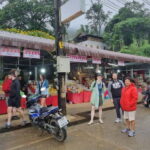
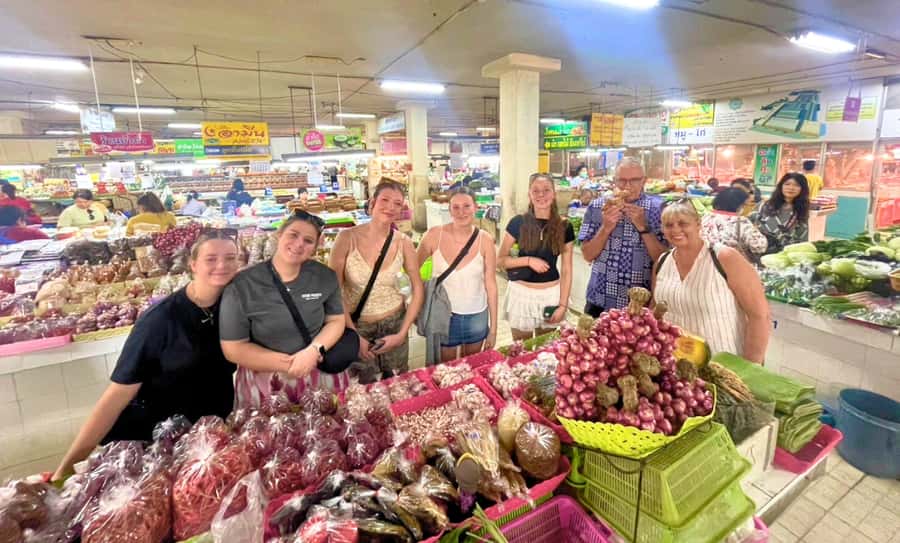
Before the cooking class, you get about 30 minutes at a food market in Chiang Mai. This is short, but it helps you understand what you’ll be using later. You can see ingredients, get a sense of local produce, and start connecting tastes to what you’ll learn in the kitchen.
Why it matters: Thai cooking relies on balance—sweet, sour, salty, spicy, plus herbs and aromatics. Seeing ingredients up close makes the recipes feel less like a list and more like real cooking choices.
Practical tip: go light on breakfast so you can enjoy the market browsing without feeling stuffed. Wear comfortable shoes because market stops can involve a bit of walking on uneven surfaces.
Thai Cooking Class with Aim: Learn Thai Dishes You Can Actually Recreate
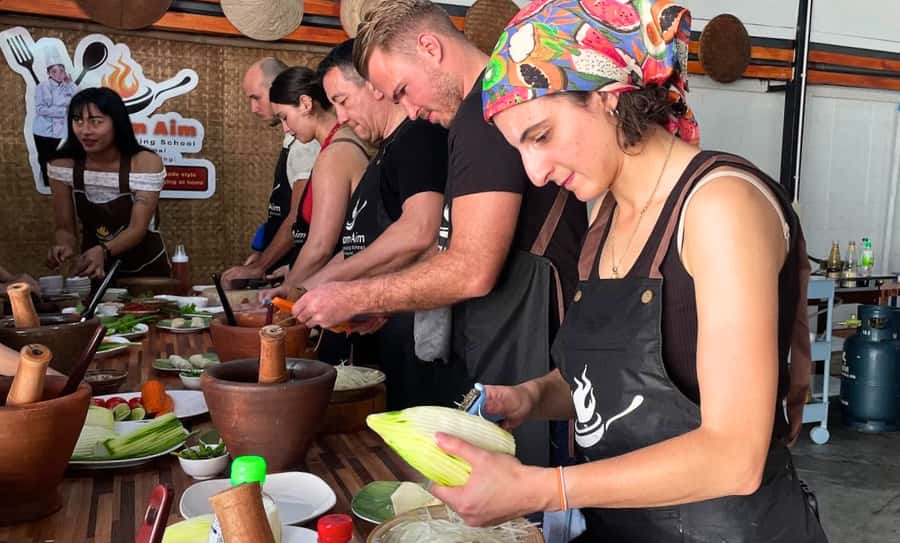
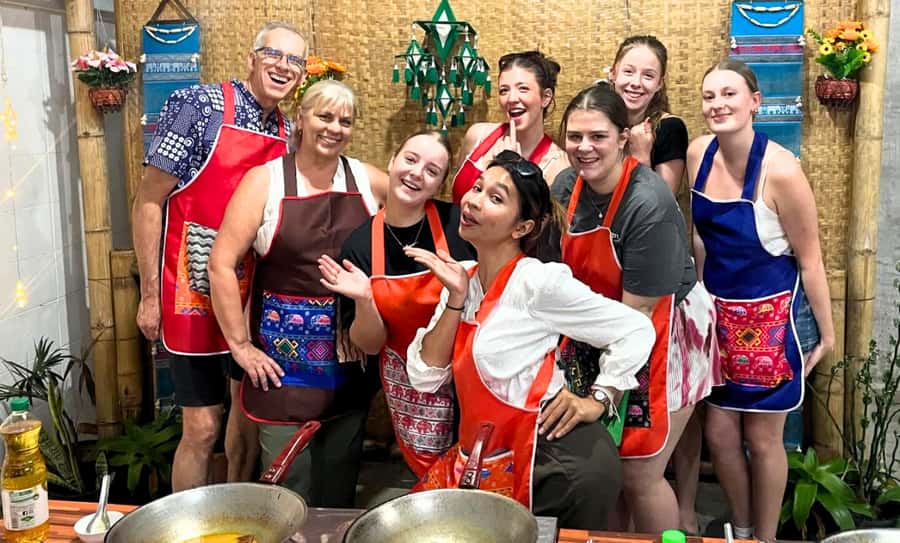
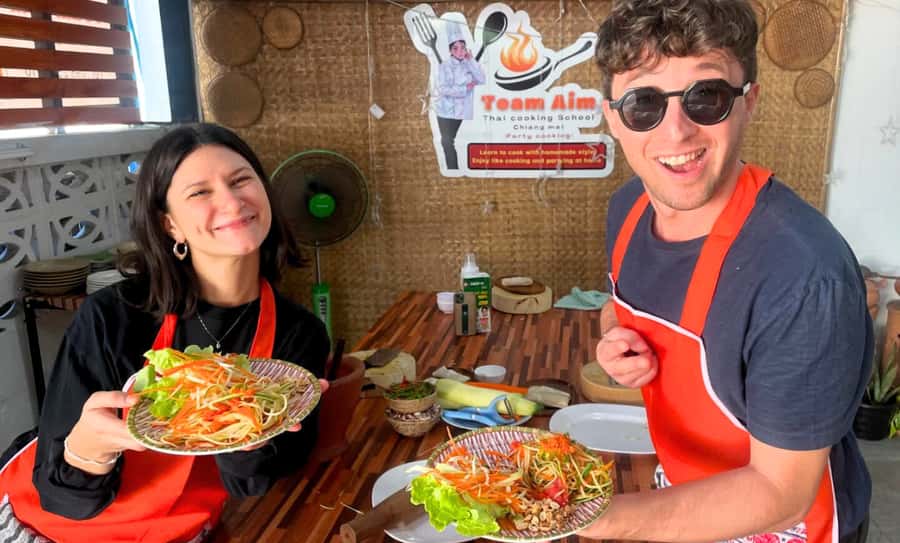
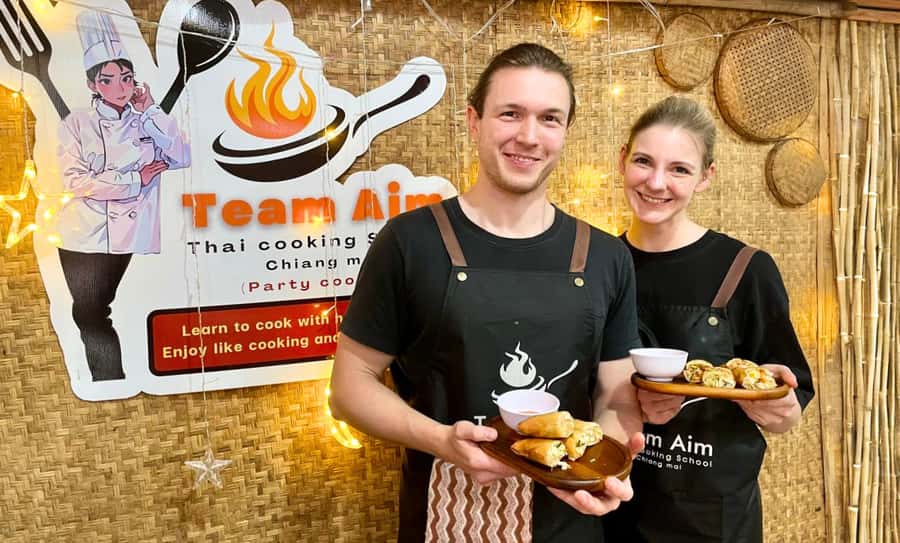
The cooking class runs about 3 hours and is led by Aim, a teacher with 10 years or more of experience who keeps things fun and interactive. You’ll cook authentic Thai dishes using fresh local ingredients, with vegan and vegetarian options available.
Here’s what makes this part genuinely useful: you’re not just watching someone cook. You’re actively preparing food, and you get e-book recipes afterward. That means you can recreate the dishes at home without guessing measurements or missing steps.
What you should expect in your cooking rhythm: you’ll likely move through a sequence—prep, cook, taste, adjust—because Thai food is about getting flavors right. If you prefer a hands-on class where you learn by doing (instead of only tasting), this one fits that style.
Also plan your attire: cooking tends to get you warm fast. Bring a change of clothes only if you think you’ll need it—this day already includes a towel, and you’ll later get a swimwear recommendation for the outdoor portion.
Joy Elephant Sanctuary: Feeding and Observing Without the Noise
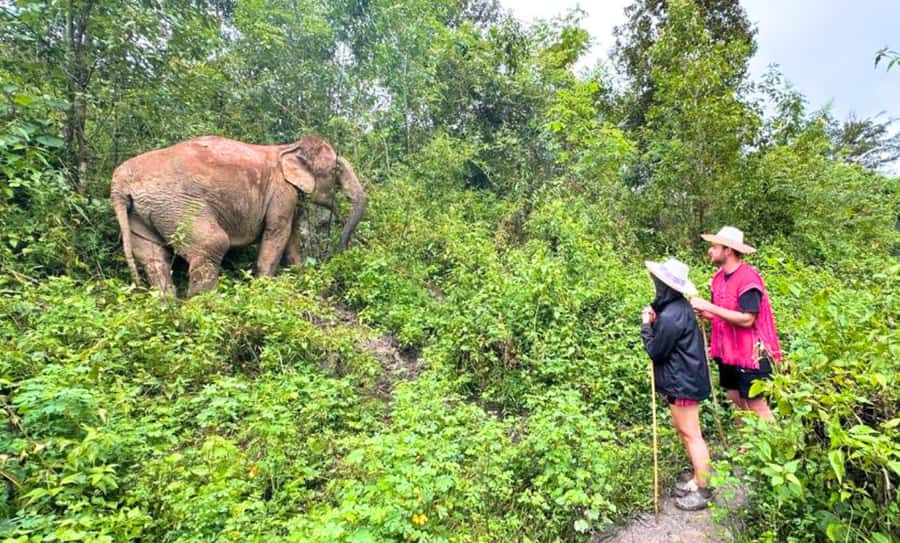
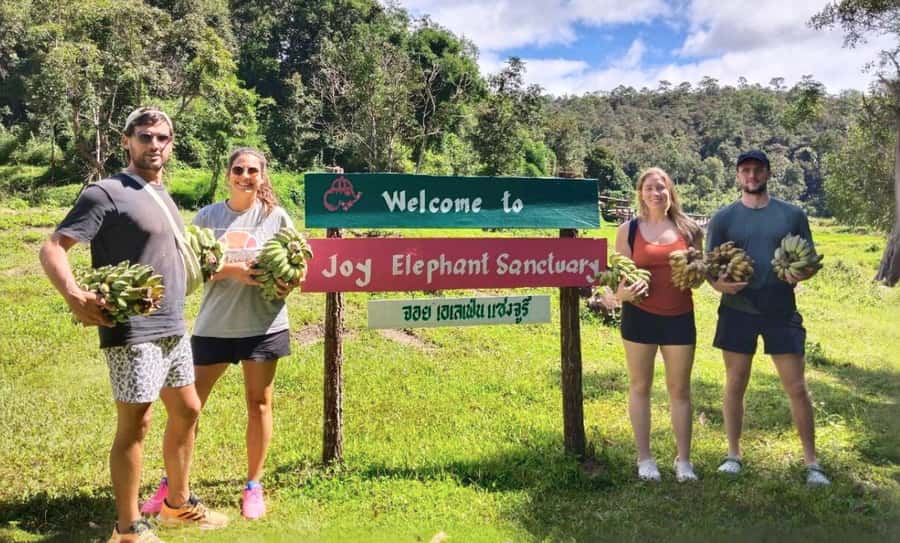
After cooking, you head toward Mae Wang District for the elephant portion at Joy Elephant Sanctuary. This is the heart of the day: you observe elephants in their natural habitat setting and learn about their care and behavior.
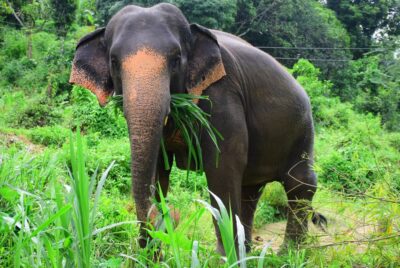
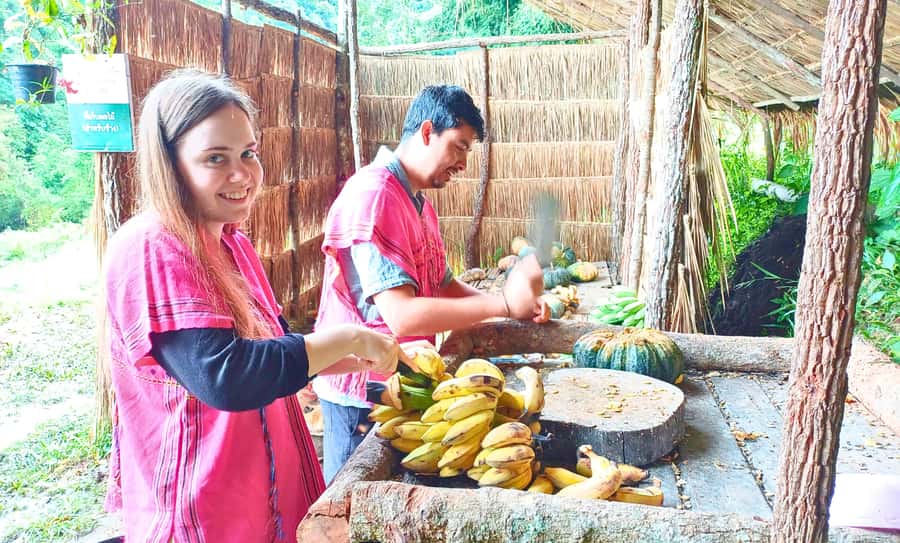
You do more than stand behind a fence. You can change into traditional Karen clothing, help prepare food for the elephants, then feed them and watch what they do afterward. You’ll also get time to see them walk and forage in the jungle.
What I like about this setup is the focus on observation. Elephants are not a quick photo-op. You’ll notice behavior patterns—how they move, what they go for, and how their environment shapes their day. That’s the kind of learning that makes elephant tourism feel respectful instead of exploitative.
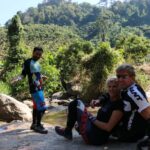
One consideration: the elephant portion likely means time outdoors in a rural jungle area. Bring insect repellent and expect sun exposure. You’ll feel better if you treat it like a nature outing, not a city attraction.
Karen Clothing Moment: Culture You Experience, Not Just Watch
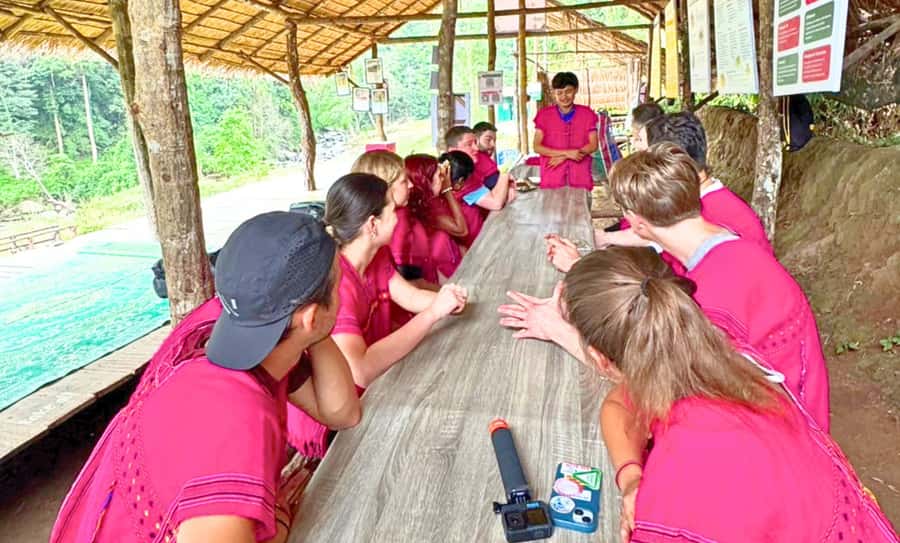
One of the standout cultural touches is changing into traditional Karen clothing. It’s built into the sanctuary portion, which helps it feel connected to place rather than a separate “costume stop.”
Why this matters for your travel memories: you’re participating in a cultural moment, not only photographing it. And because it happens alongside elephant observation and elephant-feeding activities, it supports the day’s theme—how local life and nature intersect in Mae Wang.
Keep your expectations practical: it’s a clothing experience you can likely enjoy for photos and context, then you move back into the activities outdoors. Wear shoes that you can keep walking in comfortably after you change.
You can also read our reviews of more tours and experiences in Chiang Mai



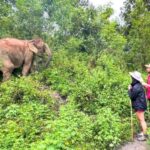
Tea by the Waterfall and Wildlife Viewing Break
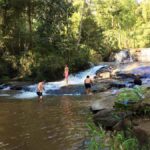
Between the heavier activities, you get a refreshing break: tea and a guided walk/wildlife viewing time near a waterfall area. The program includes sipping herbal tea while elephants roam nearby.
This part matters more than it sounds. Outdoor time can get hot and tiring, even in the jungle. A pause by water gives you a mental reset and helps you slow down enough to actually notice animal behavior rather than just rushing through it.
Practical note: the tour asks you to bring swimwear and a change of clothes. You might not need to change right away, but packing them is a smart hedge if you want the option to cool off when you can. At minimum, swimwear makes you feel prepared.
Elephant Food and Snacks: Your Role in the Day
You’re included with elephant food and snacks for the sanctuary activities. That means you’re not only learning from a distance—you’re part of the routine of preparing and offering food during observation.
To get the most value from this segment, stay present and follow the guide’s instructions closely. Feeding moments can be exciting, but the real learning is watching how elephants respond and what they do afterward in their environment.
Also, if you’re sensitive to animal-related rules, this tour is set up to keep it structured: you get the food/snacks and the activities are organized around observation and behavior understanding.
Pickup, Van, and the 4×4 Switch: Plan for Comfort
You get round-trip transfer included from accommodations within a 5km radius of Chiang Mai’s Old City. Pickup is in the Mueang Chiang Mai District area, and you’ll ride in a 12-seater air-conditioned van.
Then there’s a detail that matters: for the last 10 minutes, you switch from the van to a roofed 4×4 truck to reach the sanctuary area. That final leg can feel bumpier and warmer, since open-air conditions may apply.
What to do with that information:
- Wear comfortable shoes you can handle after a truck ride.
- Bring sunscreen and insect repellent (you’re outdoors again later).
- Expect the day to include time on your feet, guided walking, and jungle viewing.
If you’re traveling with kids: the tour isn’t suitable for children under 5. And it’s not set up for wheelchair users.
Price and Value: Is $88 Worth This Day?
At $88 per person for an 11-hour tour, you’re paying for three things that are often priced separately in Thailand: transport, an extended Thai cooking class, and an elephant sanctuary experience.
The value case is strongest if you want a full-day cultural-nature mix rather than choosing just one activity. You get:
- Cooking class with ingredients included and e-book recipes afterward
- A market stop that supports the cooking learning
- Elephant observation with feeding and care/behavior focus
- Meals included (a complimentary local meal plus dinner)
If you’re the type who likes to bring skills home, the e-book recipes tip the scale. Many “cooking tours” end with lunch and no useful take-home material. Here, you get recipes designed for you to cook again later.
If you’re only interested in elephants and nothing else, $88 may feel like a lot. But if you want a more meaningful day where food and nature connect, it’s a fair price for the time and what’s included.
Who Should Book This, and Who Should Skip It
This tour is a strong fit if you:
- Love Thai food and want to cook with a real teacher (Aim) instead of only sampling
- Want ethical elephant tourism with observation and feeding, not gimmicks
- Prefer day trips that teach you something you can use at home (recipes)
- Enjoy cultural touches like the Karen clothing moment
It may not be ideal if you:
- Need a fully seated, low-walking day (you’ll be standing/walking outdoors)
- Travel with very young children (not suitable under 5)
- Use a wheelchair (not suitable)
One more small but important practical point: if you have allergies, bring your own allergy medication since you’re advised to bring what you need.
Should You Book This Chiang Mai Elephant Sanctuary and Cooking Combo?
If you want one ticket that gives you both Thai cooking skill and a structured elephant observation day, I think this is worth booking. The best part is the pairing: market-to-kitchen learning, then nature-to-animal understanding, then a calm tea-and-waterfall pause.
I’d book it if you can handle a full 11-hour day and you’re prepared with insect repellent, sunscreen, comfortable shoes, and swimwear options. And I’d hesitate if your travel style is short and quiet, or if you need the whole day to be accessible and low-impact.
If your goal is to go home with recipes plus a more thoughtful approach to elephant tourism, this combo tour checks those boxes.
FAQ
Where does pickup happen?
Pickup is included from accommodations within a 5km radius of Chiang Mai’s Old City, in the Mueang Chiang Mai District area.
What’s the total duration of the tour?
The tour runs about 11 hours.
How do you travel to the sanctuary?
You ride in a 12-seater air-conditioned van, then switch to a roofed 4×4 truck for the last 10 minutes to reach the sanctuary.
What happens during the cooking class?
You cook authentic Thai dishes with fresh local ingredients. Vegan and vegetarian options are available, and you receive e-book recipes.
Are there vegetarian or vegan options?
Yes. Vegan and vegetarian options are available during the cooking class.
What should I bring for the day?
Bring comfortable shoes, swimwear, a change of clothes, sandals, sunscreen, and insect repellent.
What’s included in the elephant sanctuary experience?
You get entry tickets, an English-speaking guide, elephant food and snacks, a towel, and insurance. You can feed and observe elephants and participate in related activities.
Are pets allowed?
No, pets are not allowed.
Is the tour suitable for kids or wheelchair users?
It is not suitable for children under 5, and it is not suitable for wheelchair users.
Is it possible to get a refund if plans change?
Free cancellation is available up to 24 hours in advance for a full refund.