REVIEW · CHIANG MAI
Chiang Mai: Historic Temples and City Guided Walking Tour
Book on GetYourGuide →Operated by Beyond Experience · Bookable on GetYourGuide
Some tours show temples. This one helps you read them. You’ll walk Chiang Mai’s Old City with a local English guide and connect the dots between Lanna architecture, temple stories, and city history in just 3 hours. The route is built around a classic cluster of sites you can actually understand while you’re standing in front of them.
What I like most is the focus on “why” as much as “what.” You get standout stops like Wat Phra Singh and Wat Phan Tao’s teak ordination hall, where the details matter and a guide helps you notice them. The only real catch is that the most important temple entrances aren’t included, so plan for extra cash on the day.
In This Review
- Key Reasons This Walk Works in Chiang Mai
- A 3-Hour Route Through Chiang Mai’s Old City Walls
- Wat Chiang Man: Start With the Oldest Temple (Built 1296)
- Three Kings Monument: Quick City Orientation in the Walled Old Town
- Wat Phra Singh: Classic Lanna Architecture That Actually Clicks
- Wat Phan Tao: Teak Wood, the Teak Throne, and a Royal Palace Connection
- Wat Chedi Luang: Ruined Chedi Grandeur and the Buddha Inside
- Pace, Walking Comfort, and Why Small Groups Matter
- Price and Value: What $21 Really Buys You
- Guides, Stories, and the Difference Between Seeing and Understanding
- Temple Etiquette and Packing: Avoid the Last-Minute Stress
- Timing Matters: Heat, Rain, and Getting the Most From 3 Hours
- Who This Tour Is Best For
- Should You Book This Chiang Mai Temples Walking Tour?
- FAQ
- Where do I meet the guide?
- How long is the tour?
- Is the tour led in English?
- Which temple entrance fees should I expect to pay?
- What should I bring for temple visits?
- What clothing is required at the temples?
- Is rain likely, and what should I do if it rains?
- Who might want to choose a different tour?
Key Reasons This Walk Works in Chiang Mai
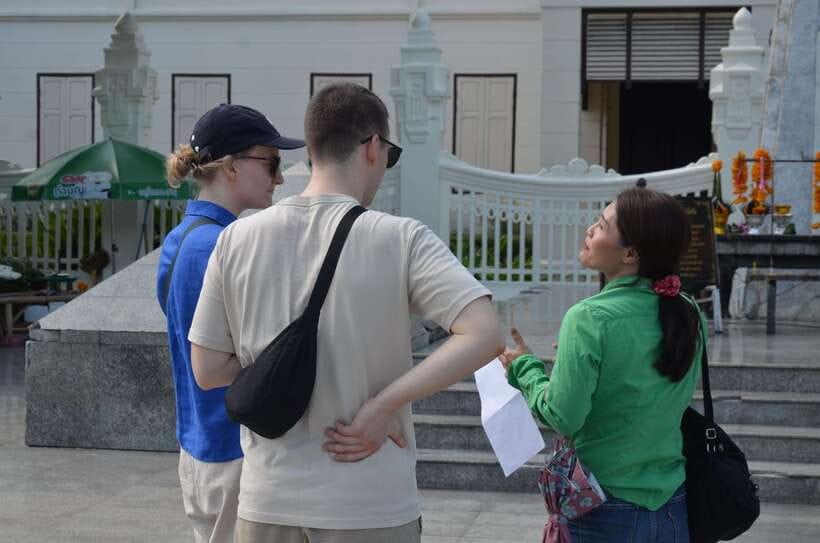
- Small group (up to 10) keeps the pace human and questions welcome
- Wat Chiang Man to Wat Chedi Luang is a smart temple-to-temple arc you can remember
- Lanna architecture made practical through plain explanations, not museum-style lectures
- Wat Phan Tao’s teak ordination hall and the story behind the teak throne
- Comfort-aware timing (many departures start early so you’re not wrestling the hottest hours)
- Water included, plus a route that’s built for low-impact sightseeing
A 3-Hour Route Through Chiang Mai’s Old City Walls
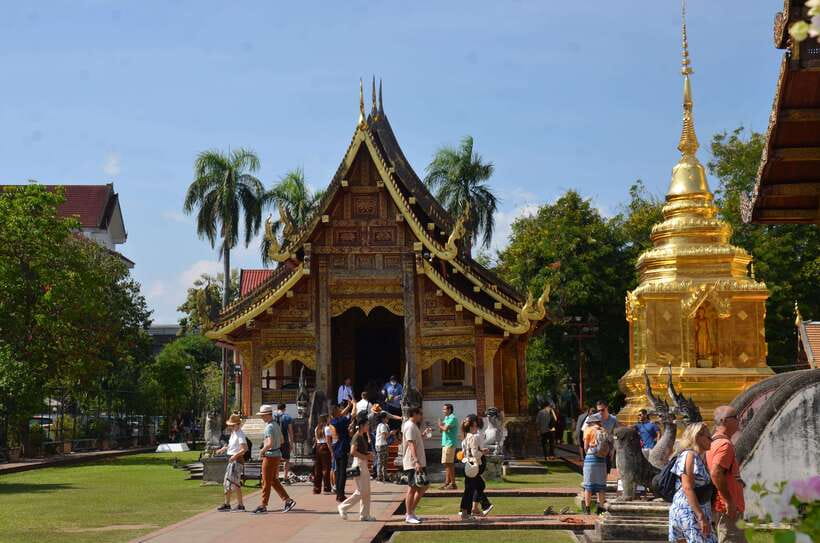
This is a short walk tour, but it doesn’t feel like a rushed checklist. You move through the historic core of Chiang Mai at a steady pace, with photo stops and guided time built in. At the end, you finish at Watchediluang Varaviharn area near Wat Chedi Luang, which is a natural place to continue exploring on your own.
The structure also helps you learn. Instead of bouncing randomly around town, you cover a logical arc from one of Chiang Mai’s oldest temples to its most famous ruined chedi stop. That makes the history feel connected instead of like separate postcards.
It’s also a good “first visit” plan. If you’re new to Chiang Mai, this kind of route helps you get your bearings fast—especially in the Old City where lanes, walls, and temple gates can start to look the same after a few hours.
You can also read our reviews of more walking tours in Chiang Mai


Wat Chiang Man: Start With the Oldest Temple (Built 1296)
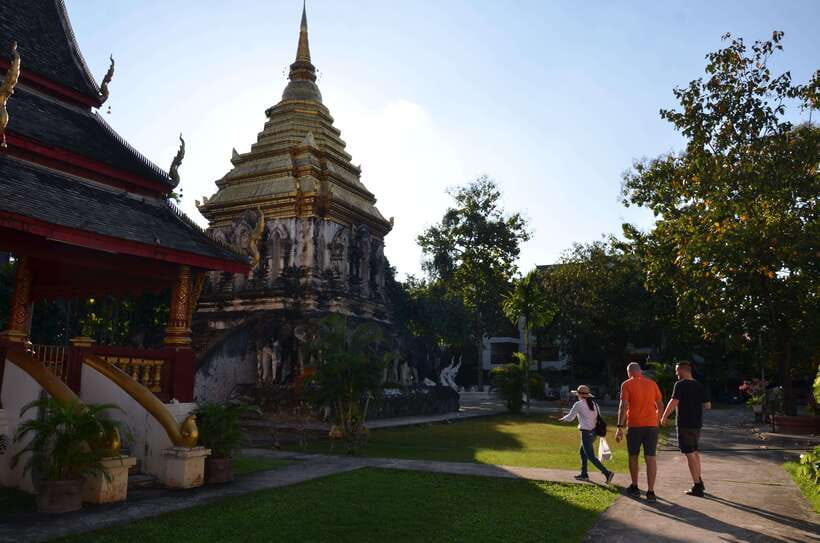
The tour begins at Wat Chiang Man, and that’s the right choice. This temple is the oldest in Chiang Mai, built in 1296, so it gives you a timeline anchor immediately instead of later. Even the early photo stop matters, because you’re starting with the city’s roots.
You’ll get a guided visit there, about 30 minutes of time to look closely. You’re not just walking in and out; you’re learning how to read key features of the temple space—what you’re seeing and why it’s important in the local religious world. For first-timers, this sets the lens for everything that follows.
A practical note: wear covered clothing. The tour’s temple dress code is clear—shoulders and knees covered—so you won’t want to arrive in shorts or sleeveless tops. If you’re waiting until the last minute to sort out clothing, that’s when you’ll feel stressed.
Three Kings Monument: Quick City Orientation in the Walled Old Town
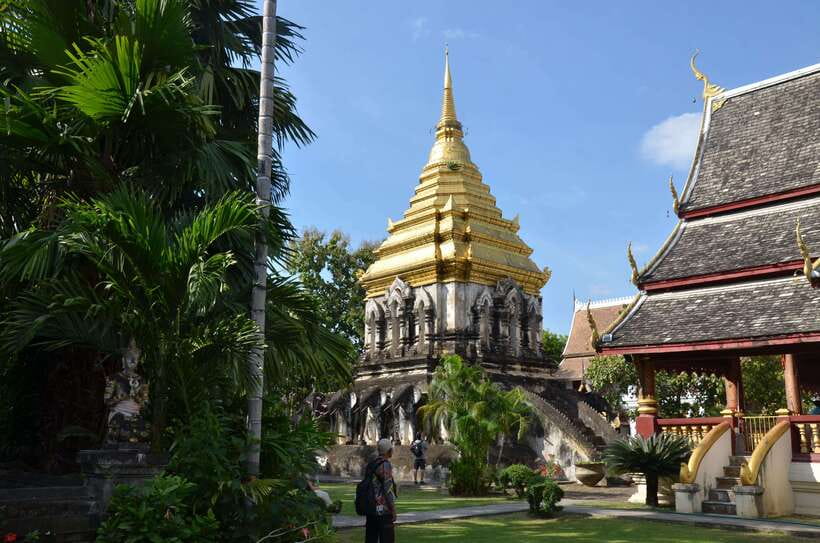
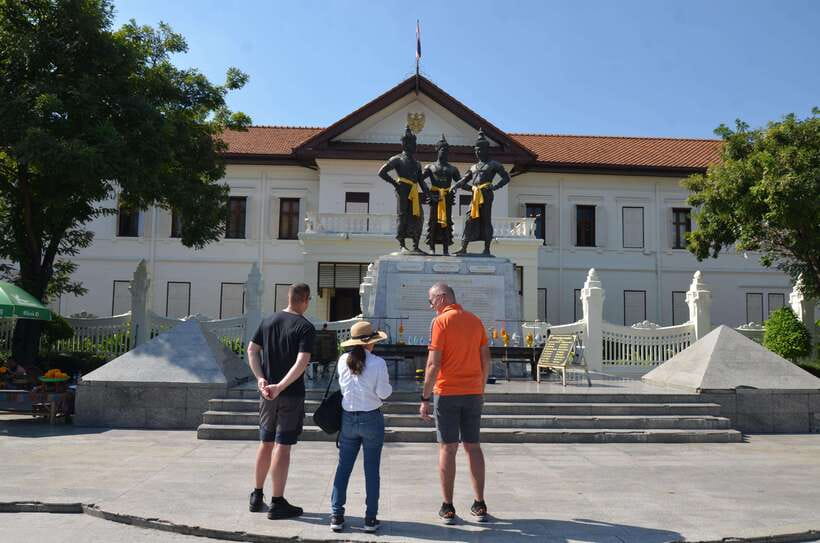
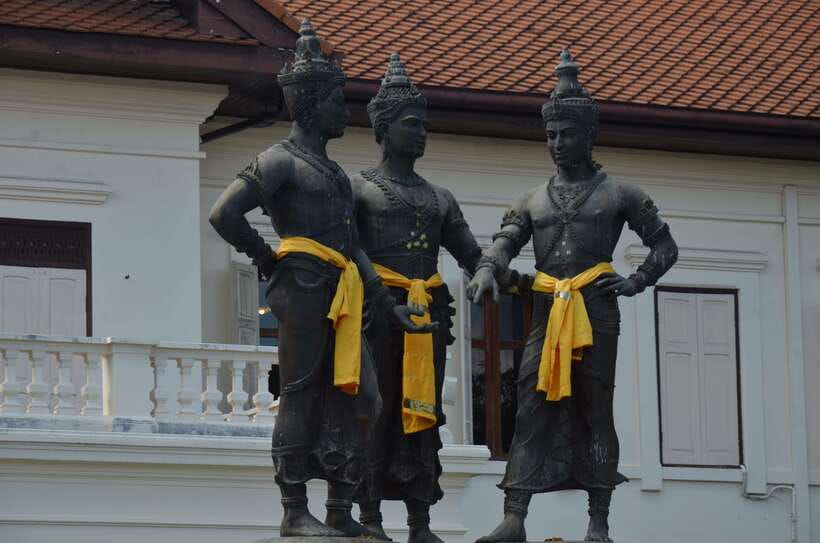
Next comes the Three Kings Monument, a big open square in the heart of the walled Old City. This is your breather stop. It’s short—about 10 minutes—but it serves a real purpose: it helps you switch from temple focus to city layout.
Why this matters: once you’ve seen a large open point in the Old City, the smaller lanes start to make more sense. You’ll also get a feel for where shops and cafes are along the route without losing the thread of the tour.
This stop is mostly photo and guided context, so it won’t feel like filler. If you’re hoping for a “walk plus learning” style tour, the short monument pause keeps you energized for the heavier temple stops ahead.
Wat Phra Singh: Classic Lanna Architecture That Actually Clicks
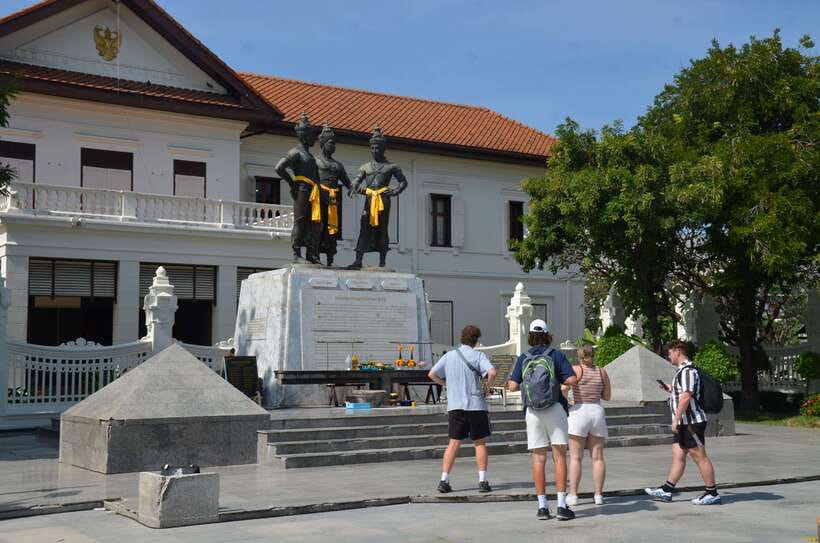
Wat Phra Singh is one of the finest examples of classic Lanna architecture, and the tour treats it like a centerpiece. You’ll spend about 40 minutes here, with guided time plus photo moments.
What you should expect is a temple visit where details have meaning. Lanna architecture can look ornate from a distance, but it’s a lot easier to appreciate when someone helps you interpret the shapes, style choices, and the role temples play in the life of the city. You’ll also likely notice why this temple is such a common benchmark when people talk about Lanna design.
This stop is also where you may decide what you want to linger on later. If there’s a particular feature you love—an area of carving, a roofline detail, a prayer hall element—having the guide there first gives you a vocabulary for your own return visits.
One consideration: temple entrances can cost extra. Wat Phra Singh entrance is listed as 50 THB, so don’t assume the full temple access is bundled into the $21 price.
Wat Phan Tao: Teak Wood, the Teak Throne, and a Royal Palace Connection
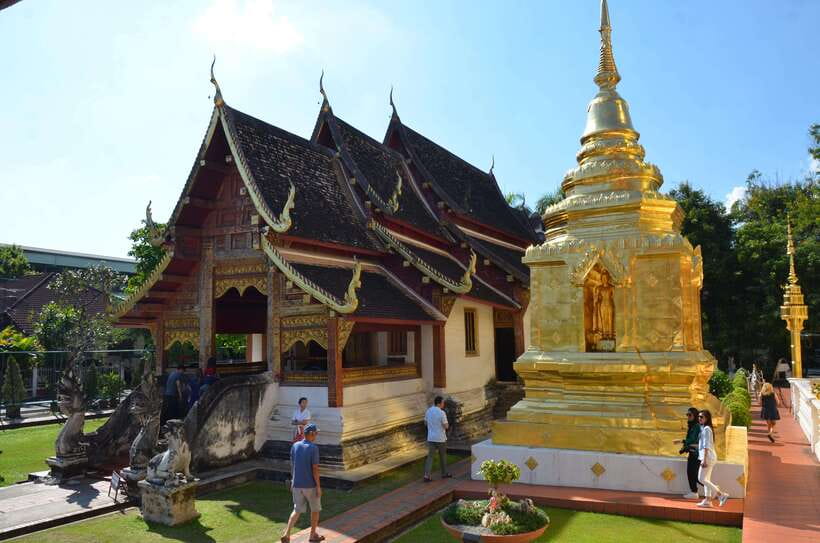
Wat Phan Tao is the standout for texture and materials. The tour notes it as a wooden ordination hall (viharn) made almost entirely of teak wood. Even if you don’t care much about architecture, teak changes the whole feel of the room because it’s warm, dense, and visually distinct.
Plan about 15 minutes here—short compared with the biggest temple stops, but focused. The key reason it’s worth prioritizing: the main hall includes an enormous teak throne that was once used by Chiang Mai’s rulers, and the building was originally part of a royal palace. That connection between religious function and royal power is one of those themes that makes the whole city story make sense.
If you care about craftsmanship, you’ll probably enjoy this stop the most. It’s the kind of place where the material tells a story even before anyone explains it.
Dress code still matters here too. If your clothing is borderline, you might feel awkward at the doorway while trying to comply. A scarf can be handy for quick coverage.
You can also read our reviews of more guided tours in Chiang Mai



Wat Chedi Luang: Ruined Chedi Grandeur and the Buddha Inside
Your final temple highlight is Wat Chedi Luang, including its impressive chedi and a visit that focuses on the Buddha inside. The tour calls out the chedi as a highlight on its own, plus the standing Buddha in the main prayer hall.
You’ll spend about 40 minutes at this stop, which is enough time to take in the scale and still feel oriented. A ruined chedi can be visually dramatic, but it’s even better when you understand how it fits the city’s spiritual and architectural story. The guide helps you notice the “shape” of the place—how the prayer space works, what parts you’re meant to observe, and what makes the chedi so memorable.
This stop also includes temple entrance costs that aren’t included in the tour price. Wat Chedi Luang entrance is listed as 50 THB, so again, plan extra cash.
Pace, Walking Comfort, and Why Small Groups Matter
The tour is 3 hours, walking through multiple temple sites in the Old City. That’s a good length for most people who want a meaningful Old City intro without losing the whole afternoon.
It’s also limited to 10 participants. That matters more than you might think. With a smaller group, you get fewer bottlenecks at doorways and you’re more likely to hear explanations clearly, especially when the guide is describing details like architecture and temple function.
I’d still treat it as a real walk tour. You’ll want comfortable shoes, and you’ll move between areas with sun and occasional street crossings. There’s a reason the tour provides water, and why people who like relaxed pacing often rate it highly.
Also note the stated unsuitability: it’s not recommended for pregnant women or people with back problems. Even if you can handle stairs in a museum, temple walking plus uneven ground can be harder in practice.
Price and Value: What $21 Really Buys You
At $21 per person, this is strong value for what’s included. You get a local guide and a bottle of water, and you’re paying for structured time with someone who helps you make sense of Lanna-style temples quickly. The small-group setup also keeps the experience from feeling like mass tourism.
Now the honest math. You’ll likely pay extra entrance tickets on the day: Wat Phra Singh (50 THB) and Wat Chedi Luang (50 THB). Food isn’t included, so you may want a plan for a meal or snack after the tour ends.
Even with those added costs, the value still holds because you’re not just buying entry to temples—you’re buying time where the “how to look” part is included. If you’ve ever visited a temple and felt like you missed half the point, a guided route like this is how you avoid that.
Guides, Stories, and the Difference Between Seeing and Understanding

A big part of why this tour earns a top score is the way guides connect the sites. The guide team includes English-speaking hosts who are frequently praised for clear explanations and patient pacing. Names that show up in the guide mix include Jen, Pun, Danny, John, Jackie, Faan, and Jane.
That doesn’t mean every guide will match your exact style, but it does give you a clue about the overall quality. You’ll typically get more than basic facts. The tone tends to be friendly and practical, with time to answer questions and help you make sense of temple details while you’re actually there.
This is also the kind of tour where a guide can help you avoid common mistakes. For example, you’ll want to know how to dress for temple entrances, when to slow down for photo angles, and where to focus attention inside prayer halls. A good guide turns those rules into part of the experience instead of an annoyance.
Temple Etiquette and Packing: Avoid the Last-Minute Stress
If you want the day to go smoothly, follow the stated rules. Shorts, short skirts, and sleeveless shirts aren’t allowed. Shoulders and knees must be covered in temples.
Bring:
- Comfortable shoes
- Hat and sunscreen
- Umbrella (especially in rainy season)
- Cash for entrance fees
- Scarf for quick coverage if needed
Also bring your patience for weather. July to mid October is rainy season, and you’ll be glad you have an umbrella or raincoat.
The other practical point: don’t bring luggage or large bags. Keeping your load light makes it easier to move between temple grounds without feeling slowed down.
Timing Matters: Heat, Rain, and Getting the Most From 3 Hours
You’re outside for most of the tour, and Chiang Mai temperatures can feel serious. One of the practical wins is that some departures start early so it’s less hot when you’re walking between sites. That can change the whole mood of the day.
If you’re going during the rainy months (July through mid October), treat “umbrella time” as part of your plan. Temple visits still happen, but you’ll move slower on wet surfaces, and you’ll want to stay comfortable.
If you’re visiting in cooler months, you’ll probably enjoy the walk more because you can spend time looking at small details without rushing away from the sun.
Who This Tour Is Best For
This tour fits best if you want an Old City introduction that gives you context, not just a set of photos. It’s especially good for:
- First-time visitors who want the main temples in a manageable loop
- People who like understanding architecture and religious symbolism
- Anyone who prefers walking with a guide over hopping around by car
- Travelers who enjoy a pace that doesn’t feel frantic
It may not fit as well if you’re dealing with mobility limits or back pain. The route is designed for walking between multiple temple compounds.
It’s also a solid choice if you like sustainable, low-impact sightseeing. The tour is specifically framed as a lower-carbon, low-impact way to see Chiang Mai without turning the afternoon into a series of short vehicle hops.
Should You Book This Chiang Mai Temples Walking Tour?
If your goal is to leave Chiang Mai with real understanding of what you saw, I’d book it. The tour price is reasonable, and the best part is that it connects the dots between several major sites in a tight time window. With a small group and a friendly guide style that shows up repeatedly, it’s the kind of tour where you can actually ask questions and get answers in the moment.
The only reason to hesitate is the extra entrance fees (50 THB each for Wat Phra Singh and Wat Chedi Luang) and the fact that it’s a true walking format. If you can handle a few hours on foot and you’re ready with covered clothing, you’ll likely find it a smart, memorable way to start your Chiang Mai trip.
FAQ
Where do I meet the guide?
Meet your guide at Wat Chiang Man. Look for the Beyond Experience sign.
How long is the tour?
The tour runs for 3 hours.
Is the tour led in English?
Yes, it’s a live tour guide in English.
Which temple entrance fees should I expect to pay?
Entrance tickets for Wat Phra Singh (50 THB) and Wat Chedi Luang (50 THB) are not included.
What should I bring for temple visits?
Bring comfortable shoes, a hat, umbrella, sunscreen, comfortable clothes, cash, and a scarf.
What clothing is required at the temples?
Casual dress is fine, but shoulders and knees must be covered when entering temples. Shorts, short skirts, and sleeveless shirts aren’t allowed.
Is rain likely, and what should I do if it rains?
July to mid October is rainy season, so bring an umbrella or raincoat.
Who might want to choose a different tour?
This tour is not suitable for pregnant women or people with back problems.