REVIEW · CHIANG MAI
Chiang Mai: 2-Days Jungle Trek, Waterfalls and Karen Village
Book on GetYourGuide →Operated by Shiny Chiangmai Tour · Bookable on GetYourGuide
Two days in the Mae Win jungle feels like a reset. This trek pairs White Karen farmlands with the quieter side of Chiang Mai Province, then caps it with waterfall time and a night of campfire stories under the stars.
I especially like the day structure. You start early, hike through jungle paths, then earn breaks that actually feel worth it: waterfall swims, lunch stops, and time to rest without rushing. I also like the people side of it, too. Guides such as Pong and Kong (and others on different dates) keep the pace human and the explanations practical, from herbs to how daily village life works.
The main thing to consider is fitness. This is real hiking, often with muddy, slippery sections and uphill pulls, and you’ll feel it if you’re not used to sustained walking.
In This Review
- Key highlights that make this trek worth it
- Getting from Chiang Mai to the Mae Win trail starts early
- Day 1 through Karen farmlands into the Mae Win jungle
- Waterfall lunch and the overnight rhythm at the White Karen village
- Day 2: Mae Wang jungle trekking, wildlife chances, and a second village stop
- What the guides do for you (and why it changes the whole trip)
- Price and value: what $96 covers in real effort and real experiences
- Packing list: the stuff you’ll thank yourself for
- Season tips: rice fields around Mae Wang change what you see
- Who should book this trek (and who should skip it)
- A simple reality check: accommodation is basic, but it fits the trip
- Should you book the 2-day Mae Win jungle trek with Karen villages?
- FAQ
- What’s the duration of the Chiang Mai 2-day jungle trek?
- How many people are in a group?
- Is the tour guided, and is English available?
- What’s included in the price?
- Where are the pick-up locations and what time should I plan for?
- What kind of accommodation do you get overnight?
- What should I bring for the trek and waterfall time?
- Is the tour suitable for everyone?
Key highlights that make this trek worth it
- White Karen village immersion, including an overnight stay in a village cottage setting
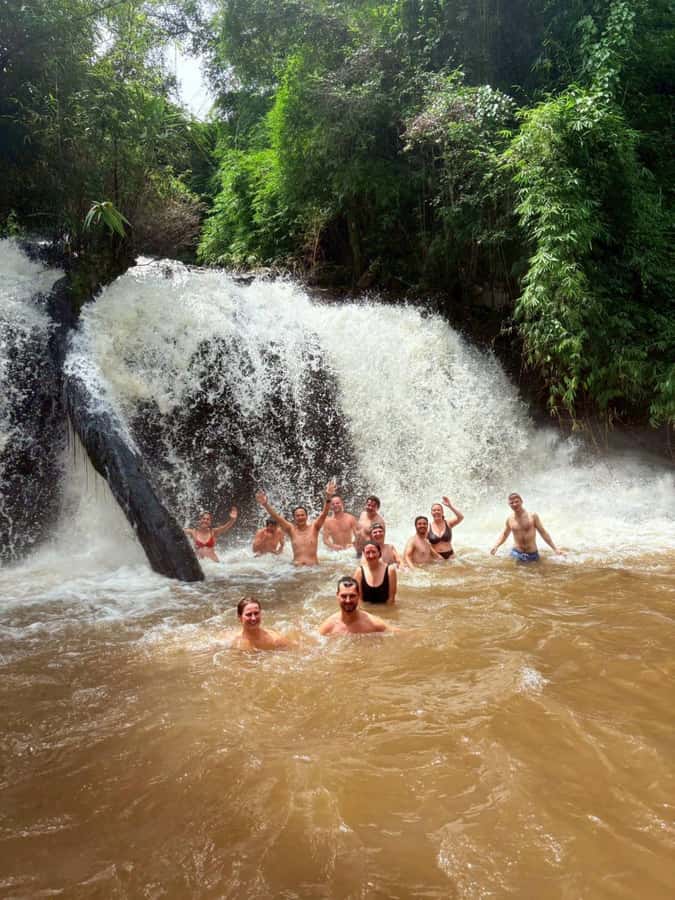
- Waterfall stops that include swimming, not just photo time
- Small-group feel (max 13) with breaks built in
- Mae Wang jungle time with a chance to spot wildlife like monkeys and gibbons
- Rice fields and seasonal farm scenery around Mae Wang, depending on the month
- Campfire night with stargazing, plus group sharing and dinner prep
Getting from Chiang Mai to the Mae Win trail starts early
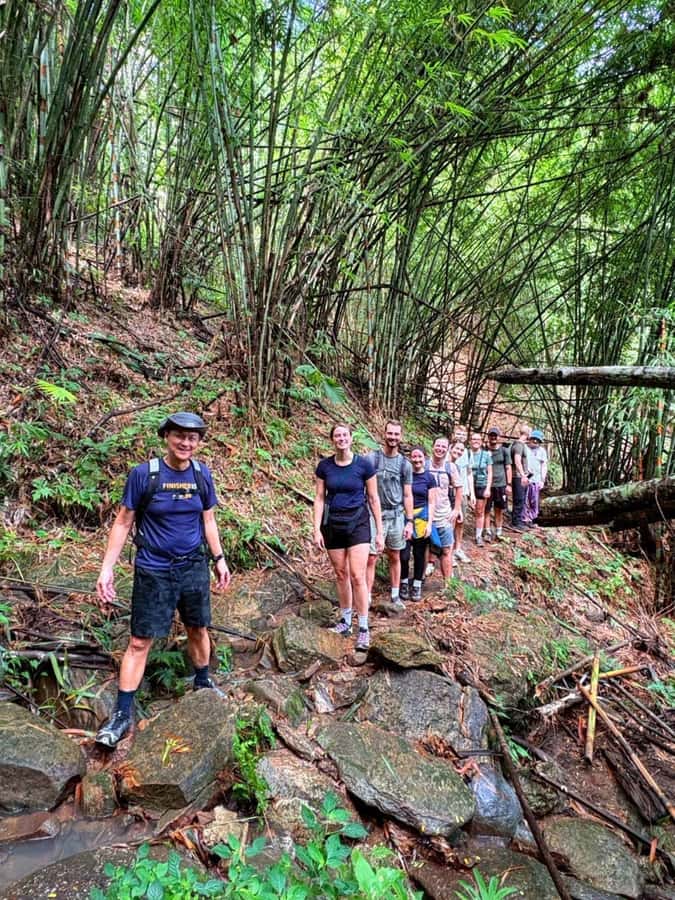
Most days begin with pick-up from inside the Old City walls or nearby areas, typically in the early morning. If you’re staying within the old city walls, the pick-up window is usually 7:00 to 7:30 AM. If you’re farther out, it’s more like 7:30 to 8:00 AM, and if your hotel is outside the pick-up area you’ll meet at a designated spot like Wat Phra Singh or Maya Shopping Center.
From there, you drive out toward the trek area with a couple of stops built in. First comes a local market where you can grab coffee and snacks or pick up anything you forgot. Then you roll on to the trekking starting point, and the day shifts from city mode to forest mode fast.
Why this matters: starting earlier means cooler walking and more daylight for the hiking and waterfall breaks. Also, you’re not guessing logistics at the bottom of a mountain path. The whole plan is meant to run on a schedule so the hiking time stays comfortable for a range of group members.
You can also read our reviews of more hiking tours in Chiang Mai
Day 1 through Karen farmlands into the Mae Win jungle
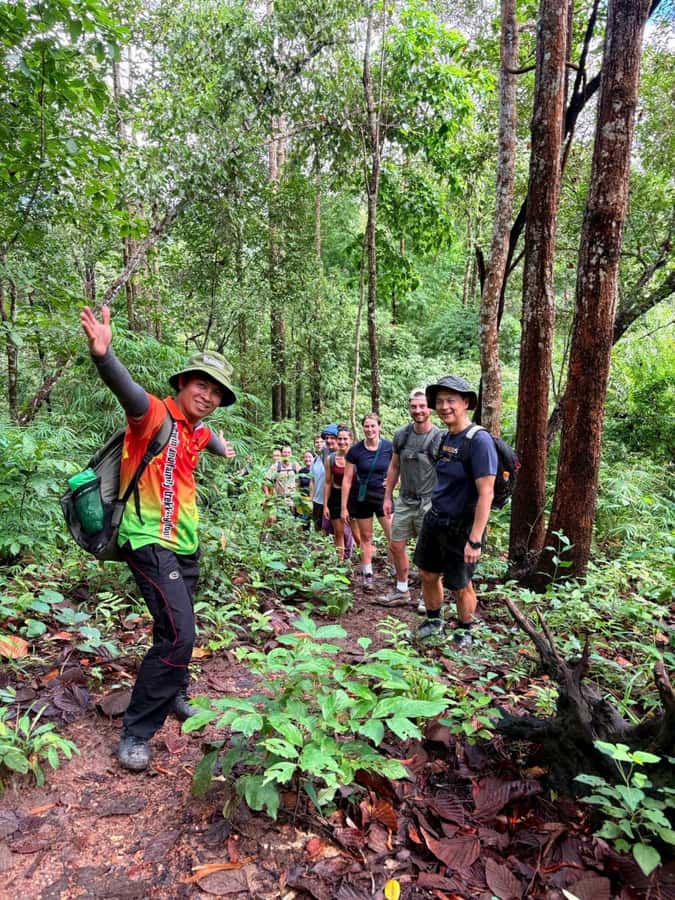
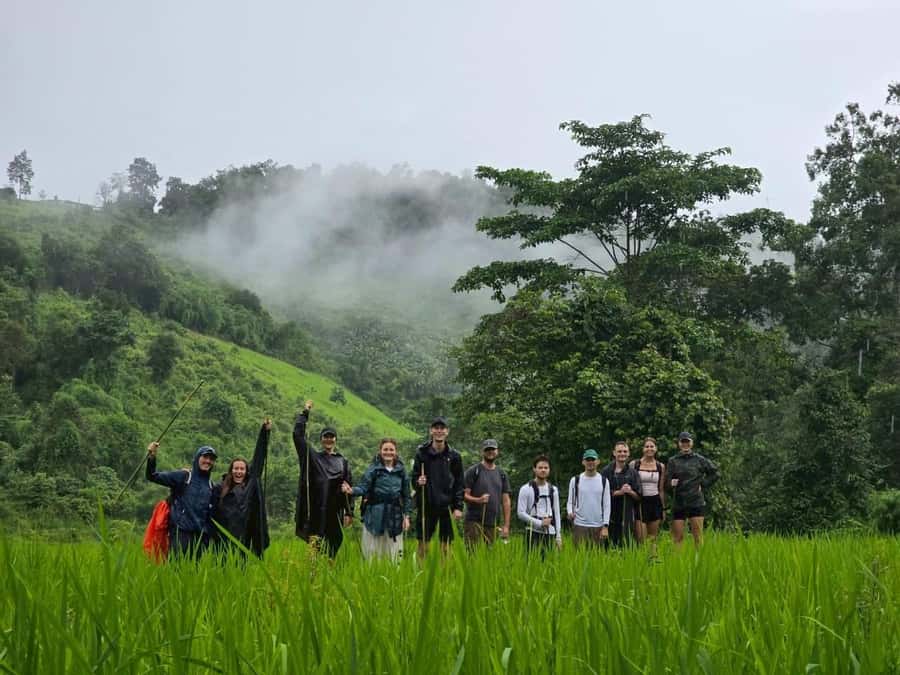
Once you arrive near the White Karen area, you get a briefing and then start trekking. The route is designed to ease you in. You’re not jumping straight into a nonstop climb. Instead, the trail moves through White Karen farmlands first, so you can see how the countryside works before you head deeper into the Mae Win jungle.
That farmland-to-jungle transition is one of the tour’s best touches. You get “Thailand scenery” that feels lived-in: fields, village life nearby, and then the thick green of the forest when you go forward. It also makes the later waterfall lunch feel like a reward rather than just another stop.
On Day 1, expect about 5 to 6 hours of trekking time in total, depending on pace, weather, and how long you pause to rest or enjoy waterfall moments. Some days in the group can come in around 12 to 14 km, though the overall time matters more than the number. This is not a speed-walk trek.
What to watch for: the path can turn slick, especially if rain shows up. Even if the climb doesn’t feel extreme, slippery footing can slow you down. Good shoes are key, and flip-flops are for after, not during.
Waterfall lunch and the overnight rhythm at the White Karen village
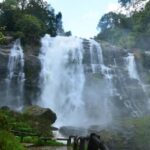
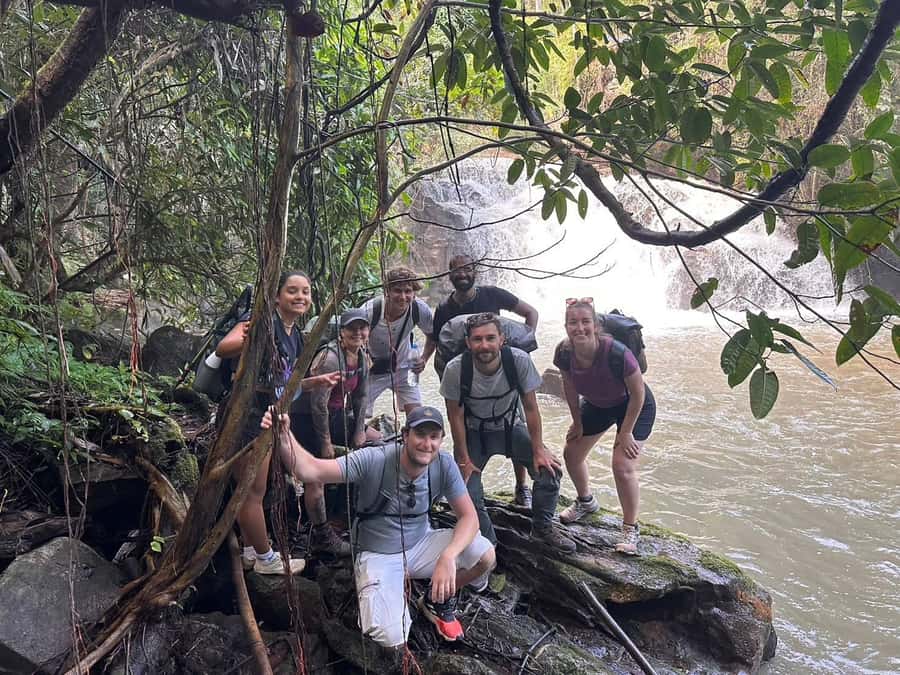
At some point on Day 1, you’ll reach a waterfall where lunch is served and the day gets a reset. This isn’t just sitting near water. It’s a chance to swim and cool off, then dry off and keep going. That’s a huge part of why this trek feels like an adventure, not an endurance test.
After the waterfall break, you continue trekking to the overnight stay at the White Karen Tribe cottage. The stay is basic, but that’s part of the point. You’re there to experience village life and the rhythm of the forest edge, not a hotel comfort level.
In the evening, you can join the guide in preparing dinner. You’ll also learn about herbs and ingredients connected to local life. After dinner, the vibe becomes relaxed and communal: campfire time, stargazing, and sharing stories with your small group.
Why I think this night is a standout: it turns the “jungle trek” into a human experience. Most hikes in Chiang Mai end when the sun sets. This one keeps going in a different way, with calm togetherness. And the stars in northern Thailand can be surprisingly clear once you’re away from city lights.
Day 2: Mae Wang jungle trekking, wildlife chances, and a second village stop
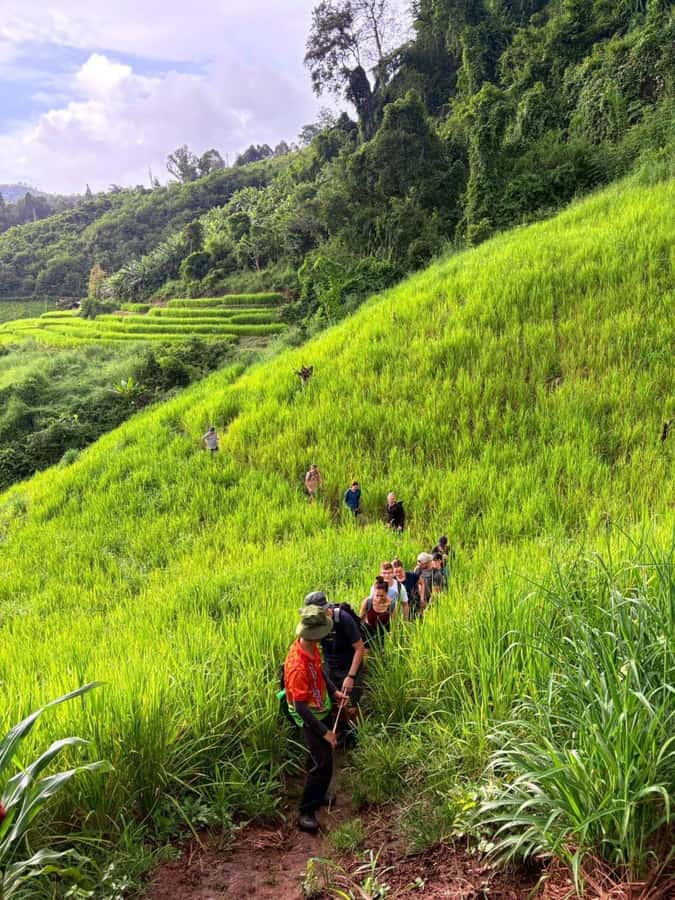
Day 2 starts with the sound of the jungle and village life, then breakfast at the cottage. After that, you head back out trekking through the Mae Wang jungle. This area is known for nature and wildlife potential, including monkeys and gibbons. You shouldn’t plan your day around guaranteeing sightings, but the chance is part of the experience.
Day 2 trekking time is flexible and adjusted to trail and group conditions. In practice, you’ll often cover around 8 to 9 km on Day 2. Some groups report closer to 8 km, others nearer to 9 or even around 10, depending on the chosen paths and how long you linger at breaks.
You’ll stop at another hill tribe village for lunch and rest. This matters because it adds variety. You’re not just repeating the same walking route. You’re seeing different pockets of village culture along the way and getting a better sense of how communities relate to the forest and farmland.
Then comes the second waterfall. If Day 1 is about settling into the trek, Day 2 is about finishing strong and getting one more chance to swim, refresh, and enjoy the cooler feeling that comes right after moving through thick greenery.
What the guides do for you (and why it changes the whole trip)
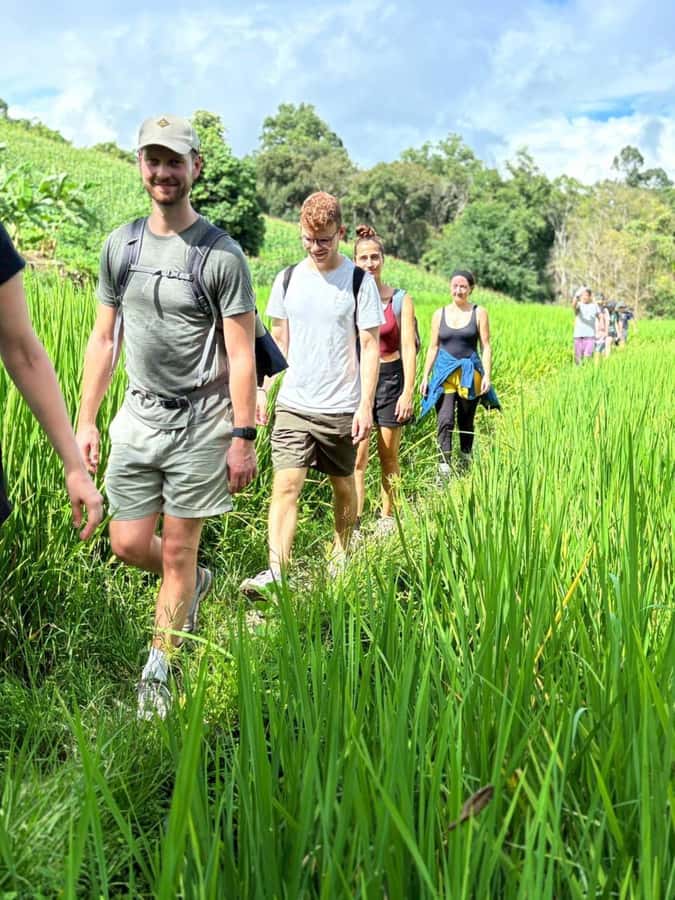
The guide can make or break this kind of trip. This one tends to work well because the guides focus on pace and context, not just getting you from A to B. Names that show up across different departures include Pong, Kong, Pat, Bo Bo, Jo, Pepe, and Nu.
Here’s what you should expect from a good guide on this route:
- practical explanations you can actually use when you’re walking through plants and the village setting
- breaks timed to keep you comfortable on steep or slippery stretches
- a calm, organized approach so the group stays together without feeling herded
One thing I like is that you often learn hands-on details. Dinner prep, herb talk, and small village activities like making simple items (seen on some days) can add texture that you don’t get from a typical sightseeing schedule.
You can also read our reviews of more tours and experiences in Chiang Mai

Price and value: what $96 covers in real effort and real experiences
At $96 per person for two days, the value comes from what’s included and how it reduces friction for you.
You’re paying for:
- round-trip transportation from the Chiang Mai area
- a live English guide
- meals (lunch twice, plus dinner on the first night and breakfast on Day 2)
- accommodation for the overnight village stay
- travel insurance
If you try to replicate this yourself, you’d spend time finding the right guide, arranging transport, figuring out where to stay overnight in a village setting, and planning a safe route with waterfall stops. The tour bundles all of that into one organized plan.
That said, this isn’t a luxury trip. Your “value trade” is basic accommodation and a hike that needs effort. If you want comfort and short walks only, this won’t feel like a bargain. If you want a real outdoors experience with meaningful stops, it’s solid for the money.
Packing list: the stuff you’ll thank yourself for
This trek asks you to carry essentials in a small overnight backpack for two days and one night. Don’t overpack. Think practical.
Bring:
- warm layers and a jacket (especially if you’re traveling in November–February)
- comfortable sports shoes with good grip
- long pants and shorts for switching up based on trail and heat
- sunglasses and a sun hat
- sunscreen and insect repellent
- swimwear, towel, and a change of clothes for waterfall time
- daypack for daily carry
- flip-flops for after hiking, likely around the cottage
- personal medications and a power bank
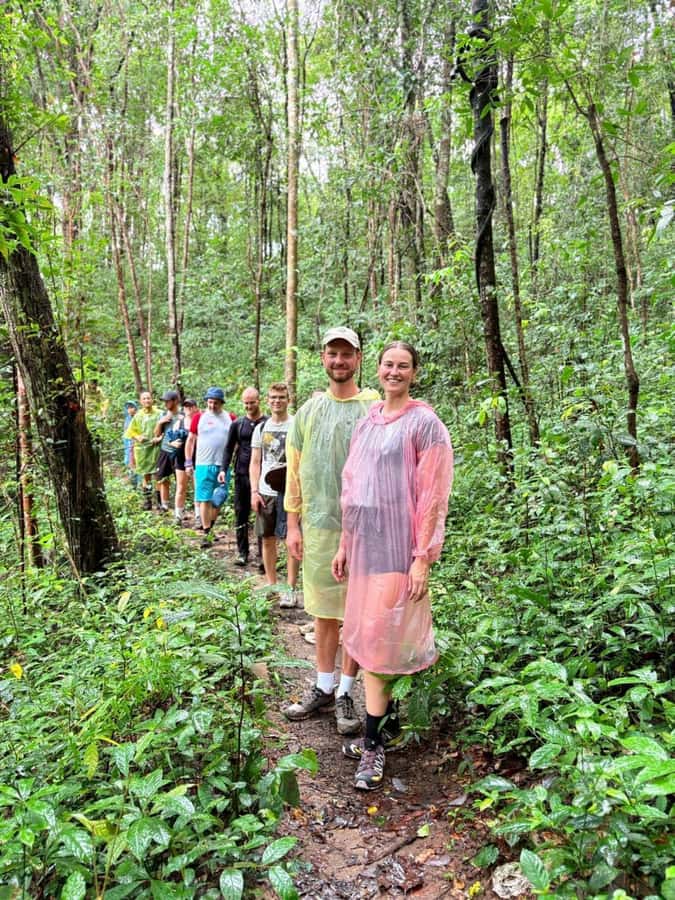
Also consider a rain jacket if you’re hiking in rainy-season conditions. Even light rain can make trails muddy, and slippery sections are part of the real-world jungle.
A winter note you should take seriously: northern Thailand can be cool in the Mae Win area at night. If you only pack a thin layer, you may feel it at the cottage.
Season tips: rice fields around Mae Wang change what you see
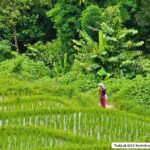
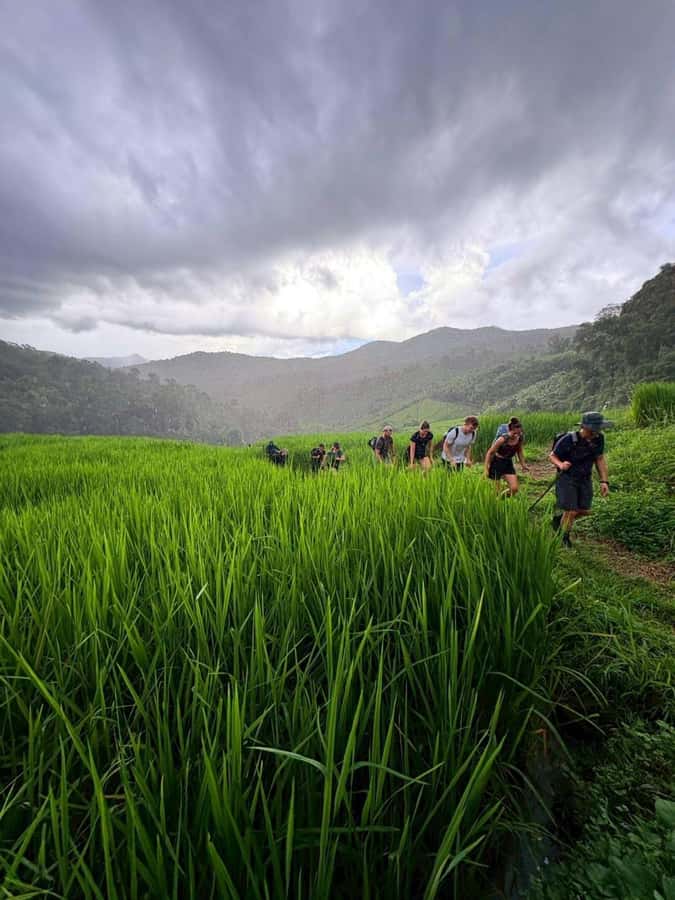
One detail I love here is the farm scenery timing. The rice fields around Mae Wang shift by season:
- July–August: planting season, with farmers transplanting young rice
- September–October: lush green fields that slowly turn golden before harvest
- November–December: harvest season, with a traditional rice cutting and gathering feel in Karen villages
So your month actually changes the visual and cultural flavor of the trek. If you can pick dates, this helps you choose a look you want, not just weather.
Who should book this trek (and who should skip it)

This is best for you if:
- you enjoy hiking and are comfortable with uphill walking for several hours
- you want a nature-focused trip that includes swimming and village time
- you like learning from local guides and seeing how communities live near the forest
It’s also a good option if you want an alternative to city animal attractions and prefer outdoors and community-focused experiences instead. Some people book specifically because they’re looking for something different from the usual Chiang Mai headline activities.
This is not for you if:
- you’re pregnant
- you use a wheelchair
- you have altitude sickness concerns
- you’re over 70
- you can’t handle a demanding two-day hike
And if you tend to hate cold mornings, plan for it. November to February nights in the Mae Win area can feel chilly.
A simple reality check: accommodation is basic, but it fits the trip
Expect an overnight village stay that’s functional rather than fancy. You may sleep in shared dorm-style conditions, and some setups include bucket flush toilets. That’s not a “comfort issue” if you go in with the right mindset.
The upside is that the overnight location puts you close to the village atmosphere and the calm night routine: dinner prep, campfire time, stargazing, and quiet conversation. That’s the whole point.
Should you book the 2-day Mae Win jungle trek with Karen villages?
If you want a Chiang Mai experience that’s active, outdoorsy, and still culturally grounded, I’d book it. The combination of waterfall swims, village immersion, and a real overnight night under the stars is the recipe that keeps this tour memorable.
Book it if:
- you have decent hiking fitness for two days
- you pack warm layers for cooler nights in season
- you’re okay with basic village accommodation in exchange for a more authentic setting
Skip it if:
- you want an easy, mostly flat walk
- you need hotel-style comfort
- you don’t handle mud and cold well
If that sounds like you, then this is one of the more direct ways to get beyond Chiang Mai’s paved sidewalks and into the jungle-and-farmland world for real.
FAQ
What’s the duration of the Chiang Mai 2-day jungle trek?
The tour runs for 2 days.
How many people are in a group?
The group is kept small, limited to 13 participants.
Is the tour guided, and is English available?
Yes. You’ll have a live tour guide who speaks English.
What’s included in the price?
Transportation, a guide, lunch (plus meals during the program), accommodation for the overnight stay, and travel insurance are included.
Where are the pick-up locations and what time should I plan for?
Pick-up is included from many hotels. Old City hotels are usually picked up between 7:00 and 7:30 AM. Hotels outside the old city walls are usually between 7:30 and 8:00 AM. If your hotel is outside the pick-up area, you’ll meet at a designated location such as Wat Phra Singh or Maya Shopping Center.
What kind of accommodation do you get overnight?
You stay overnight at the White Karen village cottage setting, and the accommodation is basic but adequate.
What should I bring for the trek and waterfall time?
Bring warm clothes (especially for November to February nights), comfortable hiking shoes, sunscreen, insect repellent, swimwear, a towel, a change of clothes, a daypack, and any personal medication. A power bank can help, too.
Is the tour suitable for everyone?
No. It isn’t suitable for pregnant women, wheelchair users, people with altitude sickness, or people over 70.